Tajik government drafts national budget for 2015

DUSHANBE, October 29, 2014, Asia-Plus – Tajik government has drafted the national budget for 2014. A government session, presided over by President Emomali Rahmon, took place on October 29. According to the president’s official website, the session, in particular, discussed a draft law on the national budget for 2015 and the national budget indices projected […]

DUSHANBE, October 29, 2014, Asia-Plus – Tajik government has drafted the national budget for 2014.

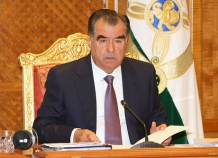
A government session, presided over by President Emomali Rahmon, took place on October 29.

According to the president’s official website, the session, in particular, discussed a draft law on the national budget for 2015 and the national budget indices projected for 2016-2017.  

The 2015 national budget indicators reportedly reflect the economic and social development of the country.

The revenue part of the national budget for 2015 is projected to stand at 15 billion somoni (equivalent to some 5 billion U.S. dollars), which is 1.377 billion somoni or 10 percent more than more than the indicators of the national budget foe 2045.

Social spending will account for more than 50 of budget allocations, which is reportedly 17 percent more than this year.

The budget projects to spend 400 million somoni to raise rates of wages, pensions and student grants, the website reports.

In 2015, Tajikistan’s gross domestic product (GDP) is expected to stand at more than 52.8 billion somoni and inflation is expected to stand at 7.5 percent.  

The session approved the draft law on the national budget for 2015 and submitted it for consideration to the Majlisi Namoyandagon (Tajikistan’s lower chamber of parliament).

The government also endorsed the payment system development strategy for 2015-2020, the program of strategic works for 2015, municipal redevelopment plans for the administrative center of the Vanj district in the Gorno-Badakhshan Autonomous Region and the city of Istiqlol in Sughd province, the national program on elimination of child labor for 2015-2025, and the program on adaptation of Tajikistan’s economy in connection with Tajikistan’s admission to the World Trade Organization.  
Join us on social media!

Article translations:

Related Article

Оби зулол
Tenisi
Оби зулол

Most Read

Коммерсбонк Точикистон

Recent Articles

By 2050, Tajikistan’s population expected to reach 14.5 Million: what lies ahead?

Tajikistan's population is growing rapidly, while productivity in key sectors such as industry, construction, and agriculture is not keeping pace.  Meanwhile, arable land per...

EAEU countries urge Armenia to hold a referendum on joining the European Union

The presidents of Russia, Belarus, Kazakhstan, and Kyrgyzstan made a joint statement at the EAEU summit in Astana.

RZD announces the restoration of passenger services between Moscow and Dushanbe

Direct rail services between the capitals of Russia and Tajikistan were suspended in March 2020 due to the COVID-19 pandemic.

#AP30/Stories. “Selam! Heller nichek?” How Tatars live today in Sughd province

On the 30th anniversary of "Asia-Plus," we continue to publish reports that remain relevant even after years. This story was told in 2021, and since then, little has changed in the life of the Tatar community in Tajikistan.

15,000 cameras, drones, and robots: how technology monitors pilgrims in Mecca and Medina

During Hajj 2026, Mecca and Medina were under unprecedented digital control.

Another child in Dushanbe removed from family and sent to boarding school

The Ministry of Internal Affairs reports that the parents did not pay adequate attention to the child.

Emomali Rahmon instructs to address issues in seed production following criticism of the industry

Issues have been noted with certification, seed quality, and the material and technical base of the industry.

Water, climate, and a $130 billion deficit: seven key outcomes of the Water Conference in Dushanbe

At the forum, countries and international organizations discussed new mechanisms for cooperation, investments, and technologies that are essential for addressing the global water crisis.