DUSHANBE, June 17, 2015, Asia-Plus – A new report by the International Fund for Agricultural Development (IFAD), Sending Money Home: European Flows and Markets, notes that last year migrant workers living in Europe sent home US$109.4 billion in remittances, providing a lifeline to more than 150 million people around the world.
Remittances from Europe represent a quarter of remittances flows worldwide. Last year, the amount sent from migrant workers in the European Union”s 28 members states was comparable to the official development assistance (ODA) sent by the EU to developing countries.
The typical amount sent from migrant workers ranged from $1,500 to $3,200 annually.
On the sending end, Western Europe and the Russian Federation were the main source of remittances. The top six sending countries in 2014 were: the Russian Federation ($20.6 billion), the United Kingdom ($17.1 billion), Germany ($14 billion), France ($10.5 billion), Italy ($10.4 billion) and Spain ($9.6 billion).
On the receiving side, in 2014, about one third or $36.5 billion of European remittances went to 19 countries in the Balkans, the Baltics and Eastern Europe, including 10 EU member states. The remaining two thirds or $72.9 billion went to over 50 developing countries outside Europe.
Of the 19 remittance-receiving countries within Europe, the report shows that 9 countries whose economies are agriculture-based relied the most on flows from Europe.
Beyond Europe, about $34.9 billion went to Asia and the Pacific, $23.1 billion were sent to Africa, $8.7 billion went to the Near East and the Caucasus. Latin America and the Caribbean received $6.2 billion. But Northern Africa and Central Asia were the regions that were most reliant on European flows, largely from France and Russia, respectively.
Europe is also a source of considerable remittances to fragile states such as Afghanistan, Iraq and Sudan, where these flows are vital for the survival of millions of families. Remittances did not represent a significant outflow of wealth from the 26 sending countries. According to the report, remittances amounted to less than 0.7 per cent of individual country GDP.
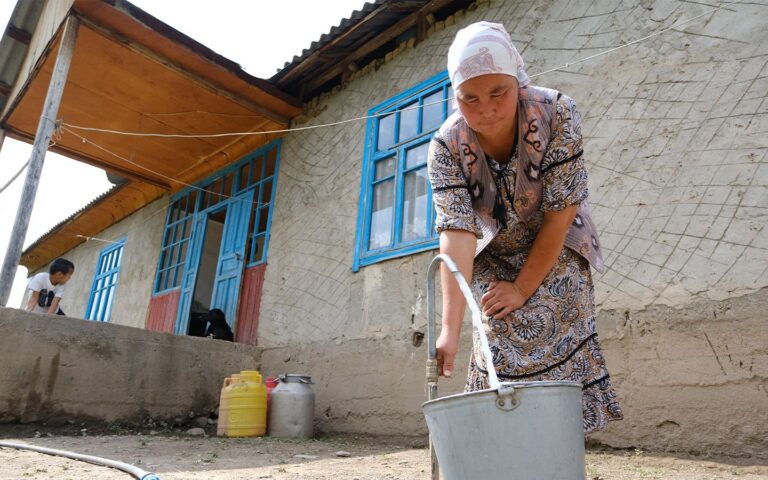
With 40 per cent of remittances going to rural areas, the report also suggests that remittances can play a critical role in the transformation of vulnerable communities.
If migrant workers and their families were given more options, they could invest – even if a small part of their money – in new productive activities or small businesses. This would in turn create jobs, improve food security and lead to better lives.
To this end, the report recommends improving access to basic financial services such as savings and credit, but also to provide families with non-financial services adapted to their needs such as technical assistance for business development or financial education programs.
The report also calls for more competition in the marketplace to lower transfer costs.
A migrant in Europe spends on average about 7.3 per cent of the amount sent in fees. While this average is slightly below the global average of 7.9 per cent, a reduction to 5 per cent would save migrants in Europe more than US$ 2.5 billion in transfer costs per year.