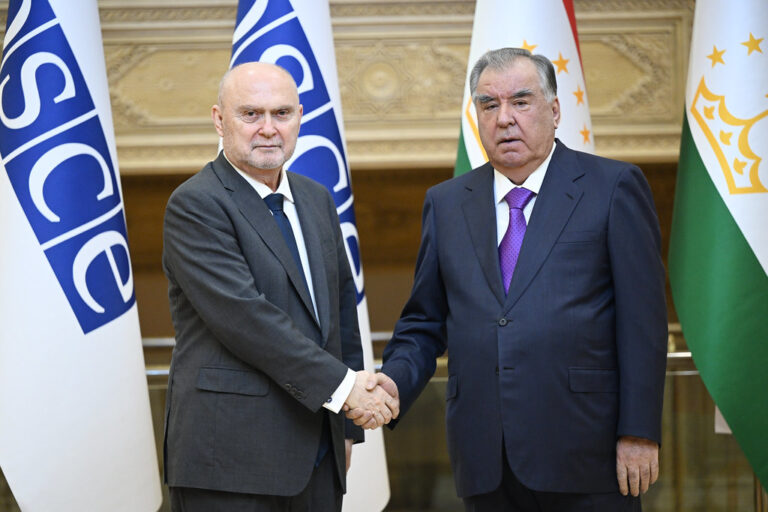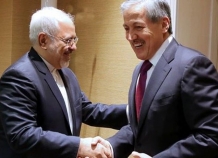
DUSHANBE, December 9, 2015, Asia-Plus – Tajik Foreign Minister Sirojiddin Aslov met with his Iranian counterpart Mohammad Javad Zarif in Islamabad on December 8, according to the Tajik MFA information department.
Aslov arrived in Islamabad on December 8 to attend the 5th Heart of Asia – Istanbul Process Meeting on Afghanistan
Aslov and Zarif reportedly discussed state and prospects of further expansion of bilateral cooperation between Tajikistan and the Islamic Republic of Iran.
They also exchanged views on the current situation in the region and challenges and threats to the regional security as well as a number of international issues being of mutual interests.
Meanwhile,
IRNA
reports Zarif welcomed exchange of officials between the two countries and said Iran is ready to develop bilateral cooperation in the field of fight against terrorism, extremism and drug traffics.
Aslov said that Iran is one of the important countries in the region and that by holding joint economic commission in Dushanbe, the ground for development of ties will be prepared.
“We support Iran”s membership in Shanghai Cooperation Organization,” he added, according to
IRNA
.
A two-day conference (ministerial level) that opened today has reportedly brought together representatives from more than 40 member and supporter countries as well as more than 10 international and regional bodies.
Foreign Ministers of Iran, China, Afghanistan, Pakistan, India, Turkey, Tajikistan, Turkmenistan, Kazakhstan and Kyrgyzstan are attending the conference.
Representatives from Russia and the United States are also participating in the event.
Heart of Asia – the Istanbul Process that began in 2011, have 14 members including Afghanistan, Azerbaijan, China, India, Iran, Kazakhstan, Kyrgyzstan, Pakistan, Russia, Saudi Arabia, Tajikistan, Turkey, Turkmenistan and UAE.
In addition, there are 12 supporting countries including Australia, Canada, Denmark, Egypt, Finland, France, Germany, Italy, Iraq, Japan, Norway, Poland, Spain, Sweden, UK and US.
The process seeks peace and development in Afghanistan and regional cooperation. Apart from combating terrorism and extremism, the forum seeks to promote economic development in the region. It also aims at promoting cooperation in the region in curbing drugs trade and other organized crimes in the region.