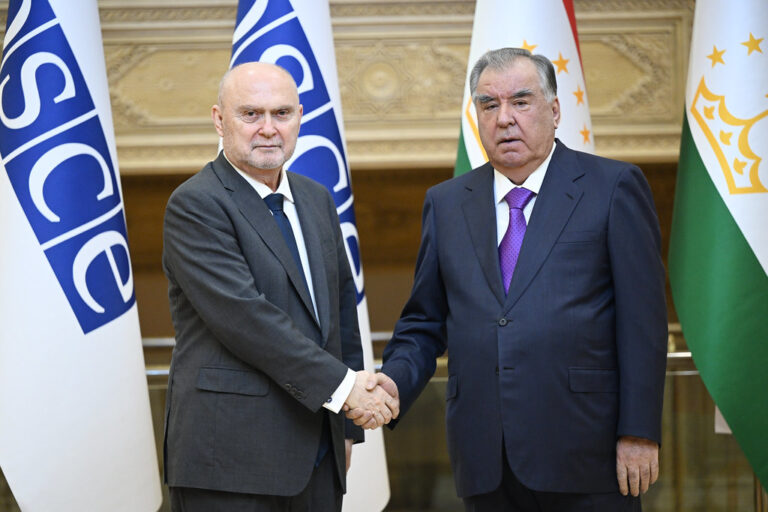
DUSHANBE, March 4, 2016, Asia-Plus — On Friday March 4, deputy speaker of Majlisi Namoyandagon (Tajikistan’s lower house of parliament), Akramsho Felaliyev, received visiting United Nations human rights expert David Kaye.
Muhammadato Sultonov, a spokesman for Majlisi Namoyandagon, says the two discussed issues related to observance of human rights and freedoms in Tajikistan.
A special attention was reportedly paid to state of the media in Tajikistan.
“Felaliyev, in particular, noted that according to estimates of many international institutions and experts, Tajikistan’s media are free compared to media in many countries of the region,” the spokesman said.
The deputy parliament speaker reportedly stressed that in the first year of independence (1991) there were 139 newspapers and magazines in Tajikistan and only four of them were private. Today, more than 400 newspapers and magazines are published in the country and 270 of them are private, Felaliyev noted.
David Kaye (USA) was appointed as Special Rapporteur on the promotion and protection of the right to freedom of opinion and expression in August 2014 by the United Nations Human Rights Council. It is his first visit to Tajikistan. Mr. Kaye arrived in Dushanbe on March 3 to assess the situation of the right to freedom of opinion and expression in the country.
A Special Rapporteur is an independent expert appointed by the Human Rights Council to examine and report back on a country situation or a specific human rights theme. The Special Rapporteurs are part of the Special Procedures of the Human Rights Council. Special Procedures, the largest body of independent experts in the UN Human Rights system, is the general name of the Council’s independent fact-finding and monitoring mechanisms. Special Procedures mandate-holders are independent human rights experts appointed by the Human Rights Council to address either specific country situations or thematic issues in all parts of the world. They are not UN staff and are independent from any government or organization. They serve in their individual capacity and do not receive a salary for their work.