EU BOMCA technical assistance mission visits Tajikistan

DUSHANBE, June 2, 2016, Asia-Plus – The European Union (EU) is continuing to offer significant support to border security activities in Central Asia.  Thus, a technical assistance mission on management of mixed migration flows at borders started in Dushanbe on June 1 within the framework of Border Management Programme in Central Asia (BOMCA). According to […]

Asia-Plus

DUSHANBE, June 2, 2016, Asia-Plus – The European Union (EU) is continuing to offer significant support to border security activities in Central Asia.  Thus, a technical assistance mission on management of mixed migration flows at borders started in Dushanbe on June 1 within the framework of Border Management Programme in Central Asia (BOMCA).

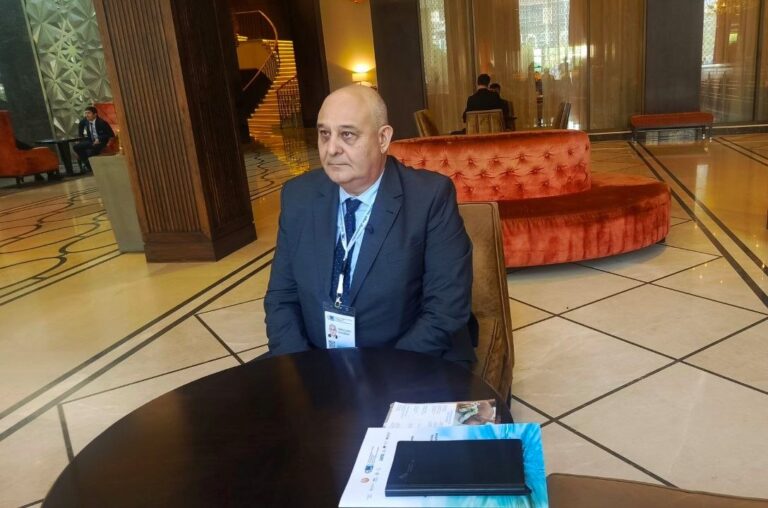
According to the EU Delegation to Tajikistan, the mission envisages a mixture of a workshop and round-table discussions between the European experts from the State Border Guard of Latvia and Immigration and Borders Service of Portugal, on the one hand, and national experts working on the issue of trafficking in human beings and readmission, on the other hand.  Local counterparts are represented by the Ministry of Foreign Affairs, Border Troops of the State Security Committee, Ministry of Interior, and Migration Service of the Ministry of Labor, Migration and Employment.

The key objective of the mission is to discuss national legislation in line with international practices dealing with vulnerable groups of migrants passing through borders and explore legislation of the EU countries in relation to working with such migrant groups.

Participants are discussing good practices from the EU MSs and Tajikistan in countering trafficking in human beings and smuggling of persons at the borders, as well as exchanging their experience and learn about EU best practices in readmission.

Based on discussions and exchange of views with the national experts, the EU experts will develop recommendations on amendments of specific pieces of the national legislation related to management of vulnerable migrant groups at borders and readmission in line with international best practices.

First BOMCA operations began in Central Asia in 2003, and since then, BOMCA has strengthened partnership of the Central Asia Governments in the field of border management. The European Union allocated a sum of EUR 33.6 million to BOMCA for the period of 2003 – 2014 and almost EUR 5 million for its 9th implementation phase (2015 – 2018).
 

Article translations:

Related Article

Оби зулол

Most Read

Join us on social media!

Aura

Recent Articles

Sanctions lifted: Dushanbe City Bank resumes international operations

The bank is returning to full-scale international operations.

Gasoline and diesel fuel in Dushanbe rose in price by 8.9% due to the war in the Middle East

The rise in global oil prices and, consequently, the cost of petroleum products has triggered the closure of the Strait of Hormuz.

The Ministry of Labor organizes consultations for migrants returning from Russia at Dushanbe airport

Employees of the Migration Service explain the requirements of Russian legislation and offer job vacancies in their homeland.

Tajikistan and Uzbekistan discuss simplification of customs procedures and implementation of VIN.TJ system

The VIN.TJ system is designed to simplify the process of vehicle registration and control.

Tajikistan climbs four places in the global fixed internet speed ranking

This is the country's best performance in the past five years.

President of Tajikistan launches hydro unit No. 7 at Nurek HPP

As of today, three units have been completely replaced at the country's largest hydroelectric power station.

Italian Opera in Dushanbe: Shohrukh Yunusov invites to an evening of musical revelations

The evening will feature the most recognizable Italian works alongside world and Tajik classics.

The European Union lifts sanctions on Tajik banks

This is attributed to successful reforms and improved financial transparency in the country.

Meta announced plans to lay off about 10% of its staff

The reason cited is the high costs of artificial intelligence development.