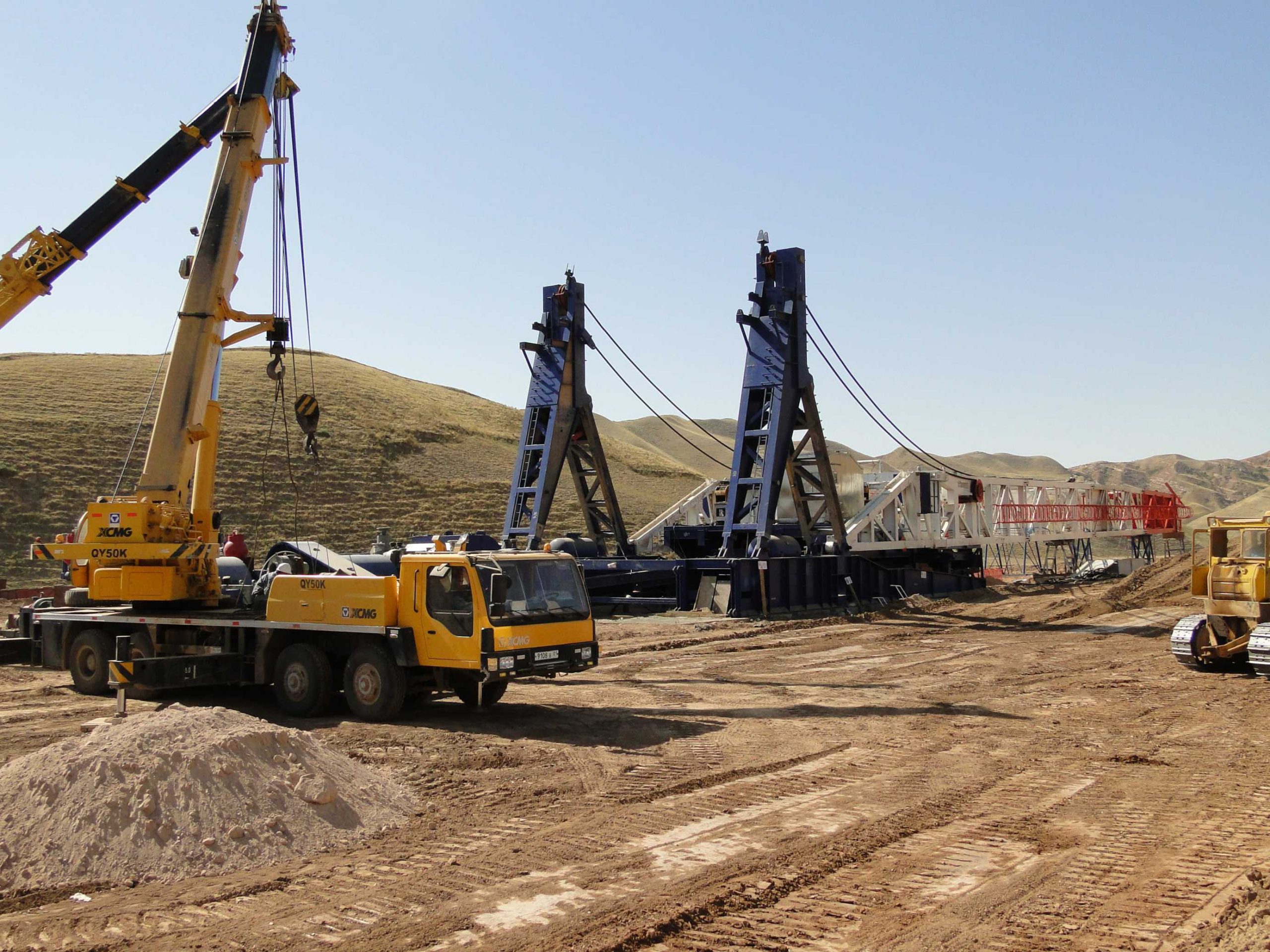
DUSHANBE, August 16, 2016, Asia-Plus — Russia”s state-controlled gas company Gazprom announced in its quarterly report that it has given up licenses for exploration and development of the Sariqamish and Western Shohambari gas fields in Tajikistan.
The report, in particular, notes that the central commission for mineral development and license movement management has decided to give up the licenses in connection with inexpediency with further exploration of the mentioned fields.
Gazprom received licenses for exploration of the Western Shohambari and Sariqamish fields on on September 15, 2009 and the licenses expire on September 18, 2018.
Meanwhile, Gazprom International, an affiliate of Russia’s state-controlled company Gazprom, gave up licenses for exploration of the Sargazon and Rengan fields in 2014.
Recall that Gazprom received licenses from the Tajik government to explore the Sargazon and Rengan fields in 2006. According to Gazprom, the Rengan field, located 20 kilometers from the Tajik capital, Dushanbe, reportedly has possible gas reserves of 35 billion cubic meters; Sargazon, located in Khatlon province 150 kilometers from Dushanbe, has possible reserves of 30 billion cubic meters.
Gazprom justified its decision to give up the licenses for exploration of the Sargazon and Rengan fields by saying that it decided to concentrate its efforts on exploration and development of the Sariqamish and Western Shohambari fields.
The Sariqamish field reportedly has possible gas reserves of 18 billion cubic meters, possible oil reserves of 17 million tons and possible reserves of dissolved gas of 2 billion cubic meters.
During his visit to Tajikistan, Gazprom chief Alexei Miller told journalists on September 18, 2013 that his company is interested in obtaining more licenses to explore natural-gas fields in Tajikistan.
According to Miller, Gazprom has invested some $150 million in two major natural-gas fields in Tajikistan”s north since 2010.
In August 2013, Gazprom reportedly announced an additional $15 million investment in its operations at the Sariqamish gas field.
Cooperation between the Tajik government and Russia’s state-controlled company Gazprom is regulated by a long-term (till 2028) agreement on strategic cooperation in the gas industry signed between Gazprom and Tajikistan’s Ministry of Energy in Dushanbe on May 15, 2003 and a memorandum of intent on launching joint Tajik-Russian enterprises of March 28, 2006. Gazprom has been working in Tajikistan on providing the beginning of geological explorations since July 2006.
According to expert estimates, the aggregate raw-materials resources of the oil and gas bearing areas in Tajikistan amount to about 1,000 billion tons of reference fuel. At the same time, production work at oil and gas fields require considerable expenditure, since hydrocarbon deposits occur at depths ranging from 6.5 to 8 kilometers.