
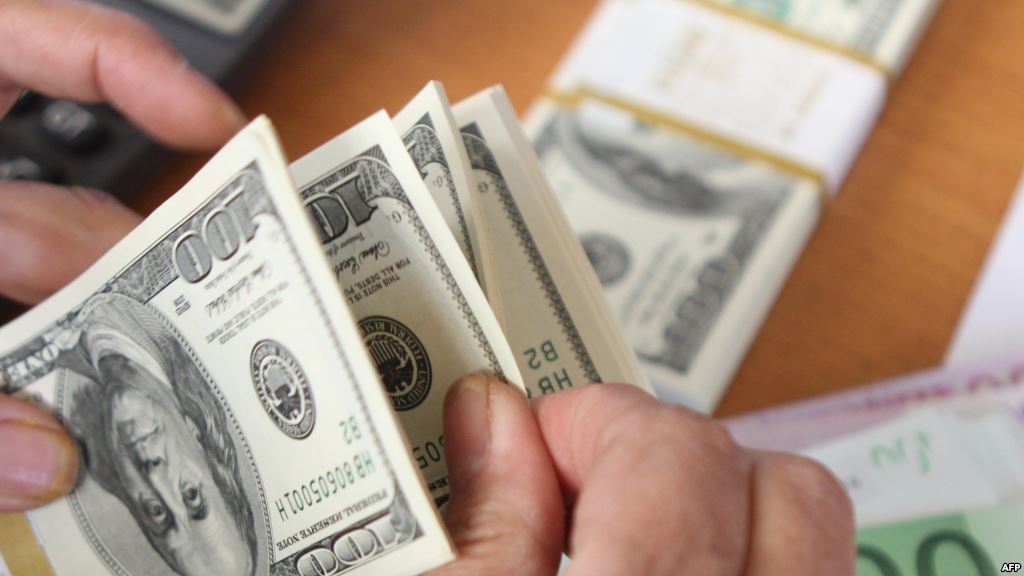
EurasiaNet.org reports that remittances paid by migrant laborers from Russia to Central Asia in 2016 fell compared to 2015.
As stated before, the Russian Central Bank did note last week that money transfers by individuals to Uzbekistan had hit $2.74 billion in 2016, but this actually represented a drop not a rise, since the figure for 2015 was $3 billion, according to EurasiaNet.org.
Second place among cash transfers made from Russia to former Soviet republics is taken by Tajikistan. The figure for remittances in 2016 was $1.9 billion — a global figure smaller than Uzbekistan, but one that accounts for a far greater proportion of the nation’s economy as a whole. This is a fall from the previous year, when it was $2.2 billion.
Kyrgyzstan with $1.7 billion is in the third place. Now, this is an improvement, from the $1.5 billion recorded in 2015, EurasiaNet.org says.
This picture affects the prior evaluation of the figures somewhat, and indeed in a way that makes more sense.
One obvious takeaway is that Kyrgyzstan’s decision to join the European Economic Union may indeed be starting to bear some scanty fruit, since the uptick in the inflow of remittances is likely connected to the greater ease with which Kyrgyz workers can now settle in Russia for employment.
But the overall decline means that Russia’s gradual emergence out of economic contraction is not yet paying dividends for the mass of migrant laborers. Russia’s slump was brought on by a combination of plummeting oil prices and, in part, Western sanctions imposed following the annexation of the Crimea Peninsula. That collapse of oil prices led to the sharp devaluation of the ruble and, accordingly, in the dollar value of remittances. The ruble has never anywhere near recovered its prior vigor.
Looking at one key sector in which many migrants laborers are employed — construction — one starts to understand where a major problem may lie.
According to the Russian State Statistics Agency, this January-February, the volume of real estate space built was down by 19.5 percent on the previous year over the same period — a startling drop.
The picture is mixed across the board in Russia. Fixed capital investment is hovering between sluggish and sagging. Industrial production is up, albeit by a reasonably contained amounts. Consumer demand is shrinking, but doing so at a slower pace than before.
Perhaps most worrying for remittance-dependent nations, there is every possibility that Russia’s economy will be irrevocably changed by the enduring crisis, which is lasting longer than any downturn since the dark days of the 1990s. When recovery kicks into gear, the services of migrant laborers may not be as urgently needed as they were before.
