
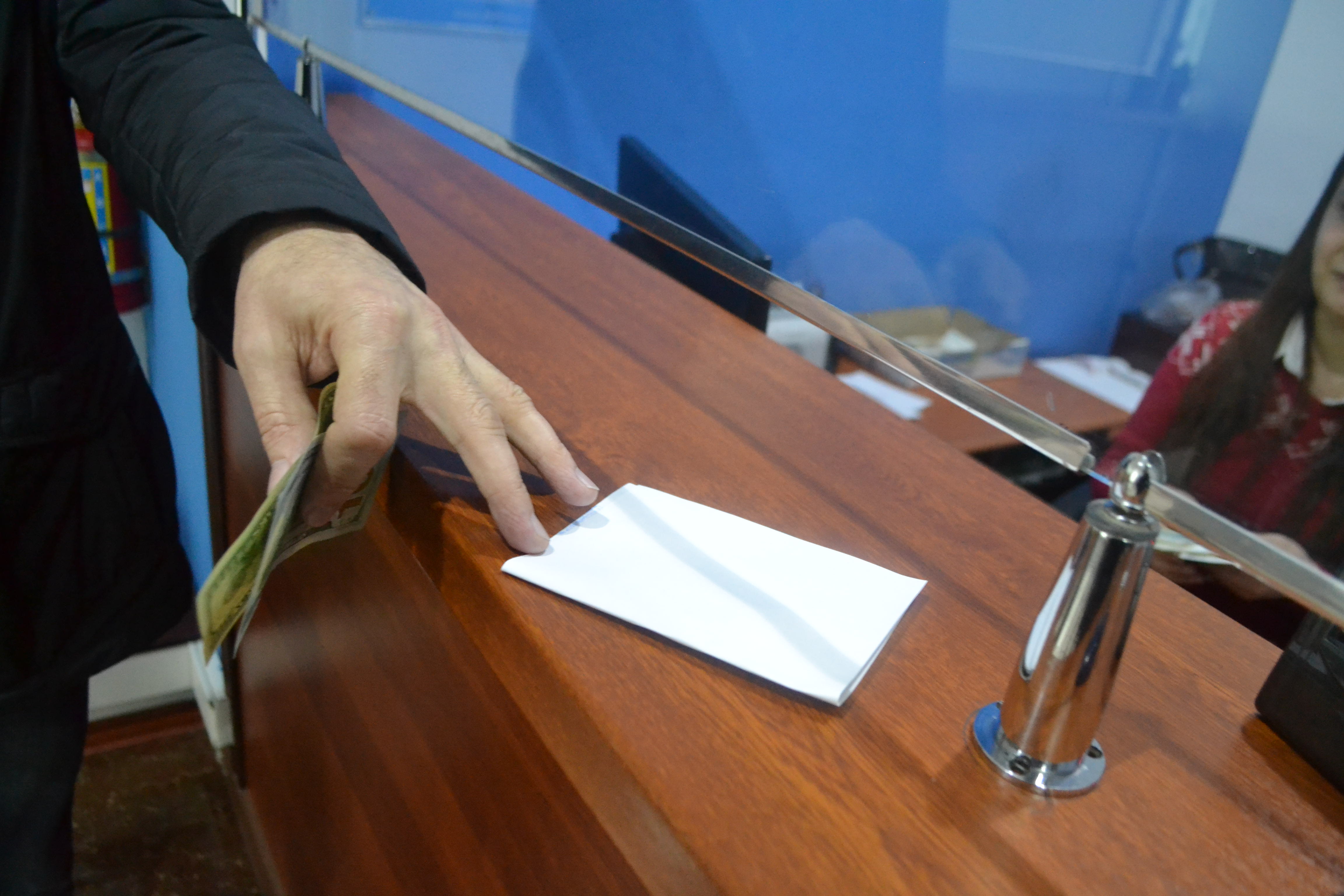
The National Bank of Tajikistan (NBT) accuses currency dealers of causing devaluation of the national currency, the somoni. They reportedly purchase the dollars in large amount from banks and sell them at the overpriced exchange rate.
“Analysis shows that a panic and alarm situation has emerged in the country’s forex market under the impact of psychological and speculative factors,” says a statement by Tajik central bank.
“This situation and other factors have led to significant increase in demand for the U.S. dollar and activation of an unofficial market.”
In view of the aforesaid, Tajik central bank has ordered commercial banks to organize sale of the dollar owing to their own reserves and the currency purchased from the population.
At the same time, the NBT has ordered banks to reveal and register persons who regularly purchase currency for the purpose of realizing a speculative profit.
The statement says that Tajik central bank is taking all necessary measures to stabilize the country’s currency market.
Meanwhile, the somoni has lost 11.3 percent of its value against the dollar at the market exchange rate since the beginning of the year: from 7.92 somoni per 1.00 USD on January 1 to 8.82 somoni per 1.00 USD today.
The NBT had earlier noted that one of the reasons form devaluation of the somoni is excessive increase in money supply in circulation.
8.4 billion somoni have been circulation by the end of February, which was nearly 60 percent more compared to the same period last year. Over the past month, the money supply in circulation has increased by 1.3 billion somoni, reaching 9.7 billion somoni.
Increase in the money supply has reportedly been caused by financial support provided by the government to the distressed banks.
Recall, the somoni lost 10.7 percent of its value against the dollar in a year to December 31, 2016.
Tajikistan has mainly resorted to “administrative resources” to keep the currency on an even keel.
In December 2015, the National Bank ordered the closure of all unauthorized currency exchange points in the city. After that, only banks were able to perform foreign exchange operations. Anybody found violating this new arrangement could face jail terms of up to nine years. Also, banks are forbidden by law from selling somoni at more than 1.5 percent the rate established by the National Bank.
Even the Finance Ministry has long freely admitted the somoni is set for gradual devaluation, which explains why people are so eager to get rid of their stocks. According to the ministry’s forecasts, the somoni is projected to slide to 9.6 somoni to the dollar this year, to 10.4 somoni in 2018 and to 11.2 somoni in 2019.
