
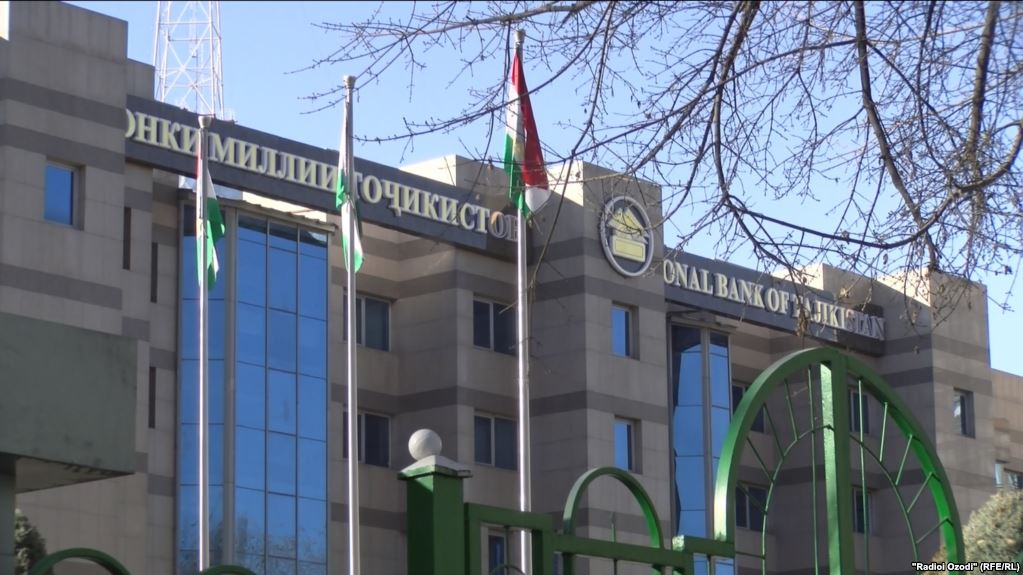
The National Bank of Tajikistan (NBT) says it will interfere in the country’s currency market only at the worst.
“Currently, the regulator operates in the currency market in the regime of “floating regulated rate” without determining and announcing exchange rate limits,” says a statement released by Tajik central bank.
Under this regime, an official currency exchange rate is reportedly set on the basis of demand and supply for foreign currency in the internal currency market.
According to data from the NBT, an official exchange rate of the Tajik national currency, the somoni, against the dollar dropped 7.8 percent from the beginning of the year to mid-April.
Over the same period last year, an official exchange rate of the somoni against the dollar dropped 10.8 percent.
Meanwhile the market rate of the somoni against the dollar dropped 13 percent from the beginning of the year to mid-April.
Over the same period last year, the market rate of the somoni against the dollar dropped 5.7 percent.
According to the statement, the difference between the official rate and the market rate increased from 0.6 percent on January 1, 2017 to 5.4 percent on April 17, 2017.
NBT specialists say there are external and internal factors affecting the exchange rate of the somoni against the dollar.
The external factor:
– Instable geopolitical, economic and financial situation in the countries that are the major trading partners of Tajikistan;
– Increase in the dollar’s value results from the monetary and credit policy of The Federal Reserve, the central bank of the United States;
– Decrease in prices for Tajikistan’s main exports.
Internal factors:
– Increase in volume of money;
– Decrease in attraction of funds in foreign currencies from international financial institutions and other donors;
– Increase in productive and commercial activities, trade, increase in purchasing power of the population with regard to increase in volumes of remittances in the Russian ruble and increase in the exchange rate of the Russian ruble in Tajikistan;
– Seasonal necessity in replenishing supplies of imported goods and raw materials.
– Increase in volumes of funds in foreign currencies to service external debt and finance construction of important state facilities;
– Decrease in foreign currency inflows and decrease of share of the U.S. dollar in a total volume of them;
– Increase in lending agencies’ demand for US dollar cash funds to pay out deposits and savings to physical entities;
– Liquidation of two commercial banks and decrease in population trust in banking system.
