Tajikistan will begin making shift to 12-year education system in 2020, says education minister

Tajikistan will begin making shift to a 12-year education system in 2020, the Minister of Education and Science, Nouriddin Said, told reporters in Dushanbe on July 10.  This process will take several years   He noted that the new concept provided for three levels of full secondary education – primary education, basic secondary and profile secondary […]

Asia-Plus

Tajikistan will begin making shift to a 12-year education system in 2020, the Minister of Education and Science, Nouriddin Said, told reporters in Dushanbe on July 10.  This process will take several years  

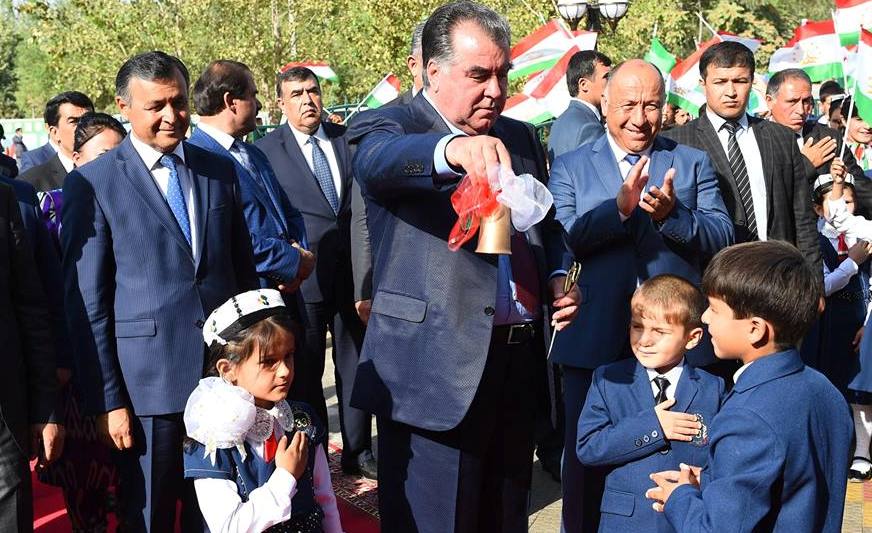
He noted that the new concept provided for three levels of full secondary education – primary education, basic secondary and profile secondary education.   Children will go to school after six years of age.  

Tajikistan has been making preparations for shifting to the 12-year education system during several years.  

Said noted that 300 Russian teachers would be invited to work with schools in Tajikistan.  “This issue was discussed recently here at a meeting with representatives of the Russian Ministry of Education and Science,” the minister said.  

He also noted that five Russian-language schools will be built in Tajikistan in the near future under support of Russia – they will be built in Kulob, Qurghon Teppa, Khujand, Dushanbe and Tursunzoda.  “Negotiations on this issue are under way,” the minister added.

The 12-year secondary education system is expected to give school students an opportunity to prepare themselves properly for entering higher educational institutions.

Introduction of the 12-year education system will also allow Tajikistan to join the Bologna Process (or Bologna Accords) and expand opportunities for Tajik students to get higher education in any of European countries.

Recall, Tajikistan was supposed to introduce the 12-year education system in 2016 but because of financial and economic crisis as well as insufficient number of schools in the country the Ministry of education and Science asked to postpone transition to the 12-year education system.  

Tajikistan’s lower house (Majlisi Namoyandagon) of parliament endorsed the bill requiring amendments to the country’s education legislation on April 28, 2010.  The amendments, in particular, provided for introducing the 12-year secondary education in Tajikistan in 2016.

The 12-year education model reportedly focuses on improving access to quality education, training of highly qualified personnel, enhancing the education management and many other measures aimed at modernizing Tajikistan's education system.

Join us on social media!

Article translations:

Related Article

Оби зулол
Оби зулол

Most Read

Recent Articles

The only GPW veteran in Dushanbe allocated more than 80,000 somoni

The mayor's office of Dushanbe allocated him 25,000 somoni.

GITEX AI Kazakhstan 2026: how Almaty became the main AI hub of Central Asia

More than 300 companies and startups, over 200 speakers and 100 investors from 50 countries — the region is entering the global stage.

A trade and economic park to be built at the border junction of Tajikistan, Kyrgyzstan, and Uzbekistan

President of the Kyrgyz Republic Sadyr Japarov familiarized himself with the project.

A project to protect soil from degradation to be developed in Central Asia

The initiative is of great significance for the mountainous countries of the region, including Tajikistan.

Mudslide, death, and destroyed homes: hundreds of families in Tajikistan left homeless

A correspondent from "Asia-Plus" visited Kulob and spoke with the families of those who died and were affected by the disaster.

Spring 2026 bright event: new issue of VIPzone now on sale

This issue is about people and ideas that change everything: from business and investments to fashion, food, and urban environment.

Godfrey Sullivan: “Tajikistan is a promising market for Visa to develop digital payments”

The Vice President of Visa explained why Tajikistan is becoming a promising market for digital payments and how artificial intelligence is influencing the future of finance.

Seven students in Dushanbe were threatened with expulsion for arriving at universities in personal cars

The materials for each case have been sent to the Ministry of Education and Science for appropriate actions.

India’s blockchain push and lessons for the global south

The Indian Government has started pushing aggressively its agenda...

India’s blockchain push and lessons for the global south

The Indian Government has started pushing aggressively its agenda...