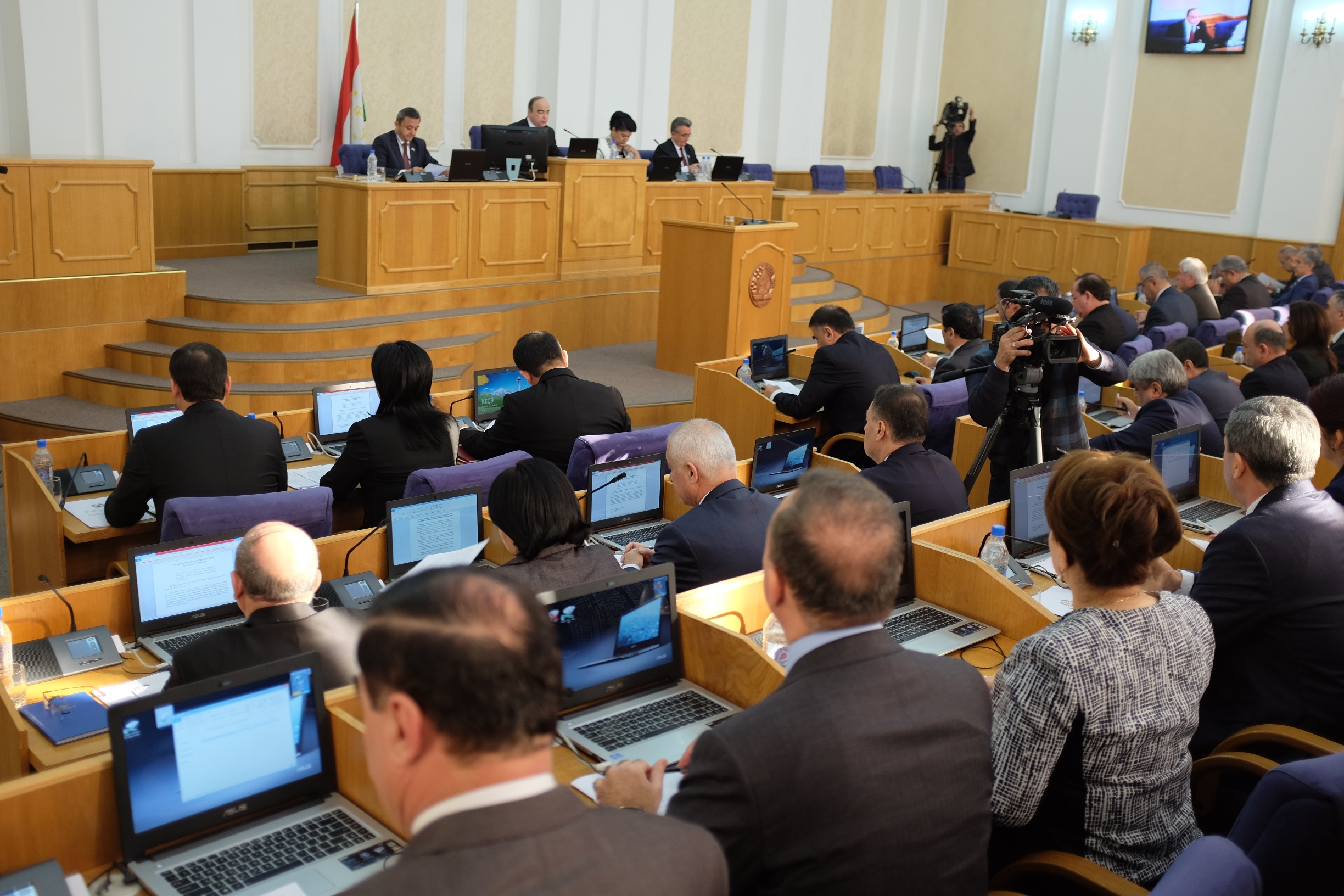
Deputies of the lower house of the Tajik parliament on August 23 unanimously supported the amendments proposed by the president to the law "On the regulation of traditions and rites". To explain the deputies of the amendment invited even representatives of the Islamic clergy
Offering deputies to support the proposed amendments, the head of the Center for Islamic Studies under the President of the Republic of Tajikistan Faizullo Barotzoda said that now the authorities have more work.
"Many rituals and traditions that regulate the law in many regions of Tajikistan are mistakenly considered a population as national or religious. Therefore, we have a great responsibility to explain to the population the correct interpretation of the law, "Barotzoda said.
Judging by the questions asked by the deputies, some of them did not understand the essence of the amendments adopted.
For example, the deputies asked whether it is possible to unite the circumcision ceremony with the wedding, whether the law prohibits preparing a dowry for the bride, whether it is possible to celebrate birthdays in a restaurant, whether it is possible to slaughter cattle for a circumcision ceremony.
Answering these questions, government officials said that the law prohibits the unification of the circumcision rite with the wedding. "Henceforth, the circumcision ceremony is a purely family celebration, which will be held in the family without the invitation of musicians, and the wedding is considered a social rite," the government representatives explained.
By the way, according to representatives of the government, the population can slaughter livestock for their needs at any time, in this they are not limited. Regarding the issue of preparing a dowry for the bride, the government representatives explained that in the near future on this issue amendments will be prepared to the Family Code of the Republic of Tajikistan. Amendments will determine the obligations of the parties of the bride and groom.
Deputy Abdurakhim Holikzoda also noted that "the people need to be made clear about the unnecessaryness of such large expenditures and wastefulness that Europe gave up in the 18th century, the United States in the 19th century, Japan in the 20th century.
Deputy Jabbor Ahmedov is confident that with the adoption of these amendments, the issue with the departure of Tajik citizens in labor migration will change for the better. "Many of our citizens go abroad to migrate precisely in order to earn and save money for the wedding," Ahmedov said.
He also appealed to the Antimonopoly Service of Tajikistan to "sort it out" with the artists. "Today, Tajik performers for one wedding take from 500 to 50 thousand dollars. The Antimonopoly Service must necessarily do this," Ahmedov said..
Speaking for the deputies, the head of the Ulema Council of the Islamic Center of Tajikistan, Saidmukkaram Abdukodirzoda, said that none of the points of the adopted amendments contradict the canons of Islam.