Bilateral relations between Tajikistan and Uzbekistan remain strained due to limited cooperation in the management of transboundary rivers. This is stated in a joint study conducted by the Regional Environmental Center for Central Asia and ADELPHI in the framework of the Swiss Blue Peace Initiative "Redefining the water issue in the Central Asian context: damage from inaction and the benefits of water cooperation".
It is noted that "this is especially noticeable in the positions of the countries on the proposed construction of the Rogun HPP".
"Despite the fact that after assuming the presidency of Mirziyoyev last year, the tension seems to have softened, but the parties to the discussions should take into account the fact of the reduction in the flow to Uzbekistan and subsequent questions from Uzbekistan," notes in the study.
Given the "political capital" already invested in negotiations on the Rogun project, the authors of the study believe that "it is in the interests of both parties to find an acceptable solution, and not insist on incompatible positions that will lead to losses for at least one, but more likely for both sides".
"However, to lead to significant costs, political tensions do not need to be aggravated to instability: a mere lack of cooperation already causes significant losses for the landlocked Tajikistan, not least due to significant losses from underutilized opportunities due to disagreements with neighboring countries, even more than because of other economic difficulties and security problems ".
Tajikistan, which was "destroyed by the civil war in the 1990s and whose political stability continues to be unstable," the study authors recommend establishing good relations with neighboring countries.
It should be noted that Uzbekistan categorically opposed the erection of the Rogun hydropower plant during the rule of Islam Karimov.
The authorities of the neighboring country claimed that with the construction of this hydroelectric power station, the flow of rivers would decrease, and warned of the danger of an ecological catastrophe if a hydroelectric power station.
With the arrival of the new president of Uzbekistan, Shavkat Mirziyoyev, the position of Tashkent towards Rogun has changed somewhat: the head of the Uzbek Foreign Ministry said this summer that Uzbekistan does not object to the construction of the Rogun hydroelectric power station, but when it is built, the national interests of Uzbekistan should be taken into account.
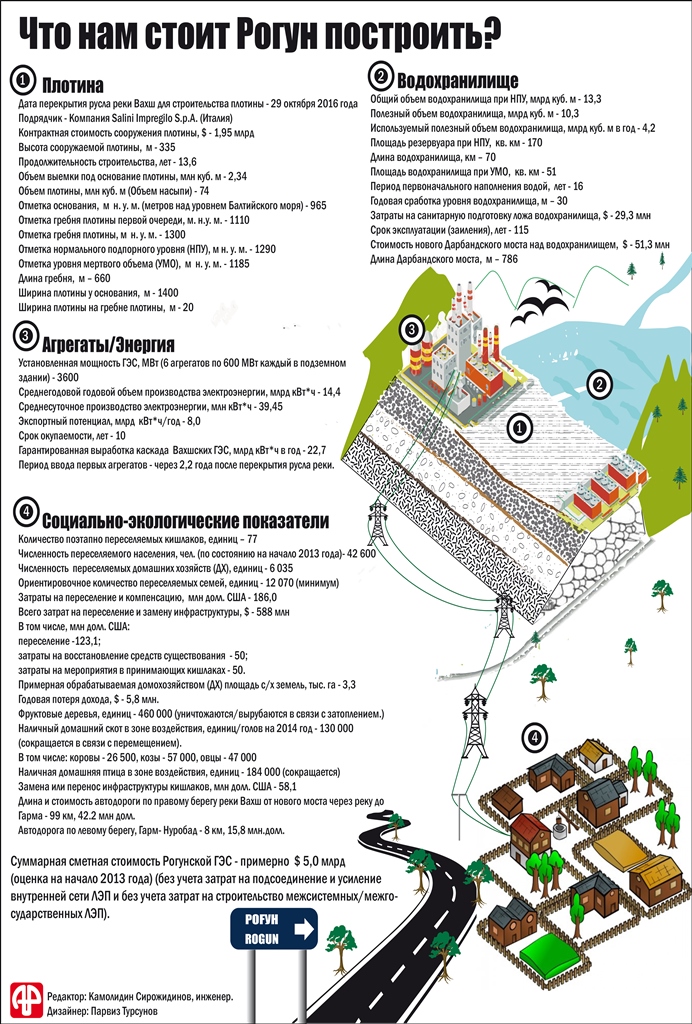
The completion of the Rogun HPP is currently being handled by the Italian company Salini Impregilo.
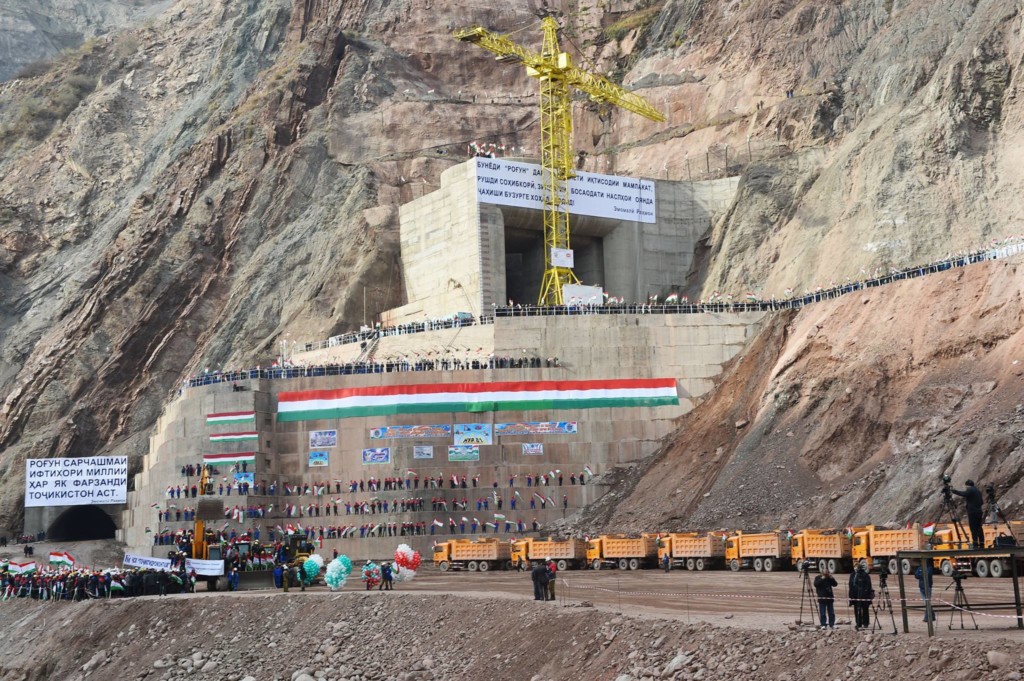
In October last year, it began work on the construction of a rock embankment dam, which height is 335 meters. The construction of this facility will be directed to $ 1.95 billion.
It is expected that the first turbine will be commissioned at the end of next year, and the second – in early 2019. Due to the sale of electricity generated by these two units, the further construction of the Rogun HPP.
The whole Rogun hydropower plant in figures and facts in our infographic.