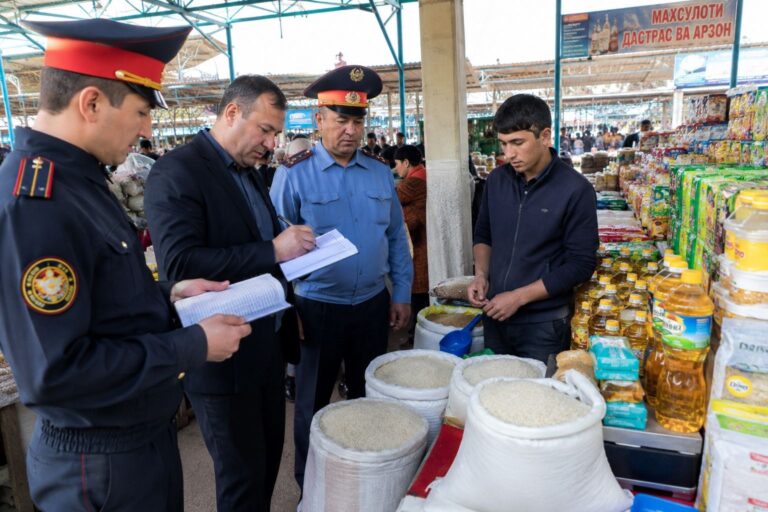
An article entitled “It Takes Two To Tango: Tajiks Eye Targeting 'Men Of Loose Morals' In Tackling Prostitution” that was posted on Radio Liberty’s website yesterday notes that Tajik prosecutors want to add the term “men of loose morals” to the country's laws to combat prostitution.
Prostitution is illegal and considered a misdemeanor in Tajikistan, but under current legislation, only women are liable for committing the offense.
Now the Prosecutor-General's Office has called on parliament to amend the law to introduce punishments for men engaged in prostitution.
The agency is drafting a bill for submission to parliament in early 2018, says Farrukh Raufov, a high-ranking official at the Prosecutor-General's Office.
The agency wants punishments for men to be “harsher” than for the women, Raufov said.
Tajikistan's Code of Administrative Offenses reportedly stipulates about a $110 fine for prostitution. Repeat offenders can face fines of up to around $120 as well as up to 15 days in detention.
However, the wording of the law is sufficiently vague and it can be argued that it applies only to female sex workers.
Prosecutors argue that in practice the wording has led to the law to be used only against women, while men have largely escaped punishment when caught by police.
The prosecutors are now proposing to add the phrase of "men of loose morals" to the Administrative Code to target men involved in prostitution either as clients or sex workers.
Punitive measures for such males would be twice as harsh as those for women, if the bill becomes law.
They would face up to a $220 fine, while repeat offenders could receive fines of up to $440 and up to 30 days in detention.
The bill is expected to apply to male sex workers, including among members of LGBT communities that already face official discrimination.
There are no official statistics on the exact number of female sex workers in Tajikistan.
In January, Interior Minister Ramazon Rahimzoda said police raids had uncovered some 280 brothels across the country and registered 1,991 female prostitutes; a majority of them aged 18-30.
Earlier statistics provided by the state Women's Affairs Committee in 2013 stood at 1,641.
Many female sex workers say widespread poverty and unemployment have forced them to prostitution.
Among other measures to tackle prostitution among women, Tajik authorities have introduced so-called morality classes for sex workers to attend lectures by police officers, doctors, and community leaders.
At such sessions, police and doctors explain legal liabilities and the risks of sexually transmitted diseases, while community leaders give advice on alternative career training options.
The morality classes were first launched in southern city of Qurghon Teppa in 2016.