Tajikistan increases gold and silver production

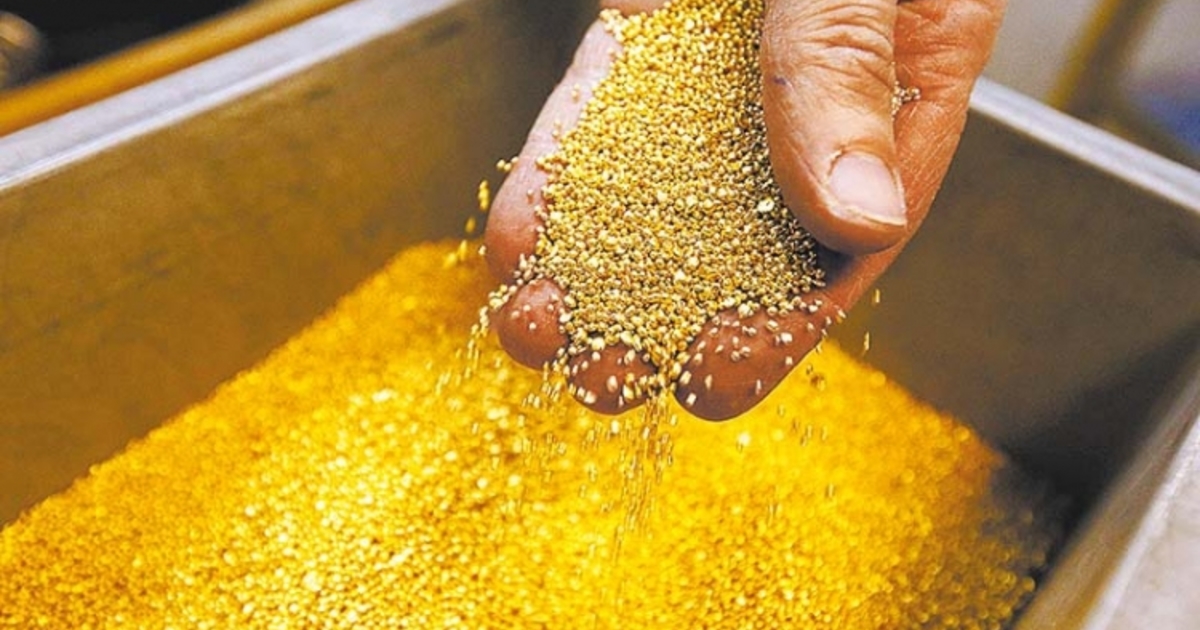
Tajikistan is continuing to increase production of precious metals (gold  and silver) this year. According to the Ministry of Industry and New Technologies (MoINT), gold production has increased over the first ten months by 16.4 percent and silver production over the same ten-months period has increased by 89.7 percent compared to the same period last […]

Asia-Plus

Tajikistan is continuing to increase production of precious metals (gold  and silver) this year.

According to the Ministry of Industry and New Technologies (MoINT), gold production has increased over the first ten months by 16.4 percent and silver production over the same ten-months period has increased by 89.7 percent compared to the same period last year.  

Tajikistan last year produced 5 tons of gold, which was 500 kilograms more compared to 2015.

The Tajik-Chinese joint venture (JV), Zarafshon, produced 3,300 kilograms of gold last year, state-run enterprise Tilloi Tojik – 570 kilograms, Tajik-Canadian JV Aprelevka – 590 kilograms, and the remaining amount of gold was produced last year by a number of local small gold mining enterprises.

Meanwhile, China Nonferrous Gold Limited, the first foreign company to obtain 100% ownership of a mining and exploration project in Tajikistan, which is currently mining the Pakrut Gold Project in Tajikistan, is expected to produce 500 kilograms of gold this year.

As far as production of silver is concerned, Tajikistan last year produced 3,200 kilograms of silver, which was 200 kilograms more compared to 2015.  98 percent of Tajikistan silver is reportedly exported to the European countries.

Tajikistan has 137 deposits with estimated reserves of industrial gold and 127 deposits of non-industrial gold.  Tajikistan plans to increase annual production of gold to 17 tons beginning on 2022.

Four large gold mining companies now operate in Tajikistan: Tilloi Tojik; Tajik-Chinese JV Zarafshon; Tajik-Canadian JV Aprelevka; and China Nonferrous Gold Limited, which is the first foreign company to obtain 100% ownership of a mining and exploration project in Tajikistan.  Besides, enterprises such as Odina, Nazira, Ganj, Barakat and Istiqlol are engaged in gold production in the country.

Most of gold comes from the Jilau deposit operated by Tajik-Chinese joint venture, Zarafshon, which reportedly accounts for more than 70 percent of the total amount of gold produced in Tajikistan. 
 

Join us on social media!

Article translations:

Related Article

Оби зулол
Оби зулол

Most Read

Recent Articles

India’s blockchain push and lessons for the global south

The Indian Government has started pushing aggressively its agenda of embracing blockchain technology, and the same has received a new lease of life with...

India’s blockchain push and lessons for the global south

The Indian Government has started pushing aggressively its agenda...

25 Years in Touch: On Generation Change, “Digital” and “Invisible” Work

In its 25th anniversary year, "MegaFon Tajikistan" summarizes its...

The number of entrepreneurs in Tajikistan increases by 4.3%

The number of entrepreneurs operating under a patent is increasing the fastest.

Trump announces “very good” talks with Iran and the possibility of a quick agreement. Tehran did not comment on this

The President of the United States claims that Tehran has agreed to the US demand to abandon the development of nuclear weapons.

Police report the discovery of the remains of a man who had been missing since December 2025

A friend of the murdered person has been detained on suspicion of particularly brutal murder.

Residents of a settlement in Sughd: “Afghan refugees have disappeared from the Dehmoy jamoat”

Earlier, a citizen of Afghanistan was detained on charges of murdering a resident of Khujand.

In Russia, it was proposed to revoke residence permits and temporary residence permits from migrants who do not work for more than two months

During January-March 2026, 90% more residence permits were revoked from migrants in the country compared to the same period last year.

From reach to influence: why advertising no longer works by old rules discussed in Dushanbe

Market research forces a complete reconsideration of the advertising budget allocation strategy.