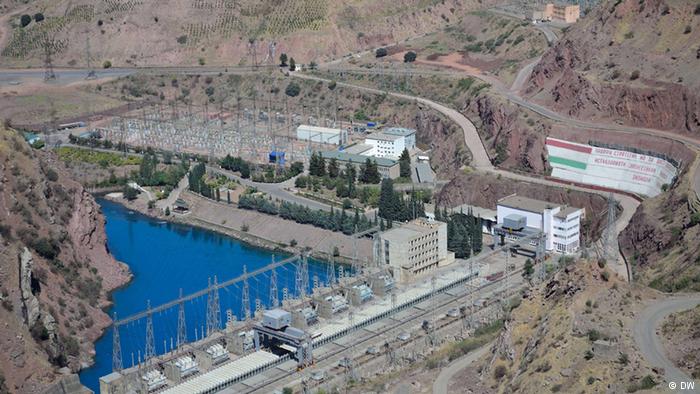
The Majlisi Namoyandagon (Tajikistan’s lower chamber of parliament) today endorsed the law on ratification of an agreement on financing the Nurek HPP Rehabilitation Project – Phase 1.
Presenting the bill to lawmakers, the Minister of Energy and Water Resources Usmonali Usmonzoda noted that the agreement between the Government and World Bank's International Development Association (IDA) was signed in June 2017.
The World Bank approved US$225.7 million in financing from the International Development Association (IDA) for the Nurek Rehabilitation Project in May this year. The World Bank financing, one-quarter in grants and three-quarters in credits, will refurbish the Nurek hydroelectric power plant (HPP).
The first phase of the Nurek Hydropower Plant (HPP) rehabilitation costs an estimated US$350 million. In addition to the World Bank’s IDA support, additional financing will be provided by the Asian Infrastructure Investment Bank (US$60 million), the Eurasian Development Bank (US$40 million), and other sources (US$24 million).
With these funds, the Tajik authorities will rehabilitate three generating units and replace six auto-transformers used to regulate voltage of the generated electricity (US$310 million); enhance dam safety, including a special focus on the protection against seismic hazards and floods (US$30 million); and strengthen the institutional capacity of open joint stock holding company Barqi Tojik and improve its operational and financial performance (US$10 million).
The Nurek HPP, with an installed capacity in excess of 3,000 megawatts, is the key asset of Tajikistan’s energy system. Its rehabilitation is central to the Government’s efforts to provide reliable electricity supply, especially during the winter months. The power plant, which generates about 70 percent of total annual energy demand, suffers from dilapidated equipment and infrastructure. The facility has not gone through major rehabilitation since it was commissioned in 1972, it is currently only 77 percent operational. The proposed rehabilitation investments will increase winter generation by 33 million kWh, helping to address a key bottleneck.
The project is being implemented by Barqi Tojik, with the first phase being implemented during 2017–23. The Government of Tajikistan will start preparations for the project’s second phase in 2019.