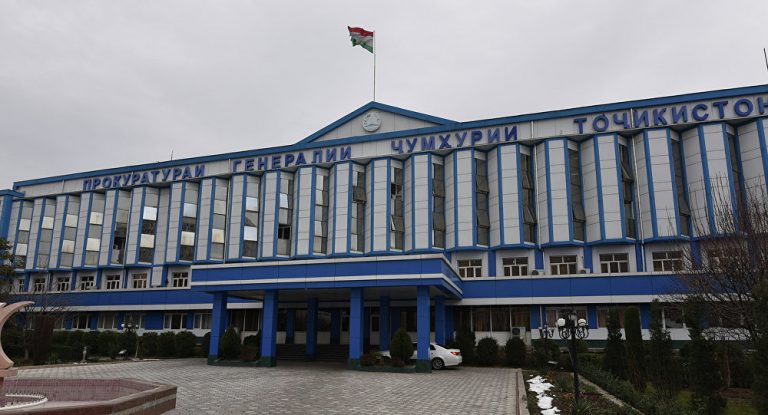
The Prosecutor-General’s Office of Tajikistan has launched an investigation into the legitimacy of suspending access to NGN accounts.
All telecommunications companies in Tajikistan providing access to the next-generation network (NGN) accounts have received letters from the Prosecutor-General’s Office with solicitation to give detailed information on that issue.
The Prosecutor-General’s Office wants to know how the companies provide access to the NGN accounts and on the basis of what decision they suspended access to the NGN accounts.
Recall, the Communications Services Agency on December 18 ordered all telecommunications companies operating in the country, namely Tojiktelecom, TT Mobile, Indigo Tajikistan, Babilon M, Babilon T, Eastera, Intercom, Telecom Technology and Komintel, to suspend access to NGN accounts.
Representative of one of telecommunications companies told Asia-Plus that representatives of the Prosecutor-General’s Office recommended them resume providing access to NGN accounts changing their names. For example, Babilon has already announced the launch of new messenger MobiGap. The company had previously offered IP-telephony service under the name of NGN.
The Communications Service under the Government of Tajikistan insists the move against the next-generation network is strictly about security.
Meanwhile, sources inside the state agency responsible for regulating the telephone and Internet sector say that the government’s real motive is to ramp up revenues.
The popular technology known as the next-generation network, or NGN, has for several years enabled phone users to avoid racking up huge bills. People in Tajikistan can open an account with one of several telecommunications service providers and then pass on the log-in details to relatives and friends abroad. The foreign-based caller installs an app on their phone and whenever they are connected to the Internet, they can make their call.
The particular attractiveness of this method is that only one side in the transaction needs be connected to a reliable Internet network.
The ability to save money on long-distance calls is particularly important in Tajikistan, where hundreds of thousands of people travel abroad every year for work.
Trends in the industry would appear to illustrate why the government is eager to quash a cost-saving form of technology. EurasiaNet.org notes that Tajik mobile phone subscribers in 2016 made 150-million-minutes worth of international calls every month. That represents a big drop. According to official data, over the past four years, the volume of international calls has reportedly fallen by 70 percent.
Fewer long-distance calls mean lower revenues for the communications agency.
“International voice calls are already yesterday’s news because after the appearance of NGN, [and messaging apps like] Viber, WhatsApp and so on, the volume of international calls has fallen sharply,” one manager at a telecommunications company told EurasiaNet.org. “Rather than call Russia at 1.2 somoni [a minute], it is easier for customers to have megabytes and to talk to their relatives for free. If we used to make our money through voice calls, now we are concentrating more on the Internet, and that is a global trend.”