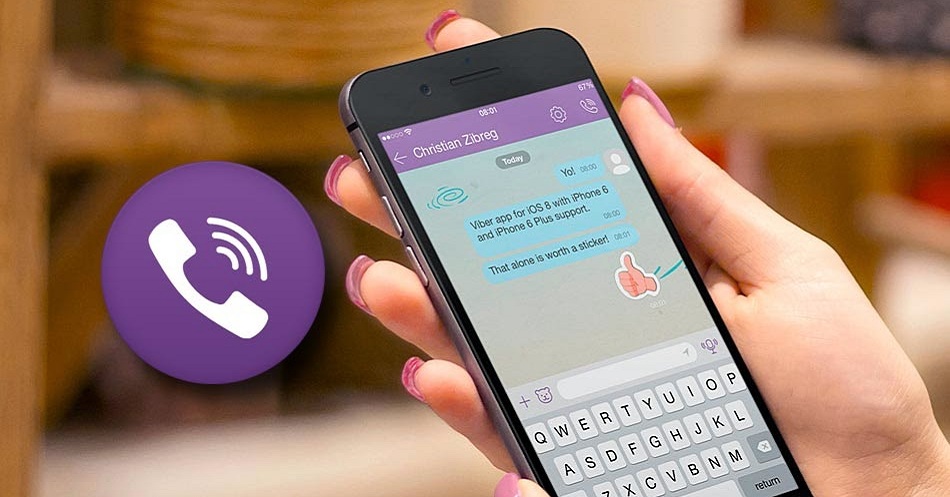
Access to messaging app Viber has been restored in Tajikistan. The communications service agency claimed “technical problems” were behind temporary suspension of access to the most popular messaging app in Tajikistan.
“All technical problems have been removed that users of the messaging app Viber in Tajikistan are now able both to use the program for voice calls and send text messages,” an official source at the communications service agency told Asia-Plus in an interview.
Recall, users of the messaging app Viber in Tajikistan reported last week that they are no longer able to use the program for voice calls. They could send only text messages with Viber.
Sources at a number of local telecommunications companies noted that access to messaging app Viber has been restricted by national operator Tojiktelecom.
A source at one of local mobile phone company said that as of the beginning of this year, all Internet traffic is required to pass through the infrastructure owned by the state-run Tojiktelecom. “We had no choice,” the source added.
This all dates back to a 2016 government decree requiring all internet data to be filtered through a largely hypothetical system known as the Unified Electronic Communications Switching Center, which is known by its Russian abbreviation EKTs.
The Tajik authorities established the Unified Electronic Communications Switching Center last year and required that all Internet and mobile communications traffic be run through the single state-owned telecoms provider, Tojiktelecom. The Center centralizes all telephone and Internet communications with the aim of facilitating surveillance on the grounds of combatting terrorism and extremism. It allows the government to have complete control over domestic communications without any safeguards.
The idea of creating a government-administered information gateway has been circulating since 2005. The stated aim of the recurring initiative has been to prevent “illegal” communications that could undermine national security.
As it had reported earlier, the Communications Service under the Government of Tajikistan on December 18 ordered all telecommunications companies operating in the country, namely Tojiktelecom, TT Mobile, Indigo Tajikistan, Babilon M, Babilon T, Eastera, Intercom, Telecom Technology and Komintel, to suspend access to NGN accounts.
The communications service agency insisted the move against the next-generation network is strictly about security.
Meanwhile, sources inside the communications service agency, however, said that the government’s real motive was to ramp up revenues.
The Prosecutor-General’s Office is reportedly investigating legality of suspending access to NGN accounts.
All telecommunications companies in Tajikistan providing access to the next-generation network (NGN) accounts last week received letters from the Prosecutor-General’s Office with solicitation to give detailed information on that issue.
The Prosecutor-General’s Office wants to know how the companies provide access to the NGN accounts and on the basis of what decision they suspended access to the NGN accounts.