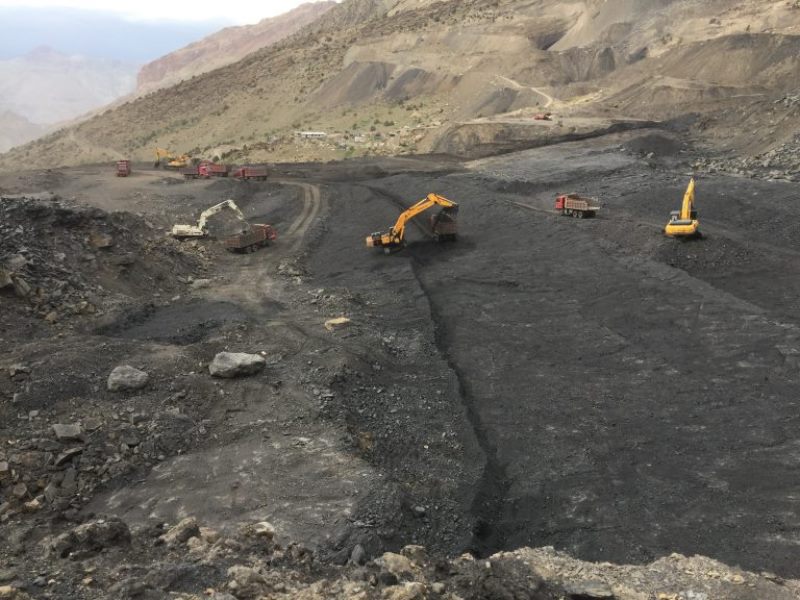
Over the first four months of this year, Tajikistan has produced 268,000 tons of coal, which is 28,000 tons more than in the same period last year or 15 percent of the country’s annual requirements in coal, according to the Ministry of Industry and New Technologies (MoINT).
“Over the report period, only five of eighteen coal-mining enterprises have been in operation,” a source at a MoINT told Asia-Plus in an interview.
According to him, Tajikistan’s annual requirements in coal are estimated at 2 million tons. “Preliminary requirements of industrial enterprises in coal this year are estimated at 920,000 tons, federally funded institutions – 57,200 tons, Dushanbe-2 combined heat and power plant and Dushanbe-based boiler houses – 1.245 million tons,” the source said.
Last year, Tajik coal-mining enterprises produced more than 1.7 million tons of coal last year, which is more than 300,000 tons more than in 2016. It is the largest amount of coal ever produced in Tajikistan.
Over the report period, Fon-Yagnob, TALCO-Resource LTD, Industrial Enterprise Ziddi and Open Joint-Stock Company (OJSC) Angisht produced totaling 1.5 million tons of coal and the remaining 200,000 tons were produced by twelve other coal-mining enterprises.
Since 2007, more than 160 industrial enterprises in Tajikistan have been shifted to coal and 230 coal-fired enterprises now operate in the country.
Exploration and development of coal fields has been intensified in Tajikistan since 2012 when Uzbekistan stopped gas shipments to Tajikistan.
Coal deposits of Tajikistan are reportedly concentrated in two coal basins: Tajik (Gissar-Darvaz) and Fergana. The first of them covers the absolute majority of deposits and occurrences concentrated in central and southern Tajikistan. Deposits and occurrences of northern Tajikistan belong to the South Fergana coal basin.
The coal deposits of the Tajik coal basin in the vast majority of cases are exposed in the mountain ranges of the Tien Shan and Pamir-Alay, framing the Afghan-Tajik basin.
The industrial potential of the Tajik coal basin is significant. According to experts from the Eurasian Development Bank (EDB), Tajikistan’s possible coal reserves are estimated at least 4.3 billion tons.
On the territory of Tajikistan there are four regions of development of carbonaceous deposits, each one has a number of characteristic features according to geological zoning: 1) Zarafshan-Hissar; 2) South-Hissar; 3) the Pamir Darvaz; and 4) south-Fergana
The biggest region, largest in acreage coal-bearing area that has the maximum number of coal veins, is Zarafshan-Hissar. The coal-bearing strata extends in almost uninterrupted strip from Panjakent to the river head of the Zarafshan River.
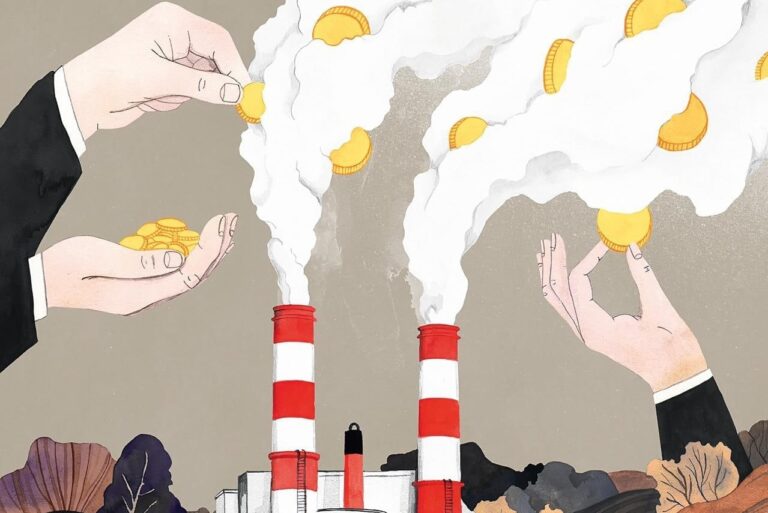
Meanwhile, Tajik ecologists express concern about increase in production of cola in the country.
The Government of Tajikistan intends to expand coal production in the country by 2020 and invest considerable funds in the infrastructure associated with this type of fossil fuel. Local environmental organizations opposed such plans and pointed out that this is fundamentally contrary to the international commitments undertaken by the country under the Paris Agreement.
“Tajikistan is one of the most vulnerable countries in the Eastern Europe, Caucasus and Central Asia region and is already experiencing significant negative effects of climate change. It is in the country's interest not only to insist on tougher goals to reduce global emissions of greenhouse gases, but also to do everything possible to combat climate change at the national level. The large-scale development of the coal industry contradicts the principles of the existing national climate policy and international efforts to reduce the use of fossil fuels,” – the Tajik NGO network on climate change said in a statement released on August 10 last year.