TJS/USD exchange rate has fallen by 6.5 percent this year so far

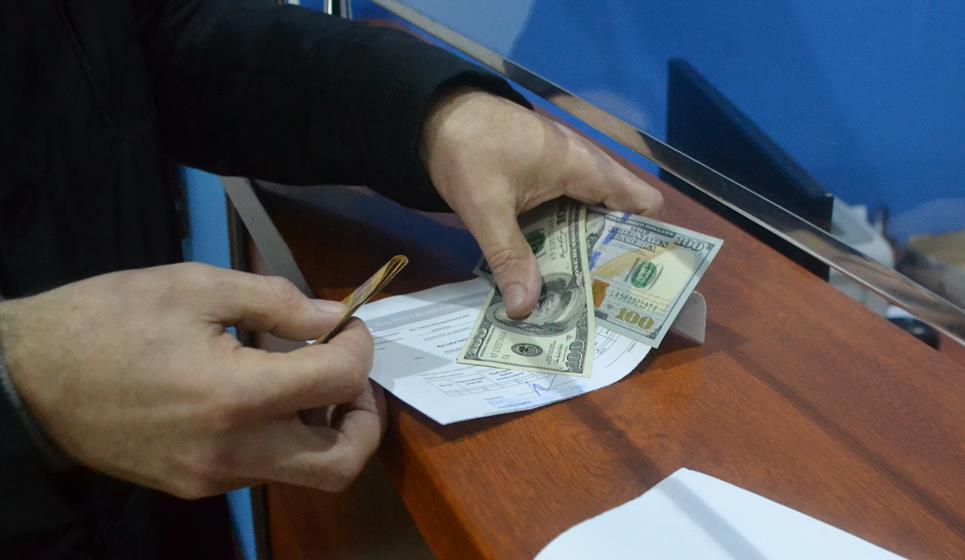
Since the beginning of the year, an official exchange rate of the somoni (TJS) against the U.S. dollar (USD) has fallen by 6.5 percent. An official TJS/USD rate set by the National Bank of Tajikistan (NBT) has fallen by 3.8 percent over the first six months of this year. The TJS/USD exchange rate reportedly fell […]

Asia-Plus

Since the beginning of the year, an official exchange rate of the somoni (TJS) against the U.S. dollar (USD) has fallen by 6.5 percent.

An official TJS/USD rate set by the National Bank of Tajikistan (NBT) has fallen by 3.8 percent over the first six months of this year. The TJS/USD exchange rate reportedly fell by 0.9 percent in April, 1.3 percent in May, and 1.6 percent in June.   

Besides, the somoni fell by 2.7 percent against the U.S dollar in the second half of July,  Thus, the Somoni-to-Dollar rate has fallen 6.5 percent since the beginning of the year.

Tajik central bank analysts attribute the devaluation of the somoni to the devaluation of the Russian ruble against the U.S. dollar, negative balance of the country’s external trade turnover (more than 1 billion USD), increase in production and commercial activities, increase in currency expenditures of the budget for construction of strategic facilities, and influence of seasonal factors.       

The National Bank now reportedly adheres to the forex policy based on “the floating regulated exchange rate without determination of limits of change in exchange rate.”

Representatives of Tajik central bank say that the current situation in the country’s forex market is more stable compared to the previous years.     

Tajikistan has mainly resorted to “administrative resources” to keep the currency on an even keel.

In December 2015, the National Bank ordered the closure of all unauthorized currency exchange points in the city.  After that, only banks were able to perform foreign exchange operations. Anybody found violating this new arrangement could face jail terms of up to nine years.  Also, banks are forbidden by law from selling somoni at more than 1.5 percent the rate established by the National Bank.

Even the Finance Ministry has long freely admitted the somoni is set for gradual devaluation, which explains why people are so eager to get rid of their stocks.  According to the ministry’s forecasts, the somoni is projected to slide to 10.4 somoni in 2018 and to 11.2 somoni in 2019.  

 

Article translations:

Related Articles

Оби зулол

Most Read

Join us on social media!

Recent Articles

Emomali Rahmon accepted the credentials from new ambassadors

Nine countries have sent new diplomats to Tajikistan.

Russia evacuated 27 Tajikistan citizens from Iran

They worked at the Bushehr nuclear power plant, built by the Russian Federation in Iran.

Baku to host WUF13: shaping the future of sustainable urbanization

Baku, the capital of Azerbaijan, is set to host...

How the Energy Industry Began in Tajikistan 100 Years Ago

We have prepared a historical photo series for you.

Tajikistan and Belarus to establish a joint laboratory for radiation monitoring and nuclear safety

An agreement was signed by the Tajikistan Agency for Nuclear and Radiation Safety and the Belarusian National Technical University.

Former Press Secretary of Emomali Rahmon Sent a Letter to the President Requesting Support for Media Workers

Zafar Sayidzoda believes it is necessary to establish a Media Support Fund, which should operate in the interests of all media — both state and private.

Neither War nor Peace: What Will Be the Next Step for Iran and the US After the Failure of Negotiations?

Tajik experts say that Iran has another leverage that could pose a serious threat to the Trump administration.

In Dushanbe, a criminal group issuing SIM cards and bank cards to fictitious persons was exposed

Through illegally issued plastic cards, the suspects were withdrawing money from an online casino game.

The eKhonish program, an analogue of eDonish, launched in Bokhtar

Now parents and education representatives will be able to remotely monitor students' attendance and academic performance.

#AP30/Experts. Rashid Ghani Abdullo: “Asia-Plus” has become a brand of Tajikistan

A well-known Tajik political scientist expressed his opinion on the role of our media in the informational space of the country and the region.