The U.S. Department of State has new advisories at Travel.state.gov that rank every country on a scale of one to four to help travelers make informed decisions about their personal safety. The agency introduced the rankings in January this year to replace its longstanding system of warnings and alerts.
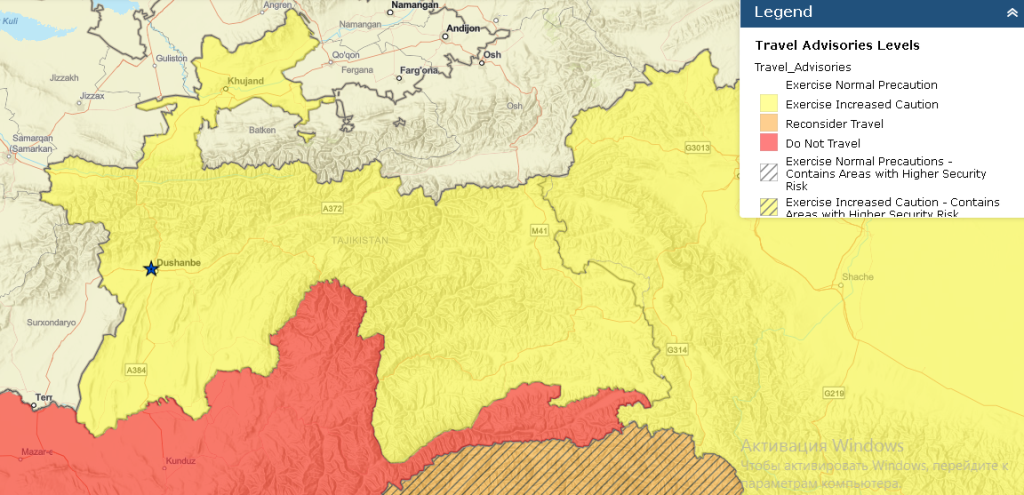
Under the new ranking system, the lower the number, the lower the risk, with Level 1 being “exercise normal precautions,” Level 2 being “exercise increased caution,” Level 3 being “reconsider travel” because of serious risks to safety and security, and Level 4 being “do not travel” because of the greater likelihood of life-threatening risks and the United States government’s limited ability to provide help.
The U.S. Department of State currently gives Tajikistan a Level 2 – “exercise increased caution.”
The State Department notes that two U.S. citizens were killed in a terrorist attack in Danghara district of Tajikistan’s Khatlon province on July 29, 2018.
“Terrorists have targeted bicyclists and may target other places, such as residential areas, clubs and restaurants, places of worship, hotels, schools, outdoor recreation events, and other venues, although Government of Tajikistan facilities remain the most likely target. Facilities catering to westerners in Tajikistan present a heightened risk. Avoid large crowds and public transportation to the extent possible. Tourists should avoid activities that develop predictable patterns of movement. If documenting your travel on social media, please ensure your privacy settings are appropriately set.”
The State Department recommends that U.S. citizens deciding to travel to Tajikistan should: monitor local media for breaking events and adjust your plans based on new information; avoid demonstrations and protests; be aware of their surroundings; stay alert in locations frequented by Westerners; enroll in the Smart Traveler Enrollment Program (STEP) to receive security messages and make it easier to locate them in an emergency; follow the Department of State on Facebook and Twitter; and review the crime and safety report for Tajikistan.
Recall, the US Department of State in January this year placed Tajikistan on a level 1 warning, meaning US travelers should exercise normal precautions while traveling to Tajikistan.