In Tajikistan, three years ago, the Concept of Providing Free Legal Aid was adopted, one of the points of which is the creation of permanent state legal bureaus in all regions of the country. They are created and work.
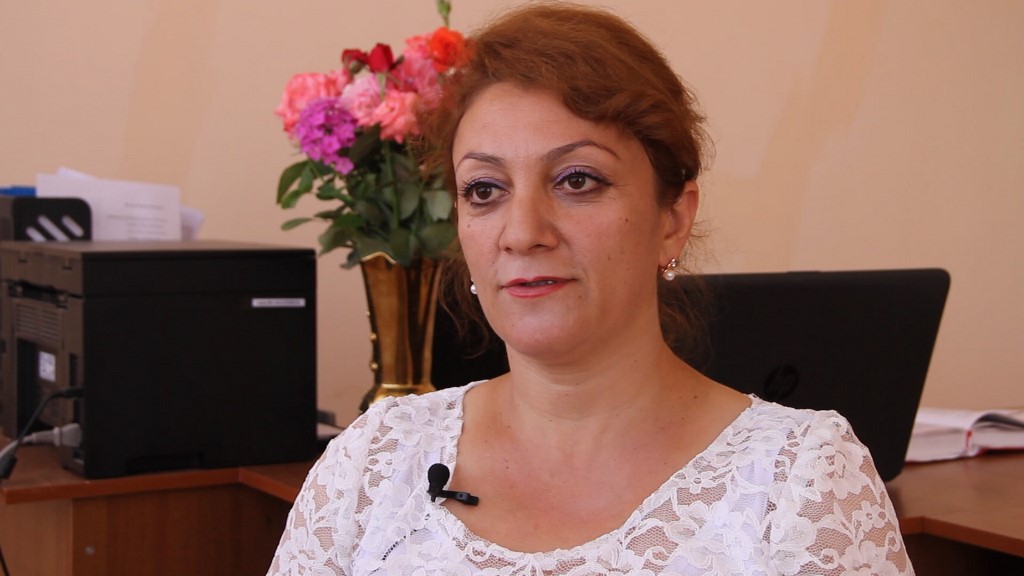
We went to Penjikent to talk with a local celebrity – a free lawyer known to the whole region Dilfuza Isoeva.
Dilfuza Isoeva, a free lawyer in Penjikent; here she is almost that local celebrity. If you ask any passer-by, does he know who Dilfuza Isoeva is and where to find her, then anyone will answer that this is a free lawyer and will also tell a couple of stories about how she helps people.
Dilfuza accepts residents in the state legal office in the Penjikent district – this is one of the first offices of free legal assistance that was opened in remote areas of Tajikistan.
– Various people come to me-teachers, entrepreneurs, farmers, but most often these are ordinary farmers-poor people, who do not have the means to pay lawyers, they do not have the means to exist.
Dilfuza explains that often it comes with old problems that arose in the distant past, but since people did not have information about how to solve them and the means to help someone sort them out, the questions were not solved for decades.
Another serious category of visitors is rural women, especially those who are left without a husbands. Such women in the province of Tajikistan, faced with legal problems, are often completely helpless.
– For example, there was a woman in marriage, but in a religious; there is no stamp in the passport. The husband was killed in an accident, she was left alone with children, without work, without means of subsistence, – Dilfuza says.
– Appealed to me for help, but it turned out that children do not even have a birth certificate, and therefore she can not receive financial assistance from the state.
Together with her client Dilfuza went to the registry office, received an extract, went to court to establish the fact of paternity and draw up the relevant documents.
– Now all her children have birth certificates, each has a father's last name, and they all receive the material aid from the state, – Dilfuza says.
According to Dilfuza Isoeva, 80% of the population in the Penjikent district do not really know their basic rights and turn to lawyers in the most extreme cases.
Therefore, she began to conduct field consultations in the villages, where told about their rights to ordinary people, about the opportunities that these rights give and answers all their questions. And recently in the Penjikent district a special program was launched on a local radio station on the same topics.
– To increase the legal knowledge of citizens is one of our main tasks, – Dilfuza says.
The State Legal Bureau has been working in the Penjikent region for 2.5 years, for which time around 800 people have applied. Lawyer – Dilfuza Isoeva deals with almost all the same cases as private specialists. Just totally free.