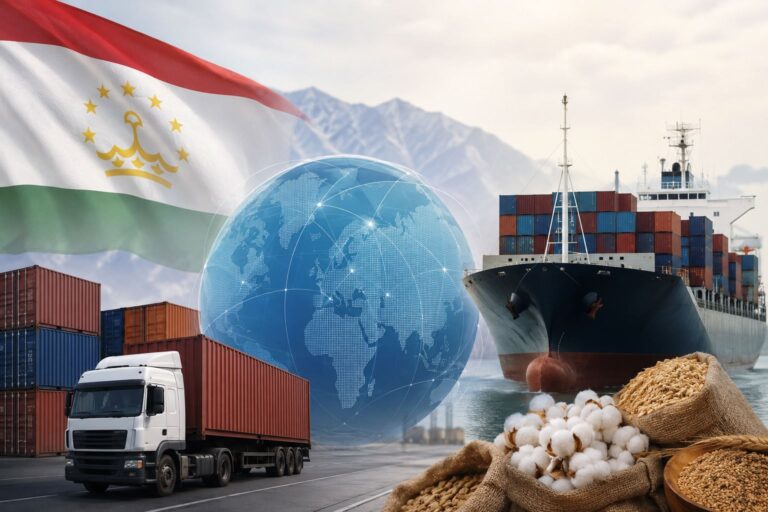
International connectivity through trade, investment, migration, communications, and transport is reportedly critical to economic development in the Europe and Central Asia (ECA) region.
These connections work together to help firms become more productive through knowledge and technology transfers, says a new World Bank report, Critical Connections: Promoting Economic Growth and Resilience in Europe and Central Asia.
The report analyzes the impact of different types of connectivity on growth to help policy makers maximize the economic benefits of these connections across the ECA region.
The report shows that greater economic connectivity leads to the spread of knowledge and higher income growth for societies, but even more so for the bottom 40 percent of the income distribution.
The new World Bank report measures connectivity by creating a new indicator, the Multidimensional Connectivity (MDC) index, which combines several channels of international connections, including: trade, FDI, migration, information and communication technology (ICT), and transport links.
According to the report, the best connected sub-regions of Europe and Central Asia are Western Europe followed by Northern, Central, and Southern Europe. The Western Balkans, Central Asia, and the South Caucasus have the lowest levels of overall connectivity.
The report also shows that the benefits of these connections build on each other, highlighting the gains offered to countries through knowledge transfers implicit in regional supply chains and the consequent knowledge from hands-on learning by doing that is not easily transmitted by books or blueprints.
In Europe, many policies have supported the various forms of connectivity that led to the development of strong supply chains and opened doors for greater productivity and growth. In Central Asia, while connectivity remains modest, investments and policies to improve trade, infrastructure, and integration are leading to increased connections across the region and beyond.
The MDC index suggests that connectivity contributes to nearly half a percent of annual real GDP growth across Europe and Central Asia, with the bottom forty percent of income earners seeing a boost of around 1 percent.
The World Bank senior experts note that increased international integration facilitates the transfer of technology and ideas between countries, firms, and people.
The report finds that increased connectivity also exposes countries in the region to the risk of economic shocks. However, by providing alternative sources of external demand and financing, diversified connections can reduce those risks and help countries manage both domestic and external shocks.
The report emphasizes that many countries in the region have built greater connectivity, advancing economic development over the last twenty-five years. However, the economic benefits of connectivity through knowledge and technology transfers are not always obvious, while the challenges of economic uncertainty usually are.
By recognizing the challenges, as well as making explicit the potential opportunities of greater connectivity through various channels, the Critical Connections report can assist policy makers in building the foundations for deepening important connections in the coming decades.