The main suspect in the deadly attack on foreign cyclists in the Danghara district has got a life term.
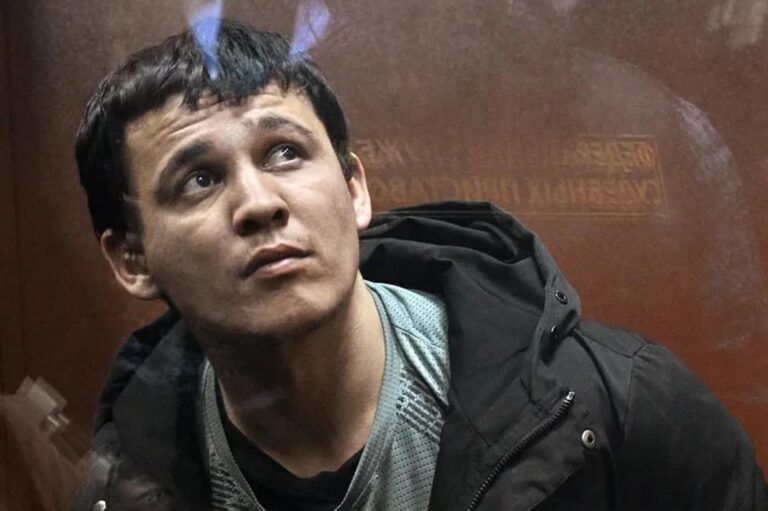
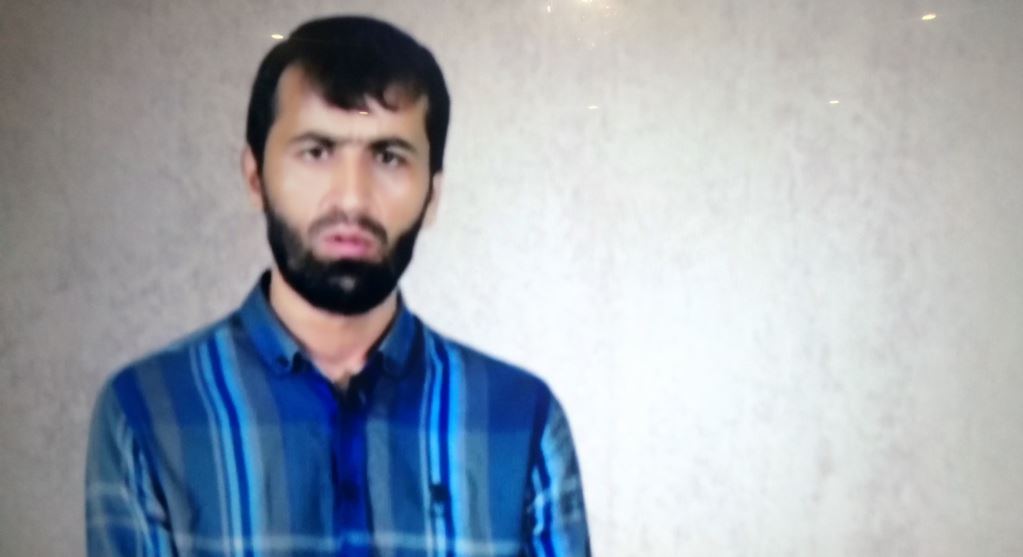
The Supreme Court sentenced the suspected ringleader, Hussein Abdusamadov, to life in prison on November 21, according to Radio Liberty’s Tajik Service.
The sentence reportedly followed his conviction on charges of overkill (cruel murder), terrorism, extremism, deliberate destruction or damage of property, and involvement of citizens in foreign conflicts.
Fifteen people were in the dock on a variety of charges, ranging from terrorism to failure to report crime.
Karomatullo Ghaniyev and Behrouz Safoyev, who were accused of abetting the attack, were sentenced to 16 years in prison each.
Twelve other people were sentenced to between one and 1½ years for failure to report crime (Article 347 of Tajikistan’s Penal Code).
Recall, Abdusamadov pleaded guilty to all charges but said he regretted nothing in his role organizing the attack.
Eurasianet says that according to its sources present in the courtroom, Abdusamadov spoke highly about his mentors, whom he named only as Qori Nosir from Tajikistan and Nuhas, from the Russian Republic of Dagestan. He told the court he had received instructions to kill foreign nationals.
In the brutal attack that took place in the Danghara district on July 29, a car rammed into the group of cyclists before multiple attackers emerged from the vehicle and stabbed survivors, killing four people — Austin Jay and Lauren Geoghegan from the United States, Dutchman René Wokke and Hamel Markus from Switzerland. Three other foreigners were injured in the attack before the assailants sped off.
Of the five men named as attackers, only one – Hussein Abdusamadov — is still alive. He was reportedly arrested early on July 30. Officials said the other four, including brothers Jaffariddin Yusupov, 26, and Asliddin Yusupov, 21, as well as Asomiddin Majidov, 19, and Zafarjon Safarov, 19, were killed when police tried to apprehend them.
Asliddin and Jaffariddin were residents of Nurek. Their mother, Nabotbegim Yusupova, says her sons were well-bred and studied not bad at school. According to her, they were not very religious and “somebody deceived them and led astray.”
Meanwhile, Radio Liberty’s Tajik Service says two others of the four dead suspects, Asomiddin Majidov and Zafarjon Safarov, were relatives of Hussein Abdusamadov. They were reportedly from the village of Selga in Khatlon province. Both traveled to Russia in late February after failing university entrance exams in 2017. According to Tajik authorities, they had returned to Tajikistan two days before the attack on the cyclists.
According to RFE/RL Tajiks Service, Hussein Abdusamadov spent his early childhood in the village of Selga, in Khatlon province, near Tajikistan’s border with Afghanistan. His father died in 1988 when he was 3 years old.
By the early 1990s, as the newly independent Tajikistan descended into civil war, he and his mother and two brothers had resettled in Dushanbe.
From the age of 10, Abdusamadov reportedly attended what was known as the Presidential Lyceum, a prestigious boarding school with long-standing ties to the government and high education standards. After graduation, in 2002, he enrolled in the international relations program at the Tajik State University of Commerce, where he was elected head of the student council.
According to his mother Gulchehra Shodmonova, around that time she noticed Hussein and another son in the company of a local religious man named Nosirkhoja Ubaidov, also known as Qori Nosir. She blamed Qori Nosir — who authorities would subsequently allege was a recruiter and agent for radical Islamists — for influencing her son and convincing him to drop out of university in 2004.
Government officials have blamed the banned Islamic Renascence Party of Tajikistan (IRPT) for the July 29 killings, ignoring or downplaying possible Islamic State (IS) terror group links.
Tajik authorities have cited a confession by Abdusamadov in which he purportedly acknowledged receiving “ideological and military-sabotage training” in 2014-15 in Iran, where he “joined the IRPT extremist group” and met with Qori Nosir, the local cleric whose association with Abdusamadov was also cited by Abdusamadov's mother.
The IRPT leadership denied what it said were “baseless and irrational allegations” that it was involved, calling the accusations “shameless and illogical slander.”