Chakan, an embroidery art in Tajikistan, has been inscribed on the UNESCO Representative List of the Intangible Cultural Heritage of Humanity.
The thirteenth session of the Intergovernmental Committee for the Safeguarding of the Intangible Cultural Heritage has taken place in Port Louis, Republic of Mauritius (from November 26 to December 1).
The twenty-four States Members of the Committee, elected by the General Assembly of the 2003 Convention, have discussed a number of issues that are important for the safeguarding of living heritage around the world.
As every year, the international cooperation mechanisms established under the 2003 Convention such as inscriptions on the Lists, register of Good Safeguarding Practices and requests for International Assistance together with the examination of national reports have been tabled to the meeting’s agenda.
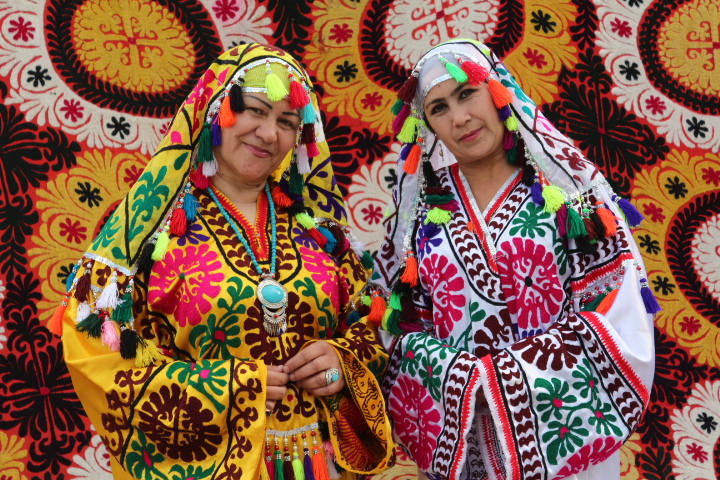
The art of Chakan embroidery is the practice of sewing ornaments, images of flowers and symbolic drawings with colorful threads on cotton or silk fabrics. The tradition is widespread among women and girls in southern Tajikistan. Chakan embroidery is used to decorate clothing and household items such as women’s shirts, headscarves, curtains, pillows, bedspreads and coverlets for cradles. The embroidery features symbolic depictions and mythological images relating to the surrounding nature and cosmos, which express people’s wishes and hopes. The practice involves selecting the textile and threads, drawing ornaments, creating needlepoint images and sewing clothes.
In the past, the threads were prepared from cotton and silk fibers and colored with natural paints made with plants and minerals: nowadays, Chakan dressmakers use fabric threads for needlework. In the Khatlon province, the Chakan shirt is an important bridal dress. Grooms wear a ‘toqi’ (the national skullcap featuring Chakan embroidery), and Tajik women and girls wear the Chakan dress during traditional festivals and holidays. The embroidered products are an expression of beauty, elegance and the unity of humans and nature. The young generation learn the art from their mothers, grandmothers and older sisters, and transmission also occurs in groups through the so-called ‘ustod-shogird’ (master-student) method. Individual craftswomen sell their products in bazaars and through dress shops, providing an important way of earning.
Recall, Shashmaqom music and Tajik pilaf were inscribed on the UNSECO Representative List of the Intangible Cultural Heritage of Humanity in December 2014 and December 2016 respectively.
Earlier, Tajik National Park (Mountains of the Pamirs) and the archeological site of Sarazm (Panjakent district in Sughd province) had been inscribed the UNESCO World Heritage List.