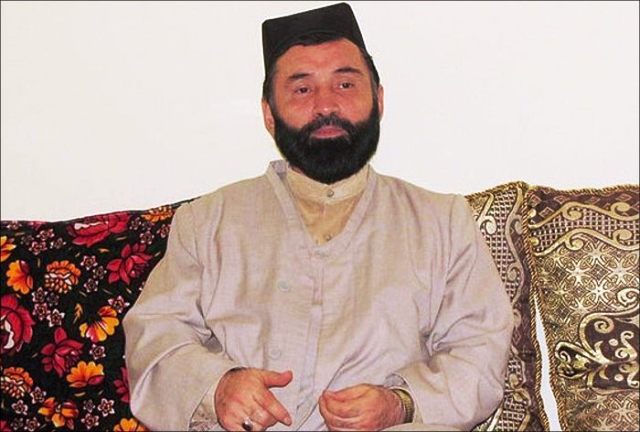
The Supreme Court of Tajikistan has reduced the jail term for Tajik cleric Said Qiyomiddin Ghozi from twenty-five years to seven years, according to the Supreme Court press center.
The Supreme Court has motivated its decision to reduce the jail term for Said Qiyomiddin Ghozi by the fact that “he sincerely repented and helped the investigative bodies solve a number of gave crimes.”
Recall, Tajik cleric Said Qiyomiddin Ghozi was sentenced to twenty-five years in prison in May last year. The sentence followed his conviction on charges of inciting racial, ethnic, regional or religious enmity, public calls for overthrow of constitutional order in Tajikistan and parricide.
In the TV broadcast titled “Invisible Roots” that was shown on Tajik national TV channels on June 18 last year Said Qiyomiddin Ghozi noted that Iran has allegedly supported the banned Islamic Revival Party of Tajikistan (IRPT).
According to him, it had been supposed that that the IRPT would become the ruling party in Tajikistan in 2015.
“The IRPT has been and remains harmful and treacherous party for Tajikistan,” Said Qiyomiddin Ghozi said.
Parliamentary and presidential elections will take place in Tajikistan in 2020.
Said Qiyomiddin Ghozi called on the people of Tajikistan not to repeat the mistakes he had made and apologized to the people of Tajikistan.
Qiyomiddin Ghoziyev, also known as Eshon Said Qiyomiddin Ghozi, was one of activists of the United Tajik Opposition (UTO). In the 1990s, he was given an unofficial title of “Generali Mardumi” (Popular General). During the civil war, he was in Afghanistan, where he was collaborating with the United Tajik Opposition. He returned to Tajikistan in 1997 and was working with one of sub-commissions of the National Reconciliation Commission.
Said Qiyomiddin Ghozi was awarded the Sharaf Order (the Order of Glory) for contribution to the implementation of the Agreements on Peace and National Accord that was signed in Moscow on June 27, 1997.
Speaking at a public event in Dushanbe, President Emomali Rahmon noted on May 12 last year that Said Qiyomiddin had been receiving money from a foreign power.
“His pockets were filled with dollars from that country, which called itself our so-called friend,” Rahmon reportedly said. “He himself admitted that he accepted the Shiite faith and carried out the orders of the security services of that country against the Tajik nation.”
He did not name Iran, although the allusion was fairly obvious.
The president also claimed that the banned Islamic Renaissance Party of Tajikistan had also converted to Shia Islam.