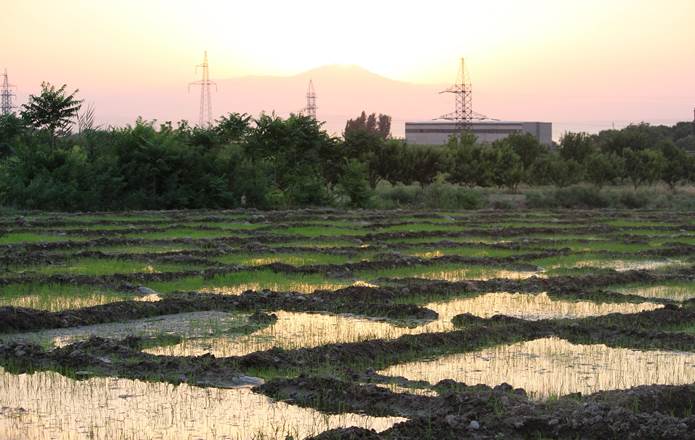
With 14 percent of the total emissions, agriculture is one of the main emitters of greenhouse gases globally.
In Tajikistan, according to the latest figures, this has even reached 60 percent, FAO Country Office in Tajikistan said, noting that as part of the problem, agriculture can have an important role in the solution, too.
A three-day FAO workshop, an effort to promote the Ex-Ante Carbon-balance Tool (EX-ACT),.concluded in Dushanbe on March 20. It ensures skills and knowledge needed to adapt and mitigate impacts of climate change.
The training was organized under a regional project on integrated natural resource management in drought-prone and salt-affected agricultural production landscapes of Central Asia and Turkey, or CACILM2 in short, funded by the Global Environmental Facility. The project supports five Central Asian countries to reduce emissions and to rehabilitate degraded land areas.
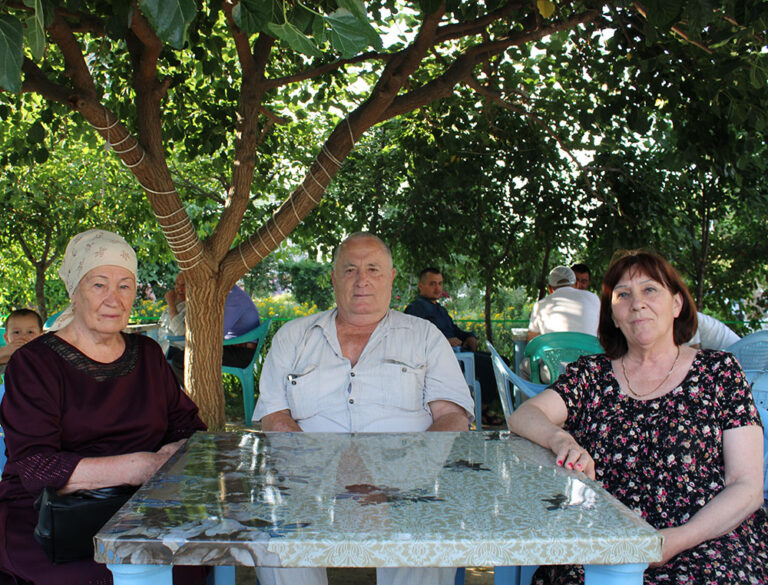
Representatives of the Agency of Forestry, Scientific-Research Forest Institute, Committee for Environmental Protection under the Government of the Republic of Tajikistan, Tajik Academy of Agricultural Sciences, Tajik Agrarian University, National Association of dekhkan farms and other relevant government agencies attended the workshop.
The workshop focused on promoting the understanding of the tool, providing information on how to apply it, understand the logic of the model, and analyze and utilize results. Apart from familiarizing participants with the model, a step-by-step guide for using EX-ACT was provided including also a practical exercise on EX-ACT.
Agriculture has a great potential to reduce negative impacts of climate change. Emissions are arising from the use of fertilizers and pesticides, transportation, land conversion, enteric fermentation of cattle, and others. Through environmentally and economically sustainable agricultural development and land management, strong progress in climate mitigation can be achieved. Considering that developing countries account for 74 percent of agriculture’s mitigation potential, supporting their agriculture and forestry sectors can contribute to climate change adaptation and mitigation – either by reducing emissions or by improving soil carbon sequestration.
“EX-ACT has a great potential to achieve sustainability in agriculture and can make a tremendous difference in climate change adaptation through collecting and sharing information back to farmers and agricultural extension specialists,” said FAO Representative in Tajikistan, Oleg Guchgeldiyev.
EX-ACT is an appraisal system developed by FAO to provide impact assessments of projects in the field of agriculture and forestry, estimating net carbon balance from greenhouse gas emissions and carbon sequestration.
The tool helps project designers prioritize project activities with high benefits in economic and climate change mitigation terms. This model can be used in various agriculture, forestry and other land uses, food security, watershed development, forest management and other programs.
It is easy to apply in practice and does not require specific technical knowledge. As a cost-effective method, it only needs a minimum amount of data, since its resources (tables, maps) can help in finding the necessary information.