Five residents of northern Bobojon-Ghafourov district jailed for membership in radical Islamic groups

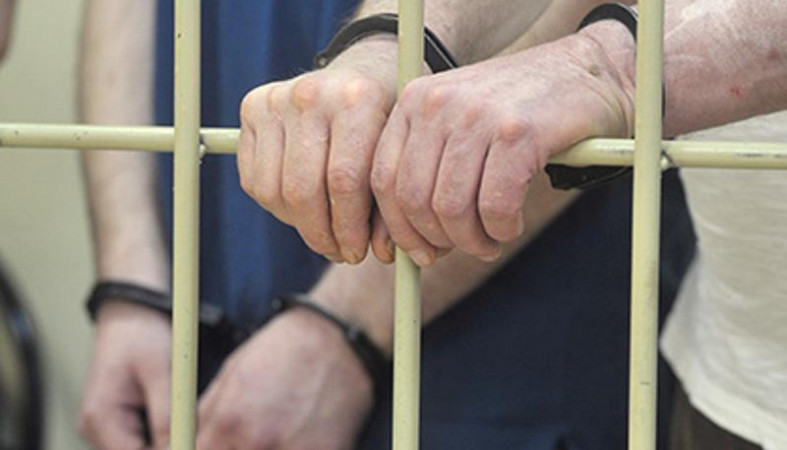
Five residents of the northern Bobojon-Ghafourov district (Sughd province) have been jailed for membership in radical Islamic groups. Two members of the outlawed Salafi group – Abdughani Bozorov,48, and Murod Namozov, 35 – have been sentenced to six years and one year and two months in prison respectively. Bozorov was found guilty of organizing activity […]

Five residents of the northern Bobojon-Ghafourov district (Sughd province) have been jailed for membership in radical Islamic groups.

Two members of the outlawed Salafi group – Abdughani Bozorov,48, and Murod Namozov, 35 – have been sentenced to six years and one year and two months in prison respectively.

Bozorov was found guilty of organizing activity of an extremist group and Murod Namozov was found guilty of not reporting a crime.   

Besides, a court in Bobojon-Ghafourov district has sentenced three local residents to various jail terms for membership in the extremist Islamic Movement of Turkestan.

According to some sources, the Islamic Movement of Turkestan is the Islamic Movement of Uzbekistan, and Uzbek secret services manufactured the change in name.

Yoqubjon Jouraboyev, 35, and Davlat Olimbayev, 28, were sentenced to five year in prison each organizing activity of an extremist group, and Abduvali Yulchiyev, 29, was sentenced to six months in prison for not failure to report a crime.  

Recall, the Tajik authorities banned Salafism as an illegal group on January 8, 2009, saying the Salafi movement represents a potential threat to national security and the Supreme Court added Salafists to its list of religious groups prohibited from operating in the country.

The movement claims to follow a strict and pure form of Islam, but Tajik clerics say the Salafists’ radical stance is similar to that of the Taliban in Afghanistan.

Salafists do not recognize other branches of Islam, such as Shi''a and Sufism.  The movement is frequently referred to as Wahhabism, although Salafists reject this as derogatory.

The overwhelming majority of Tajiks are followers of Hanafia, a more liberal branch of Sunni Islam.

On December 8, 2014, the Supreme Court of Tajikistan formally labeled the banned Salafi group as an extremist organization.  The ruling reportedly followed a request submitted to the court by the Prosecutor-General’s Office.  The ruling means that the group’s website and printed materials are also banned.
Join us on social media!

Article translations:

Related Article

Tenisi
Оби зулол
Оби зулол

Most Read

Коммерсбонк Точикистон

Recent Articles

RZD announces the restoration of passenger services between Moscow and Dushanbe

Direct rail services between the capitals of Russia and Tajikistan were suspended in March 2020 due to the COVID-19 pandemic.

#AP30/Stories. “Selam! Heller nichek?” How Tatars live today in Sughd province

On the 30th anniversary of "Asia-Plus," we continue to publish reports that remain relevant even after years. This story was told in 2021, and since then, little has changed in the life of the Tatar community in Tajikistan.

15,000 cameras, drones, and robots: how technology monitors pilgrims in Mecca and Medina

During Hajj 2026, Mecca and Medina were under unprecedented digital control.

Another child in Dushanbe removed from family and sent to boarding school

The Ministry of Internal Affairs reports that the parents did not pay adequate attention to the child.

Emomali Rahmon instructs to address issues in seed production following criticism of the industry

Issues have been noted with certification, seed quality, and the material and technical base of the industry.

Water, climate, and a $130 billion deficit: seven key outcomes of the Water Conference in Dushanbe

At the forum, countries and international organizations discussed new mechanisms for cooperation, investments, and technologies that are essential for addressing the global water crisis.

Eskhata Bank introduces a new generation children’s wallet

"Eshkata Bank" has created a full-fledged digital platform that helps children aged 7 to 16 learn how to manage money.