



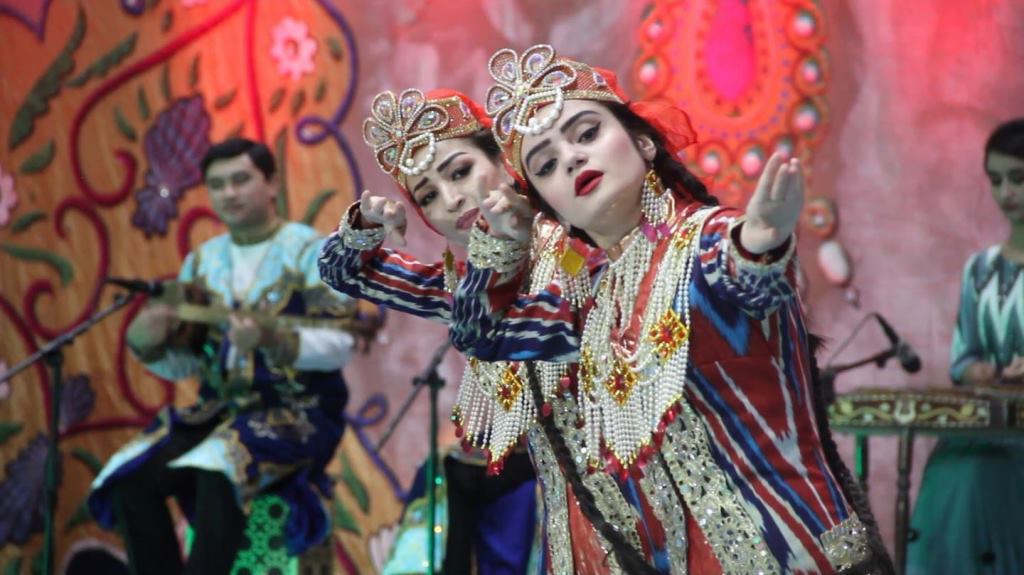
Tajikistan celebrated a Shashmaqom Day on May 12 for the 19th time.
This musical genre is over a thousand years old and over this time it has developed into a tradition.
Today, it is both music and a manner of singing and dance.
What is feature of this music, what voice the singer should have and how to dance to the Sufi poetry – watch our video
A Shashmaqom Day has been celebrated in Tajikistan on May 12 since 2000, when President Emomali Rahmon signed a decree on further development of the Shashmaqom genre in Tajikistan.
Recall, the Academy of Maqom now functions in Dushanbe. Established with support from the Aga Khan Music Initiative, the Academy of Maqom takes its name from the venerable tradition of classical or court music that spans the core Muslim world from Casablanca, Morocco, to Kashgar in western China.
Six maqoms or suites constitute the systematically organized repertory of Central Asian classical music known as Shashmaqom (six maqoms). In the Shashmaqom, instrumental pieces, lyrical song, contemplative poetry, and dance are all bound together in a vast yet integrated artistic conception of great refinement and profound beauty. The roots of Shashmaqom are linked most strongly with Samarkand and Bukhara – historically multicultural cities where performers and audiences have included Tajiks, Uzbeks, and Central Asian (Bukharan) Jews. Shashmaqom performers were typically bilingual in Uzbek – a Turkic language – and Tajik – an Iranian language – and sang poetic texts in both languages.
During the Soviet era, however, the Shashmaqom was cloned into two distinct repertories – “Uzbek” Shashmaqom, with exclusively Uzbek-language poetic texts, and “Tajik” Shashmaqom, with exclusively Tajik language poetic texts. In both Uzbekistan and Tajikistan, the local version of the Shashmaqom came to serve as an important symbol of national cultural identity. This cultural symbolism has become still more significant in the post-Soviet era as the independent nations of Central Asia strive to define themselves socially and historically.







