Central Asian, Japanese foreign ministers discuss ways to promote Central Asia as tourist destination

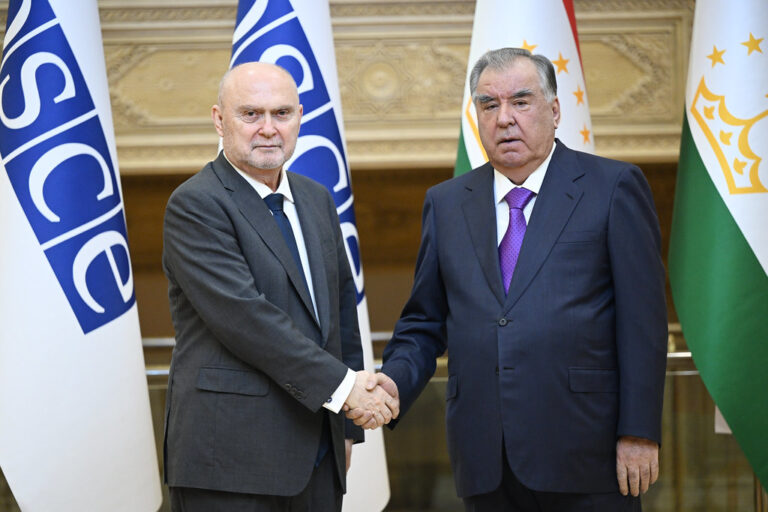
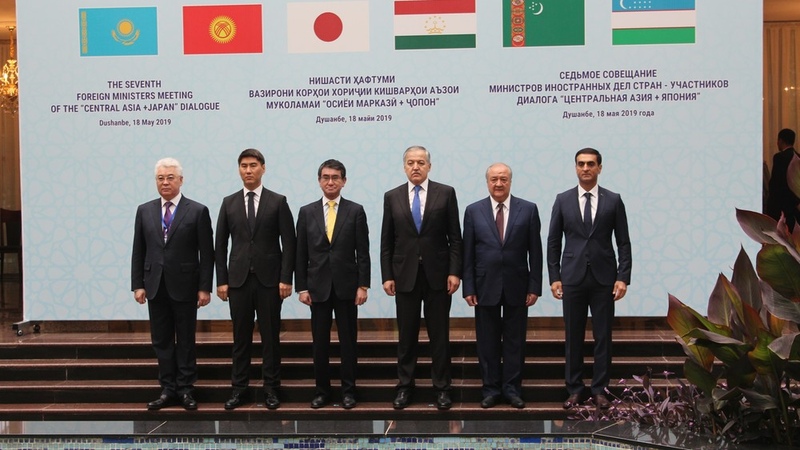
The 7th meeting of the Foreign Ministers of the Central Asia Plus Japan Dialogue took place in the Tajik capital on May 18. According to the Tajik MFA information department, foreign ministers of Japan, Tajikistan, Kazakhstan, Kyrgyzstan and Uzbekistan as well as deputy foreign minister of Turkmenistan participated in the meeting       Three sessions reportedly took […]

Asia-Plus

The 7th meeting of the Foreign Ministers of the Central Asia Plus Japan Dialogue took place in the Tajik capital on May 18.

According to the Tajik MFA information department, foreign ministers of Japan, Tajikistan, Kazakhstan, Kyrgyzstan and Uzbekistan as well as deputy foreign minister of Turkmenistan participated in the meeting      

Three sessions reportedly took place within the framework of the meeting: 1) practical cooperation between member nations of the Central Asia plus Japan Dialogue in the field of tourism; 2) practical cooperation between member nations of the Central Asia plus Japan Dialogue in the fields of trade, investment and development; and 3) regional security and regional cooperation in Central Asia. 

The meeting reportedly ended with signing of a Joint Statement of the 7th meeting of the Foreign Ministers of the Central Asia Plus Japan Dialogue. 

Meanwhile, Japanese media reports say Afghan Foreign Minister Salahuddin Rabbani also participated in the talks. 

The meeting in Dushanbe came as China increases its influence in the region through its "Belt and Road" development initiative, according to The Japan Times.

The Central Asia plus Japan Dialogue is a political initiative between Japan and the Central Asian nations of Kazakhstan, Kyrgyzstan, Tajikistan, and Uzbekistan, with the goal to create “a new framework for cooperation, thereby elevating relations between Japan and Central Asia to a new level.”  The dialogue, according to the Japanese Foreign Ministry, is also meant to serve as a forum to promote inter-regional cooperation.  Turkmenistan, maintaining its policy of neutrality, participates only as an observer.

The dialogue was formally declared on August 28, 2004 in Astana, Kazakhstan at a meeting of foreign ministers from the four participating Central Asian governments and Japan.  A joint statement was issued which outlined the parties’ views on four areas: fundamental principles and values, expansion of Japanese-Central Asian relations, intra-regional cooperation within Central Asia, and cooperation in the international arena.  The joint statement also outlined several areas of potential Japanese-Central Asian cooperation.
Join us on social media!

Article translations:

Related Article

Оби зулол
Оби зулол

Most Read

Recent Articles

The only GPW veteran in Dushanbe allocated more than 80,000 somoni

The mayor's office of Dushanbe allocated him 25,000 somoni.

GITEX AI Kazakhstan 2026: how Almaty became the main AI hub of Central Asia

More than 300 companies and startups, over 200 speakers and 100 investors from 50 countries — the region is entering the global stage.

A trade and economic park to be built at the border junction of Tajikistan, Kyrgyzstan, and Uzbekistan

President of the Kyrgyz Republic Sadyr Japarov familiarized himself with the project.

A project to protect soil from degradation to be developed in Central Asia

The initiative is of great significance for the mountainous countries of the region, including Tajikistan.

Mudslide, death, and destroyed homes: hundreds of families in Tajikistan left homeless

A correspondent from "Asia-Plus" visited Kulob and spoke with the families of those who died and were affected by the disaster.

Spring 2026 bright event: new issue of VIPzone now on sale

This issue is about people and ideas that change everything: from business and investments to fashion, food, and urban environment.

Godfrey Sullivan: “Tajikistan is a promising market for Visa to develop digital payments”

The Vice President of Visa explained why Tajikistan is becoming a promising market for digital payments and how artificial intelligence is influencing the future of finance.

Seven students in Dushanbe were threatened with expulsion for arriving at universities in personal cars

The materials for each case have been sent to the Ministry of Education and Science for appropriate actions.

India’s blockchain push and lessons for the global south

The Indian Government has started pushing aggressively its agenda...

India’s blockchain push and lessons for the global south

The Indian Government has started pushing aggressively its agenda...