Tajik parliament passes martial law act

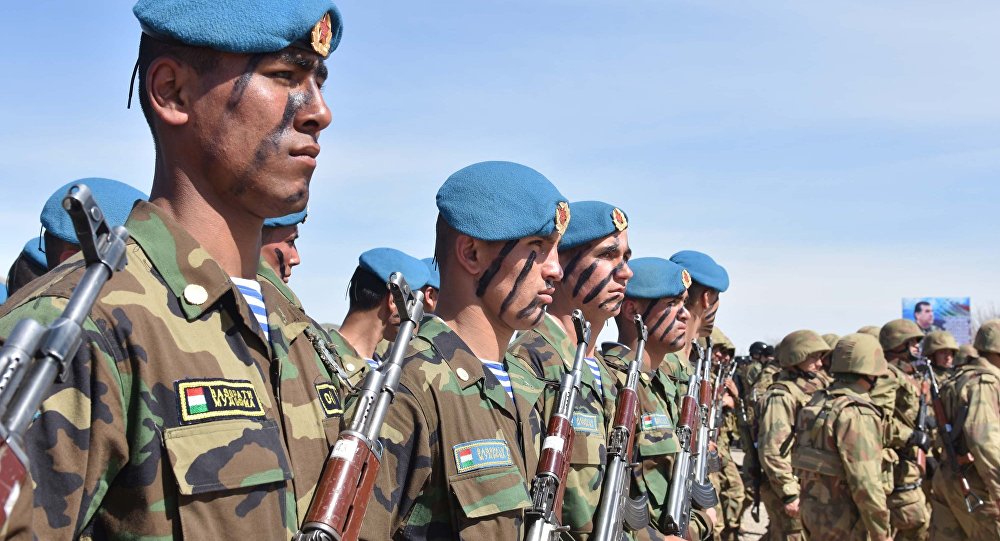
The Majlisi Namoyandagon (Tajikistan’s lower chamber of parliament) yesterday endorsed the martial law bill.  Presenting the bill to lawmakers, the Frist Deputy Defense Minister, Emomali Sobirzoda, noted that the law had been drafted for the purpose of laying legal foundation for carrying out events on defending Tajikistan in wartime, preventing aggression or treats and strengthening […]

The Majlisi Namoyandagon (Tajikistan’s lower chamber of parliament) yesterday endorsed the martial law bill. 

Presenting the bill to lawmakers, the Frist Deputy Defense Minister, Emomali Sobirzoda, noted that the law had been drafted for the purpose of laying legal foundation for carrying out events on defending Tajikistan in wartime, preventing aggression or treats and strengthening the country’s defense power.   

The bill provides for organizing and carrying out various events during martial law, Sobirzoda added.    

Under the martial law bill, the President declares a martial law throughout the entire territory of the country and in individual localities with immediate submission of an edict concerning this for approval to a joint meeting of the Majlisi Namoyandagon and the Majlisi Milli (Tajikistan’s upper chamber of parliament). 

The bill, in particular, restricts or suspends departure of citizens from the country and entry of citizens into the country.  

In all, the bill consists of 18 articles.

Martial law is the imposition of direct military control of normal civilian functions by a government, especially in response to a temporary emergency such as invasion or major disaster, or in an occupied territory.  Martial law can be used by governments to enforce their rule over the public, as seen in multiple countries listed below.  Such incidents may occur after a coup d'état.

Typically, the imposition of martial law accompanies curfews; the suspension of civil law, civil rights, and habeas corpus; and the application or extension of military law or military justice to civilians.  Civilians defying martial law may be subjected to military tribunal (court-martial).
Join us on social media!

Article translations:

Related Article

Оби зулол
Оби зулол
Tenisi

Most Read

Коммерсбонк Точикистон

Recent Articles

RZD announces the restoration of passenger services between Moscow and Dushanbe

Direct rail services between the capitals of Russia and Tajikistan were suspended in March 2020 due to the COVID-19 pandemic.

#AP30/Stories. “Selam! Heller nichek?” How Tatars live today in Sughd province

On the 30th anniversary of "Asia-Plus," we continue to publish reports that remain relevant even after years. This story was told in 2021, and since then, little has changed in the life of the Tatar community in Tajikistan.

15,000 cameras, drones, and robots: how technology monitors pilgrims in Mecca and Medina

During Hajj 2026, Mecca and Medina were under unprecedented digital control.

Another child in Dushanbe removed from family and sent to boarding school

The Ministry of Internal Affairs reports that the parents did not pay adequate attention to the child.

Emomali Rahmon instructs to address issues in seed production following criticism of the industry

Issues have been noted with certification, seed quality, and the material and technical base of the industry.

Water, climate, and a $130 billion deficit: seven key outcomes of the Water Conference in Dushanbe

At the forum, countries and international organizations discussed new mechanisms for cooperation, investments, and technologies that are essential for addressing the global water crisis.

Eskhata Bank introduces a new generation children’s wallet

"Eshkata Bank" has created a full-fledged digital platform that helps children aged 7 to 16 learn how to manage money.