The Shuroi Ulamo (Council of Ulema — an Islamic council that issues fatwas (religious rulings) and religious guidance to Islamic religious organizations) announced on June 1 that this year, Tajikistan will celebrate Idi Ramazon or Eid ul-Fitr on June 5.
Festive prayer on the occasion of the end of the holy month of Ramadan will be performed at all mosques of the country at 6:00 am.
Eid ul-Fitr is a Muslim holiday that marks the end of Ramadan, the Islamic holy month of fasting. Eid is an Arabic word meaning “festivity”, while Fitr means “to purify”; and so the holiday symbolizes the purification after completing the fasting month, which is after the end of the Islamic month of Ramadan, on the first day of Shawwal.
Eid ul-Fitr is one of the major religious holidays that followers of Islam have been observing for centuries. By closing the holy month of Ramadan, it carries a deep moral meaning, encapsulates the joy of renewal, commitment to self-improvement, readiness to do good and help the needy.
Eid ul-Fitr is a Muslim holiday that marks the end of Ramadan, the Islamic holy month of fasting. Eid is an Arabic word meaning “festivity”, while Fitr means “to purify”; and so the holiday symbolizes the purification after completing the fasting month, which is after the end of the Islamic month of Ramadan, on the first day of Shawwal.
Eid ul-Fitr lasts for one day of celebrations and is sometimes also known as the “Smaller Eid": as compared to the Eid al-Adha that lasts three days following the Hajj and is casually referred to as the “Greater Eid.”
On this day, Muslims attend the special Eid prayer (salah). An obligatory charity is paid to the poor and the needy before performing the ‘Eid prayer by all those adult Muslims who are required to pay Zakat. Eid prayer is performed in congregation in open areas like fields, squares etc or at mosques.
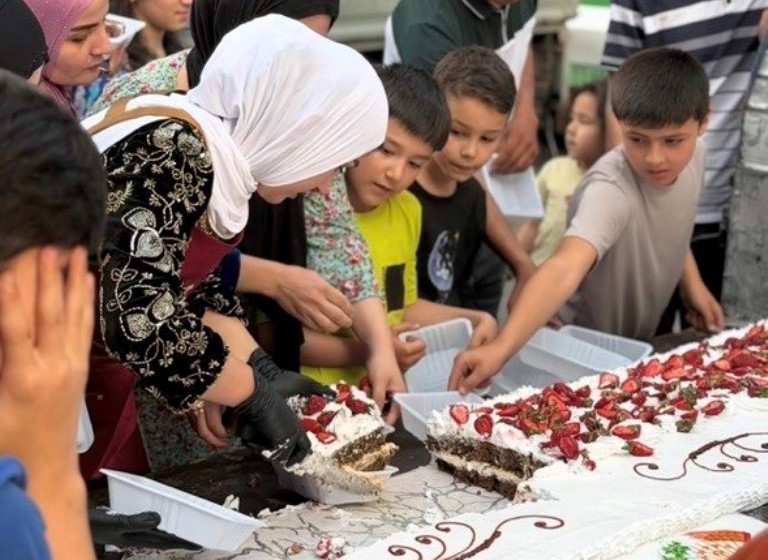
After the prayers, people visit their relatives, friends and acquaintances. Gifts are frequently given; it is common for children to be given small sums of money by adult relatives or friends. It is also common for children to salam parents and adult relatives; they usually get sweeties or money from the adult relatives or friends.