One of the development priorities of Tajikistan is the improvement of road infrastructure that is crucial for the country to overcome communication deadlock and turn itself into a transit hub. To support the efforts of the Government of Tajikistan, the Government of Japan has been funding several projects through the Japan International Cooperation Agency (JICA) in the transport sector. One of the main directions of JICA cooperation has been rehabilitation and reconstruction of roads in the country.
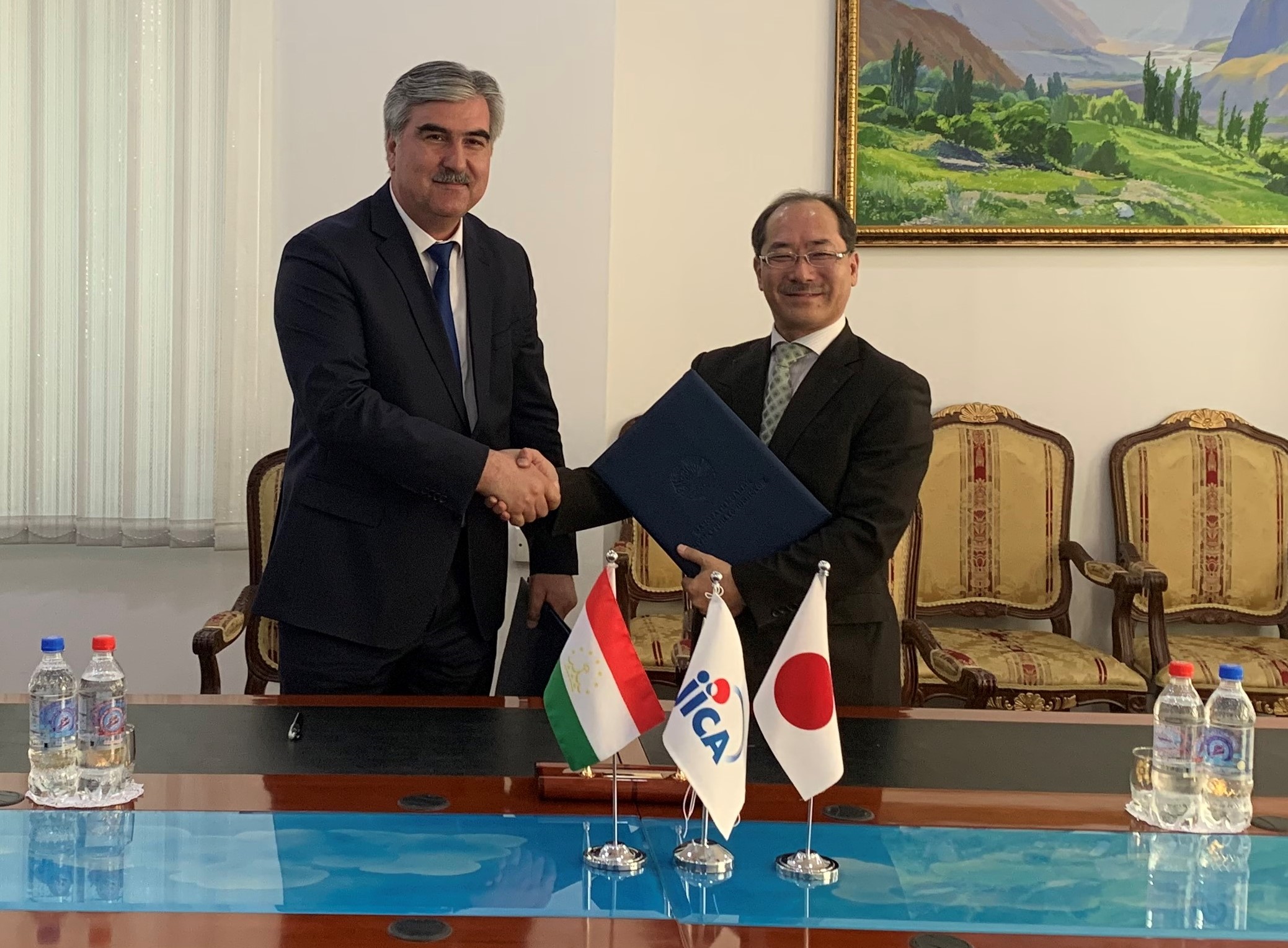
On September 3, 2019, H.E. Faiziddin Qahhorzoda, the Minister of Finance of Tajikistan and Mr. Hideki Tanabe, the Chief Representative of JICA in Tajikistan signed the Grant Agreement for “The Project for the Rehabilitation of Kizilkala-Bokhtar Section of Dushanbe-Bokhtar Road”. The Government of Japan has allocated 3,232,000,000 Japanese Yen, in addition to 117, 000,000 Japanese Yen for detailed design, (about 31 million USD) through JICA to support the implementation of the said Project. The objective of the Project is to improve transportation and traffic safety, thereby contributing to economic development of Tajikistan.
Expressing his gratitude to JICA for its cooperation, Mr. Qahhorzoda emphasized the importance of further cooperation in rehabilitation and reconstruction of other roads.
Mr. Tanabe expressed his confidence that this project would promote Tajikistan’s development further.
The Dushanbe-Bokhtar Road (approximately 98 km) has attracted attentions from the Tajik senior government officials, since it is a vital priority for enhancement of transportation connectivity in Tajikistan. The JICA’s project rehabilitates Kizilkala-Bokhtar Section, and the Asian Development Bank (ADB) rehabilitates the remaining sections of the road.
For long years, JICA has been implementing grant aid and technical cooperation projects in Tajikistan, including rehabilitation of Bokhtar-Panji Poyon Road, provision of road maintenance equipment, improvement of local engineers’ capacity for road maintenance and disaster prevention, etc.
Once the Duhanbe – Bokhtar Road is rehabilitated, the whole road between Dushanbe and Panji Poyon (bordering with Afghanistan) will be fully improved, which will contribute to the promotion of logistics between the countries.
JICA will continue its cooperation in the transport sector with a special focus on road asset management in close partnership with the Ministry of Transport and other development partners.
JICA began its technical cooperation with Tajikistan in 1993 by inviting Tajik officials to gain knowledge and experience on governance and macroeconomics development. As of January 2019, a total number of participants to JICA’s Knowledge Co-Creation Programs, formerly called the Training Programs, has exceeded 2200 people. JICA Office was established in 2006 in Tajikistan and since then various Grant Financial Assistance and Technical Cooperation projects have been implemented more dynamically, aiming at improving living standard of Tajik people for the sectors such as agriculture and rural development, water supply, health, transport, energy, capacity building