Natural disasters cost Tajikistan’s economy at hundreds of millions of dollars annually, says Tajik PM

In a statement delivered at UN General Assembly in New York, Tajik Prime Minister Qohir Rasoulzoda touched upon problems of terrorism, climate change and hydropower, according to UN News Center.   Touching up the problems of terrorism, organized crime and drug trafficking, Rasoulzoda reportedly told about efforts taken by the Tajik government to support providing stability […]

Asia-Plus

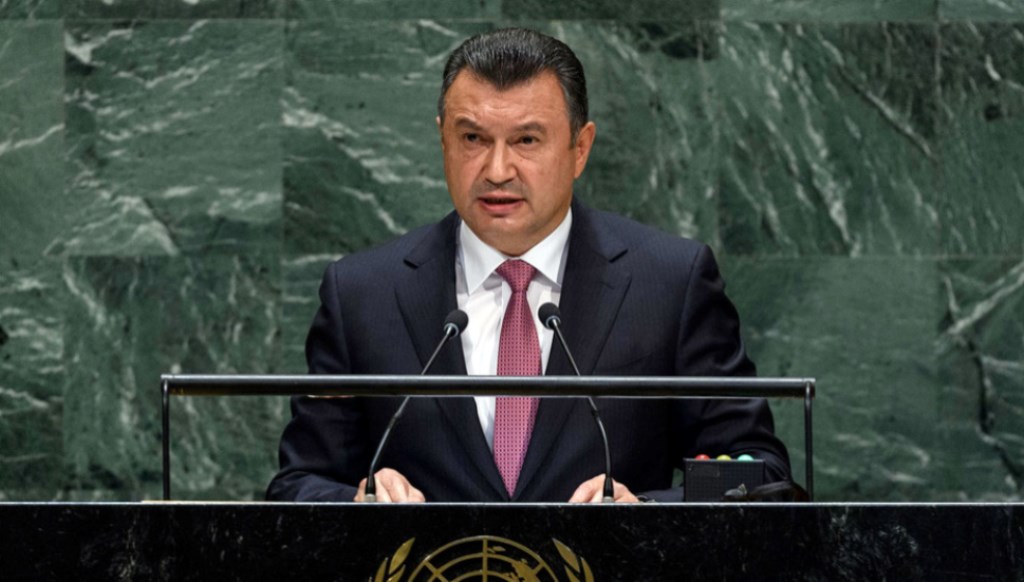
In a statement delivered at UN General Assembly in New York, Tajik Prime Minister Qohir Rasoulzoda touched upon problems of terrorism, climate change and hydropower, according to UN News Center.  

Touching up the problems of terrorism, organized crime and drug trafficking, Rasoulzoda reportedly told about efforts taken by the Tajik government to support providing stability in Afghanistan.  

Tajik prime minister, in particular, noted that security in the Central Asian region is closely connected with providing security in Afghanistan.   

Dwelling on the climate change problems, Rasoulzoda noted that glacier areas in Tajikistan have significantly reduced over the past decade.

According to him, air temperature has risen one degree Celsius in the country over the past 60 years.  

“Water-borne disasters alone cost our country’s economy at hundreds of millions of dollars annually,” Rasoulzoda noted that Tajikistan is for the widespread use of hydropower.

Tajik official pointed to the necessity of encouraging development of “green” energy as “as an important vector of sustainable development.”  
Join us on social media!

Article translations:

Related Article

Оби зулол
Оби зулол

Most Read

Акика Алиф

Recent Articles

In Tajikistan, the workforce has increased, but not everyone is employed

Statistics show a significant gap between men and women in the labor market.

Amin Qobilov and Marvori Nasriddinzoda become chess champions of Tajikistan

The national chess tournament, which brought together the strongest players, has concluded in Dushanbe.

How to tame snow avalanches: how many houses and roads in Tajikistan are at risk?

Large avalanches can occur on average once every 40 years, causing residents to eventually consider dangerous areas safe and build houses on them.

Emomali Nourali and Muhiddin Asadulloyev became No. 1: Tajik judokas in the world ranking

After the "Grand Slam" in Dushanbe, the IJF ranking was updated, recording a historic result.

Media: the US struck Iranian ports but denies resuming war

Iran's military opened fire on forces that attempted to attack a pier on Qeshm Island.

Uzbekistan implements digital residency registration system

It will be possible to process it online through Face-ID.