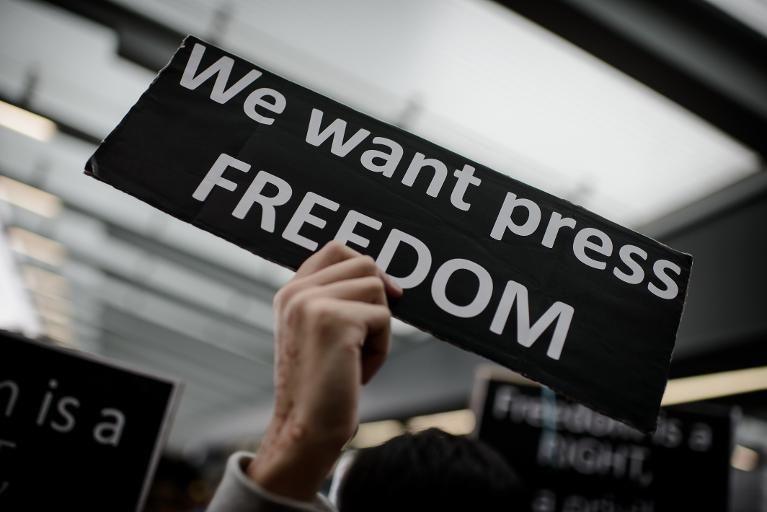
Global media watchdog Reporters Without Borders (RSF) has called on Europe’s leaders to condition their relations with Tajikistan on respect for press freedom.
A statement released by RSF on November 7, in particular, notes that French President Macron’s decision to meet with Tajik President Emomali Rahmon offers a unique occasion to raise the issue of the freedom to inform in Tajikistan, “where it is constantly flouted although guaranteed by the country’s constitution and international treaties.”
Tajikistan is hemorrhaging independent journalists, the statement said, noting that more than 20 have fled abroad since Tajik authorities began cracking down in 2016.
“Regardless of the economic and strategic benefits of trade and relations between France and Tajikistan, a frank dialogue between partners should not overlook press freedom,” RSF’s Eastern Europe and Central Asia desk said.
Tajikistan has reportedly plunged 45 places in the World Press Freedom Index since 2015, a dramatic fall that is due in part to massive Internet censorship.
According to the statement, the state communications service agency illegally and arbitrarily blocks news websites such as Asia-Plus, an independent news outlet that is one of its favorite targets. “This agency is used above all to reinforce the president’s personal power,” the statement said.
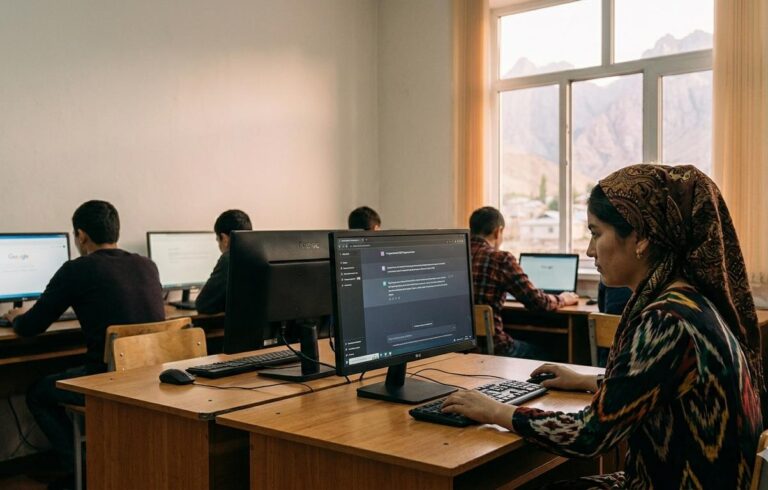
The authorities have reportedly monopolized Internet access since 2018 and have not hesitated to use their power to cut access to online resources, including leading news sites such as Fergana and Akhbor, instant messaging services, video platforms such as YouTube and sometimes even Google. This is their automatic response to economic or social difficulties or street protests.
The statement says journalists who are just trying to do their job are constantly subjected to harassment by the intelligence services, intimidation and blackmail.
“A climate of intimidation discourages journalists from tackling sensitive subjects. And their self-censorship fosters impunity for corruption.”
Pressure is reportedly also put on international media outlets. Journalists, including those working for Radio Liberty’s Tajik Service, are subject to the constant threat of having their press accreditation withdrawn, the statement noted.
Tajikistan is ranked 161st out of 180 countries in RSF’s 2019 World Press Freedom Index.