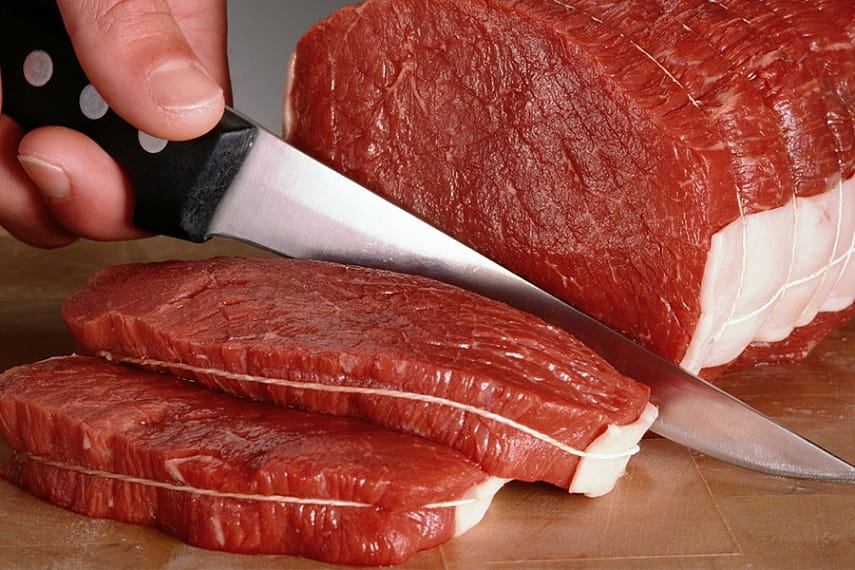
An agreement on the delivery of 300 tons of halal beef to the Tajik capital was signed between the Slutsk meat-producing plant in Belarus’s Minsk oblast and the Dushanbe State Unitary Enterprise (SUE) for Production, Purchase, Storage and Sale of Essential Goods (Enterprise) in late October, the Enterprise head Farrukh Khoushvakhtov told Asia-Plus in an interview.
“To-date, we have received 20 tons of halal beef from Minsk. This meat does go on retail in shops or bazaars but is distributed to the Dushanbe-based public catering facilities at the rate of 45.00 somoni per kilogram,” Khoushvakhtov said.
According to him, local butchers have been sent to Belarus to slaughter cattle in accordance with the canon of Islam.
“The halal beef will be supplied to Dushanbe during six months. The Dushanbe Administration has allocated 1 million U.S. dollars for the delivery of 3000 tons of beef from Belarus,” Khoushvakhtov said.
Recall, Tajik officials noted in September that Tajikistan’s Agency for State Reserves (Agency) has begun importing bull-calves from Kazakhstan and frozen meat from Belarus for the purpose of curbing meat price hike in the country.
“We have begun importing 1 ½-year-old bull-calves from Kazakhstan and frozen meat from Belarus. The bull calves are slaughtered here and the meat is sold at the Agency’s shops at Dushanbe’s Merhgon and Sakhovat bazaars at the rate of 50.00 somoni per kilogram. We also plan to import bull-calves from Ukraine,” Abdukarim Rahimov, an official with the Agency for State Reserves, told Asia-Plus in an interview.
According to him, the frozen meat from Belarus is not in demand among the population despite the low price. The frozen meat from Belarus is reportedly offered at the rate of 44.00 somoni per kilogram.
“We have imported the frozen meat from Belarus for already four years. We buy bull-calves and slaughter them there, freeze in place and carry the frozen meat to Tajikistan by refrigerated trucks. It’s cheaper” Rahimov said.
“However, the frozen meat is not in demand among the population and we bring it for the needs of government agencies,” the official added.
Meanwhile, current average price for one kilogram of beef at the bazaars of Dushanbe and nearby districts beef has reached 60.00 somoni, and the price for one kilogram of lamb keeps within 55.00 somoni.