Citing sources close to the investigation, Radio Liberty says that one of persons who attacked a frontier post in the Roudaki district last week had previously served as a soldier in the area where the deadly assault took place.
The suspect had firsthand knowledge of the facility and nearby areas, which is why the attackers targeted that particular checkpoint, a Tajik security official told RFE/RL on November 11.
That and other sources identified the suspect by his first name, Anvar, and he is believed to be in his early 30s. Officials who gave the information spoke on condition of anonymity as they weren't authorized to speak to the media.
The suspected attackers allegedly planned to seize weapons at the remote, unremarkable border post in the Sultonobod area in the Roudaki district to potentially stage assaults on more prominent targets elsewhere.
Tajik authorities said 20 armed militants, including three women, raided the post on the Tajikistan-Uzbekistan frontier in the early hours of November 6.
According to official statements released on the day of the incident, 15 attackers and two security officers were killed in the ensuing shoot-out, and five perpetrators were arrested. Other sources put the number of the death toll among government troops at seven.
The militants reportedly recruited three women — identified as Rahbar Boqiyeva, Malohat Haidarova, and Zulkhumor Jumayeva — to take part in the raid because they would rouse less suspicion and be used to distract the soldiers before the attack.
Shortly before the assault, Boqiyeva allegedly approached the checkpoint pretending to have lost her way and asked the border guard on duty for directions.
When the unsuspecting watch tower guard came down, Boqiyeva stabbed him with a knife, the sources said. RFE/RL cannot independently confirm the claim.
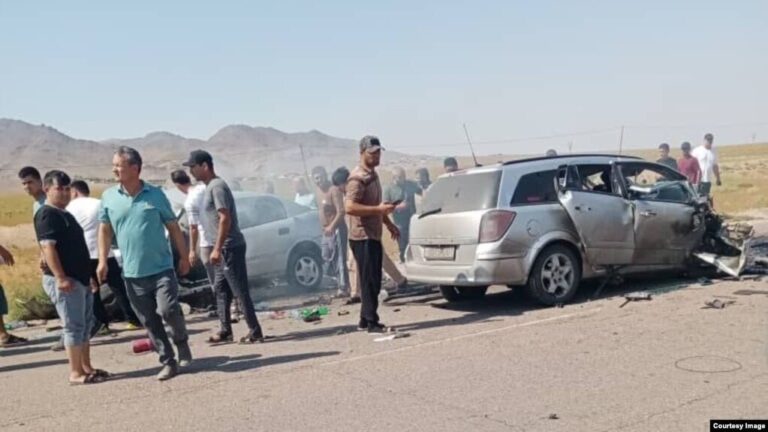
The attackers spent several hours before the assault in the nearby villages of Lailikuya and Qizilnishon, before driving to the border posts in four vehicles, the sources said.
The vehicles were allegedly purchased by one of the suspected attackers, a businessman identified by his first name, Iskandar, who had owned a children's clothing shop at Dushanbe’s Korvon bazaar. He reportedly sold his business for some $13,000 several weeks ago and purchased the four vehicles that investigators say were used in the attack.
In initial statements, the Tajik government said the perpetrators — all of whom are believed to be Tajik nationals — crossed into Tajikistan from Afghanistan on the orders of an IS affiliate, IS-Khorasan.
But according to information obtained from the detainees, only six of the attackers came from Afghanistan, while others were based in Tajikistan, the sources in Dushanbe told RFE/RL.
IS claimed responsibility for the attack but there are no proven links between the suspects and the IS group, which offered no evidence to back its claim, RFE/RL said.