A two-day conference, titled Towards Regional Initiatives for Sustainable and Climate Resilient Water Supply and Sanitation Services in Central Asia, is concluding in the Uzbek capital of Tashkent today.
Organized jointly by Uzbekistan’s Ministry of Housing and Communal Services and the World Bank, with funding from the Central Asia Water and Energy Program (CAWEP) and the Global Facility for Disaster Reduction and Recovery (GFDRR), the event reportedly brought together around 100 participants, including utility directors, key policy and decision-makers, academia, and the private sector from Kazakhstan, Kyrgyzstan, Tajikistan, Turkmenistan, and Uzbekistan to discuss best practices for building climate-resistant water supply and sanitation services, according to the World Bank Office in Dushanbe.
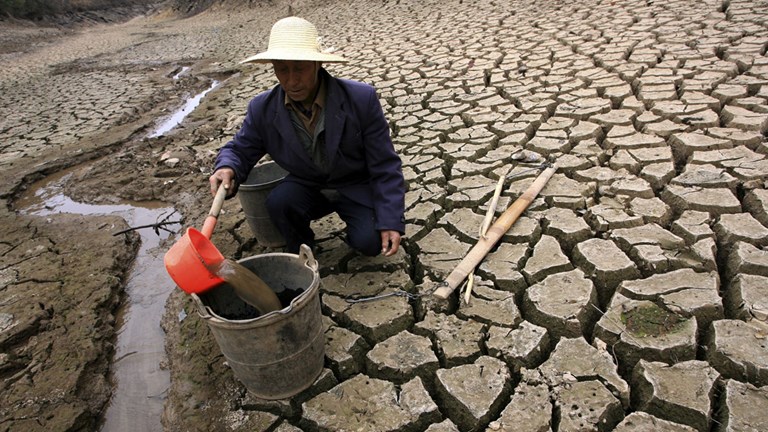
Water supply and sanitation (WSS) services are expected to become increasingly susceptible to the expected impacts of climate change. These impacts can materialize in the form of more frequent and severe extreme events, including floods and droughts; different rainfall patterns and temperatures; and seasonal shifts.
“The conference in Tashkent can be viewed as a new platform for interaction among regional water supply and sanitation professionals. The World Bank, along with other development partners, is glad to support the renewed regional water dialogue,” said Lilia Burunciuc, World Bank Regional Director for Central Asia.
The conference participants are reportedly analyzing how climate change affects water security and WSS services in Central Asia.
They are also discussing WSS sector reforms in their countries and ways to improve its performance, the delivery and management of WSS services in rural areas, lessons from private sector participation in WSS service delivery, and opportunities for national capacity building for WSS.
Experts from Bulgaria, Portugal, South Africa and Israel, as well as from the World Bank Group, European Bank for Reconstruction and Development, International Secretariat for Water and International Association of Water Supply Companies in the Danube River Catchment Area are sharing international best practices in the above-mentioned areas that may be applied in the Central Asian context.
The event participants will develop follow-up activities to support a longer-term initiative to enhance collaboration between Central Asian WSS sector policymakers and utilities, as well as to address common challenges and opportunities in the region in this field.