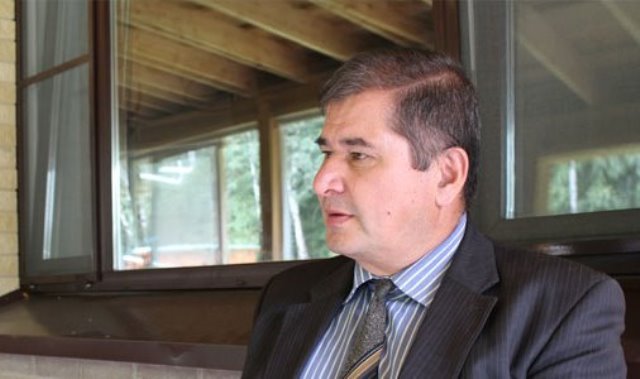
The leader of the Social-Democratic Party of Tajikistan (SDPT), Rahmatillo Zoyirov, says the collection of election deposit is a crime by the Central Commission for Elections and Referenda (CCER).
SDPT leader has reiterated his call on President Emomali Rahmon to abolish an election deposit fox candidates.
According to him, he reiterates his call on the president to abolish the election deposit because after his first call, some state official and parliamentarians “objected to him that now is not the time for cancellation [of the election deposit].”
“They said, “You SDPT leader Rahmatillo Zoyirov overslept and missed time”,” Zoyirov noted in his call.
He called the collection of election deposit is a crime by the Central Commission for Elections and Referenda.
SDPT leader also notes that the collection of election deposit for candidates is contrary to the country’s Constitution.
“Since the election deposit set by Article 32.1 of the Constitutional Law “On Elections on to the Majlisi Oli of the Republic of Tajikistan” is contrary to Articles 1, 5, 10, 14, 17 and 49 of the Constitution of the country’s Constitution it should be abolished,” Zoyirov noted in his call to the president.
In an electoral system, a deposit is the sum of money that a candidate for an elected office, such as a seat in a legislature, is required to pay to an electoral authority before he or she is permitted to stand for election.
In the typical case, the deposit collected is repaid to the candidate after the poll if the candidate obtains a specified proportion of the votes cast. The purpose of the deposit is to reduce the prevalence of 'fringe' candidates or parties with no realistic chance of winning a seat. If the candidate does not achieve the refund threshold, the deposit is forfeited.
The financial deposit set by the Central Commission for Elections and Referenda (CCER) for candidates amounts to 5,800 somoni (equivalent to some 600.00 U.S. dollars).
Recall, Social-Democrats don’t rule out that they may boycott the upcoming parliamentary elections scheduled for March 1, 2020.
Founded in 2002, the Social-Democratic Party was registered on December 20, 2002. It was originally registered as the Party of Justice and Development on February 5, 1999. Tajikistan’s Ministry of Justice requested the same year that the Supreme Court ban the party’s activities and its registration was canceled. The party re-emerged and was registered under the name of the Social-Democratic Party in late 2002. Chairman of the Social-Democratic Party is Rahmatillo Zoyirov and the party reportedly has about 8,000 members.