AKDN supports early development of children in Tajikistan

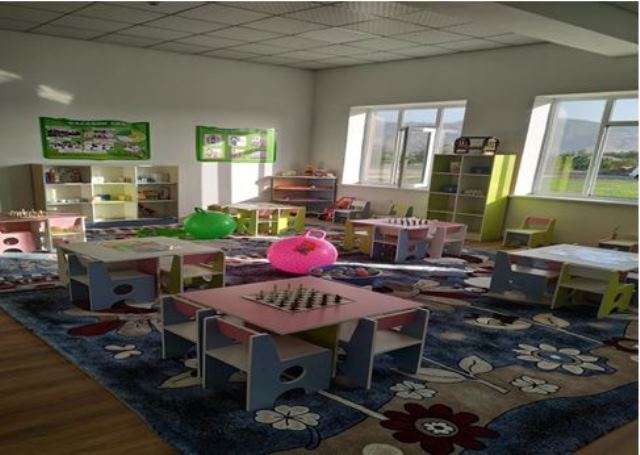
Six Early Childhood Development (ECD) Centers that were launched in Tajikistan last year under support of the Aga Khan Development Network (AKDN) now successfully function in the country.   Provided with all necessary equipment the ECD Centers were launched, in particular, in Vahdat Township and Roudaki, Varzob and Faizobod districts, according to the Ministry of Education […]

Six Early Childhood Development (ECD) Centers that were launched in Tajikistan last year under support of the Aga Khan Development Network (AKDN) now successfully function in the country.  

Provided with all necessary equipment the ECD Centers were launched, in particular, in Vahdat Township and Roudaki, Varzob and Faizobod districts, according to the Ministry of Education and Science (MoES).

An official source at a MoES says the Aga Khan Foundation (AKF) has made a noticeable contribution to creation of decent conditions for early development of children in the country.  

According to him, 283 preschool children’s development centers have been established at the general educational institutions in the Gorno Badakhshan Autonomous Region (GBAO) in collaboration with AKF.  482 teachers are reportedly engaged in educating and raising more than 6,500 children at these centers.

The Ministry of Education and Science emphasizes that it will continue cooperating with AKDN on supporting early childhood development. 

Children’s development centers have functioned in the country alongside the preschool educational institutions since 2004.  

As of July 1, 2018, 1,973 children’s development centers functioned in the country covering more than 52,200 children, according to Ministry of Education and Science.  

The brain develops most rapidly in the first five years of a child’s life and the Aga Khan Foundation works to ensure that girls and boys have a good start in life by influencing the environments in which they are growing.  Globally, AKDN’s Early Childhood Development (ECD) initiatives provide 750’000 children ages 0-8 years with nurturing, relevant and quality learning opportunities at costs that are affordable for governments, families and communities.

In 2017, AKF’s Early Childhood Development programs benefitted close to 280,000 children (ages 0-8) worldwide.  Three countries (Afghanistan, Tajikistan and Kyrgyz Republic) have adopted nationally AKF’s early learning model.


 

Join us on social media!

Article translations:

Related Article

Оби зулол
Оби зулол
Tenisi

Most Read

Коммерсбонк Точикистон

Recent Articles

RZD announces the restoration of passenger services between Moscow and Dushanbe

Direct rail services between the capitals of Russia and Tajikistan were suspended in March 2020 due to the COVID-19 pandemic.

#AP30/Stories. “Selam! Heller nichek?” How Tatars live today in Sughd province

On the 30th anniversary of "Asia-Plus," we continue to publish reports that remain relevant even after years. This story was told in 2021, and since then, little has changed in the life of the Tatar community in Tajikistan.

15,000 cameras, drones, and robots: how technology monitors pilgrims in Mecca and Medina

During Hajj 2026, Mecca and Medina were under unprecedented digital control.

Another child in Dushanbe removed from family and sent to boarding school

The Ministry of Internal Affairs reports that the parents did not pay adequate attention to the child.

Emomali Rahmon instructs to address issues in seed production following criticism of the industry

Issues have been noted with certification, seed quality, and the material and technical base of the industry.

Water, climate, and a $130 billion deficit: seven key outcomes of the Water Conference in Dushanbe

At the forum, countries and international organizations discussed new mechanisms for cooperation, investments, and technologies that are essential for addressing the global water crisis.

Eskhata Bank introduces a new generation children’s wallet

"Eshkata Bank" has created a full-fledged digital platform that helps children aged 7 to 16 learn how to manage money.