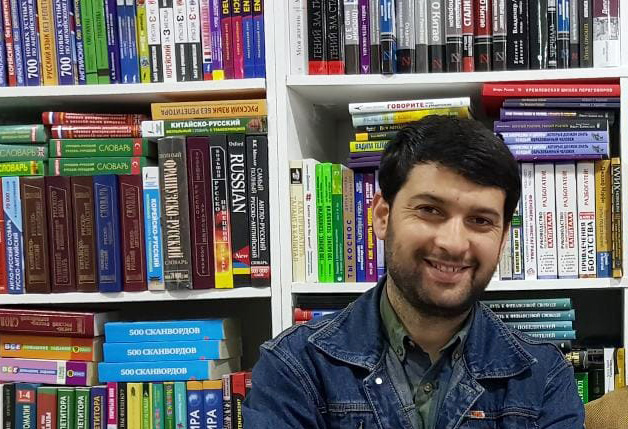
Tajik freelance journalist, who has been held by security services for more than two days, has been arrested on a charge of inciting public discord.
On Thursday January 30, a court in Dushanbe’s Ismoili Somoni district ruled to place Daler Sharifov in pretrial detention for two months.
The journalist is suspected of “inciting ethnic, racial, and religious discord.”
If found guilty, Daler Sharifov could face up to five years in prison.
Recall, the journalist was summoned for questioning to the State Committee for National Security (SCNS) office in Dushanbe’s Shohmansour district on January 28 and he has not been seen since.
On January 29, Daler Sharifov was moved from the SCNS office in Dushanbe’s Shohmansour district to the SCNS head office, Ms. Shoira Davlatova, the head the Dushanbe-based Independent Center for Human Rights Protection, told Asia-Plus in an interview.
One of relatives of Daler Sharifov told Asia-Plus yesterday that security officers had conducted a search of Sharifov’s home during which they confiscated several books in Tajik, Russian and Arabic languages. “They said that they will check out the books and will release him after questioning,” the relative said.
Daler Sharifov had previously worked with Tajik national TV channel Safina as author and host of the program “Mushoirat” (Communicating). In recent years, he has not worked anywhere officially.
Meanwhile Eurasianet says that most recently, Daler Sharifov had worked for Ozodagon newspaper, which was forced to close shop in 2019. Most of the staff at the newspaper, including its founder Zafar Sufi, have reportedly sought asylum in Europe. After Ozodagon folded, Sharifov remained in Dushanbe and continued to work freelance, writing about government campaigns to pressure women into refraining from wearing hijabs and other rights violations, according to Eurasianet.
The National Association of Independent Media of Tajikistan (Nansmit) released a statement on January 30 noting that norms of the country’s legislation were not observed during the detention of Daler Sharifov. The fact that Sharifov’s lawyer was not granted access to Daler until the third day from time of arrest is in violation of Tajik law.