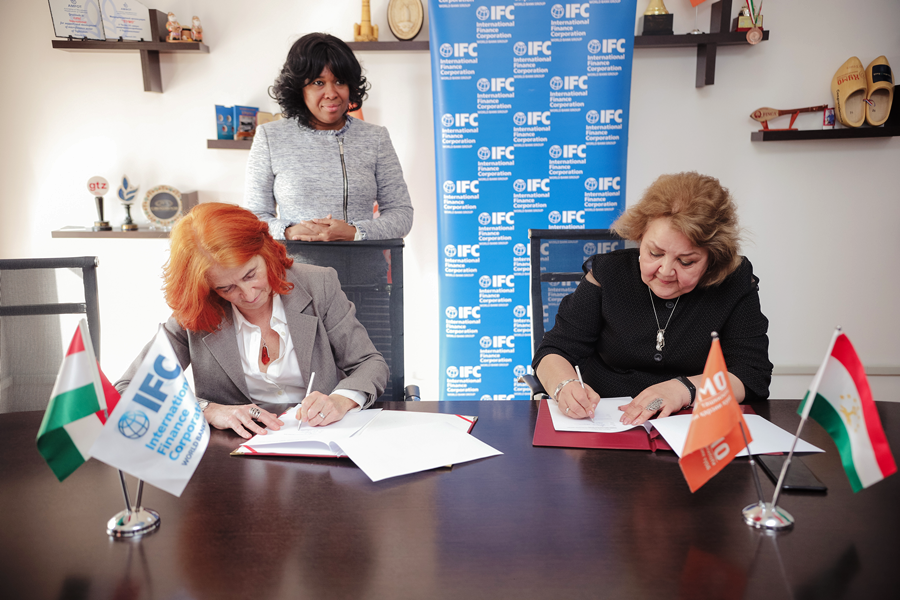
The International Finance Corporation (IFC), a member of the World Bank Group, and the microcredit deposit-taking organization (MDO) Humo on February 19 signed a loan agreement for US$2 million equivalent in Tajik Somoni, according to IFC.
The document was inked in Dushanbe by Ms. Georgina Baker, IFC Vice President for Europe, Central Asia, Latin America, and the Caribbean, and Ms. Mavsouda Vaisova, General Director of Humo.
The amount of this loan is allocated to help underserved population improve housing conditions and for micro and small businesses to access finance.
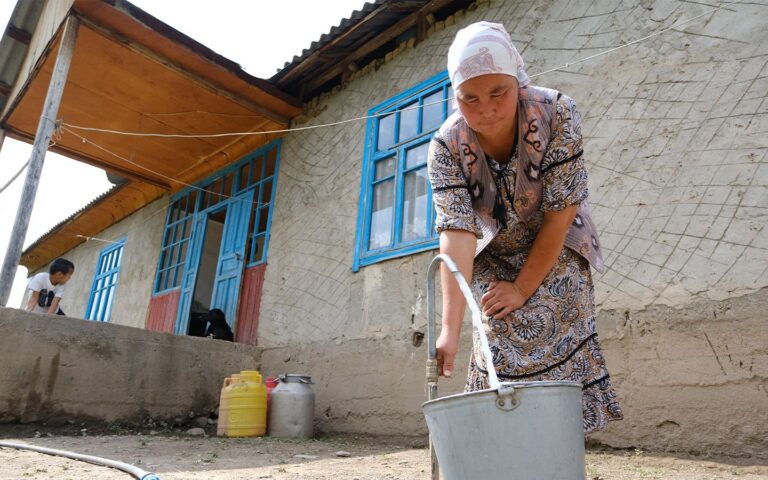
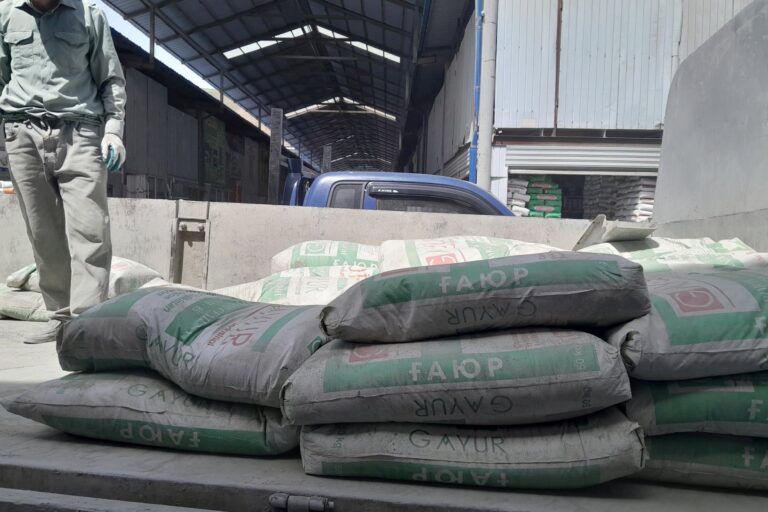
On the housing front, there is a pressing need to improve living conditions in Tajikistan, a low-income country, where most homes are built with substandard materials, leaving them exposed to natural hazards and creating challenges in extreme seasonal weather. Furthermore, access to financing, to purchase and improve homes, is extremely limited, according to IFC.
Micro, small, and medium enterprises (MSMEs) reportedly also face limited access to finance. According to the SME Finance Forum, the country’s MSME-finance gap is estimated at around $1.5 billion, equivalent to 18.5 percent of aggregate GDP.
IFC’s financing for Humo will help address these financing gaps. This is IFC’s first loan to Humo and the second to a Tajik financial institution to support micro-housing in recent months. Both loans are being provided through currency swaps with the International Development Association (IDA)’s Private Sector Window Local Currency Facility.
According to Ms. Vaisova, 50 percent of the loan will be spent to help underserved populations improve housing conditions and another part of the loan will be spent for individual entrepreneurs as well as micro and small businesses to access finance.
Tajikistan became a member of IFC in 1994. IFC has provided loans, equity financing, trade-finance guarantees, and risk-management solutions (currency swaps) to local financial institutions, supporting the development of MSMEs in Tajikistan. IFC was the first development finance institution to offer local currency denominated financing in the country. IFC has also provided advisory services to support banks and microfinance institutions and helped establish the country’s first credit bureau.
As part of the record US$75 billion IDA18 replenishment, the World Bank Group created the US$2.5 billion IDA Private Sector Window to catalyze private sector investment in the poorest and most fragile countries. Recognizing the key role of the private sector in achieving IDA18 objectives and the Sustainable Development Goals (SDGs), the window provides concessional funds for co-investment alongside IFC and Multilateral Investment Guarantee Agency (MIGA) private investments. Concessional funds help to mitigate risk and reduce barriers, which unlocks and crowds in private investment in emerging markets.
Humo, a leading microfinance organization in Tajikistan, has operated in the sector for 15 years. The company is among the country's top five financial institutions, including banks, in terms of loan-portfolio size and serves almost 60,000 borrowers. The company's mission is to provide affordable and innovative financial solutions for individuals, small businesses, and agriculture. HUMO also fulfills its social goals by supporting women and rural populations.