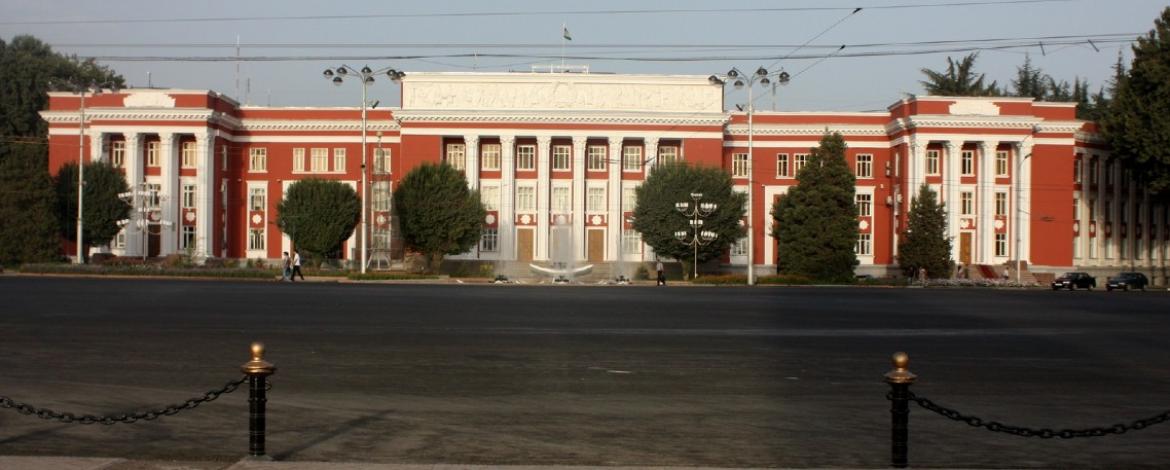
Tajikistan’s upper chamber (Majlisi Milli) of parliament (Majlisi Oli) is expected to discuss amendments made to the country’s administrative code at its session that will take place in Dushanbe on June 26, according to the Dushanbe mayor’s office.
Recall, the Majlisi Namoyandagon (Tajikistan’s lower chamber of parliament) has voted to criminalize spreading infectious and fine anybody not wearing a face mask while going out in public.
The bill, passed by the Majlisi Namoyandagon on June 10, provides for a prison sentence of between 2 and 5 years for the intentional transmission of infectious diseases and a prison sentence of up to 10 years if the act caused grievous bodily harm.
Parliament also approved fines of 580 somoni for physical entities and a fine of 11,600 somoni for legal entities for disseminating inaccurate and untruthful information about pandemic through media and a fine from 116 to 290 somoni for anyone not wearing a mask in public or failing to practice physical distancing of two meters.
Meanwhile, some local experts consider that the mentioned amendments should not be passed.
The head of legal company Himoya, Navrouz Odinayev, says “there are many questions to the amendments that were endorsed by the Majlisi Namoyandagon in a hurry.” He hopes that the Majlisi Milli will not second the bill.
Earlier, Tajik media experts had opposed the amendments concerning the dissemination of inaccurate and untruthful information about pandemic through media. These amendments are unacceptable and will lead to the rise of censorship and restriction of access to information, they said.
The Paris-based media watchdog Reporters Without Borders (RSF) has called for the withdrawal of newly approved legislative amendments in Tajikistan under which false or inaccurate COVID-19 coverage would be subject to heavy fines. RSF warned that the amendments could lead to censorship and other violations of press freedom.
“This new, vaguely defined legislation could be exploited to violate the right to information,” Jeanne Cavelier, the head of RSF's Eastern Europe and Central Asia desk, said in a statement published on June 12.
RSF notes that one of first targets of these amendments could be Kvtj.info, a website founded by civil society representatives that is keeping a tally of the number of Covid-19 deaths in Tajikistan, a tally verified by journalists based abroad.
RSF recommends that the Tajik authorities should combat disinformation by means of self-regulatory mechanisms that promote the best journalists standards and ethics, such as the Journalism Trust Initiative.