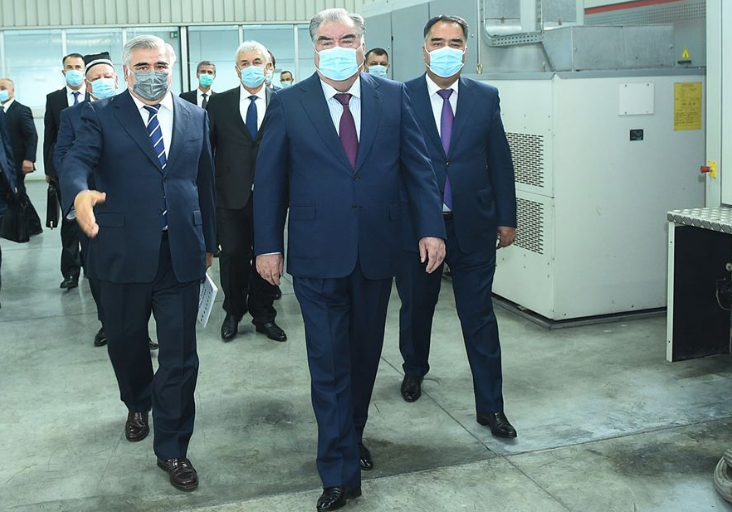
President Emomali Rahmon on July 4 signed the law penalizing for distribution of ‘inaccurate’ and ‘untruthful’ information about pandemic and not wearing face masks in public or failing to practice physical distancing of two meters.
Recall, Tajikistan’s upper house (Majlisi Millii) of parliament on June 26 voted to second amendments made to the Administrative Code which would subject journalists and others who distribute “inaccurate” and “untruthful” information about the COVID-19 pandemic through the press or social networks to fines.
The amendments were previously approved in the legislature’s lower house, Majlisi Namoyandagon, on June 10. Deputies in the Majlisi Namoyandagon voted in favor of making it an administrative offense to spread deliberately false information about the pandemic through media or the internet. Individuals found to be in breach will face fines of up to 580 somoni, while legal entities, ostensibly meaning media outlets, may have to pay 11,600 somoni.
The amendments also provide for a fine from 116 to 290 somoni for anyone not wearing a mask in public or failing to practice physical distancing of two meters.
Journalists and civil society activists in Tajikistan are concerned that in practice, and without an expert commission, the only information which would be considered “accurate and truthful” would be information and statistics provided by the government.
The Paris-based media watchdog Reporters Without Borders (RSF) on June 12 called for the withdrawal of newly approved legislative amendments in Tajikistan under which false or inaccurate COVID-19 coverage would be subject to heavy fines. RSF warned that the amendments could lead to censorship and other violations of press freedom. RSF recommends that the Tajik authorities should combat disinformation by means of self-regulatory mechanisms that promote the best journalists standards and ethics, such as the Journalism Trust Initiative.
In a statement released on June 30, the Committee to Protect Journalists (CPJ) called on President Rahmon to reject proposed legal amendments that it says threaten freedom of speech in Tajikistan. According to CPJ, the proposed amendments to Tajikistan’s administrative code are a clear license for authorities to expand censorship efforts in the name of fighting the COVID-19 pandemic.