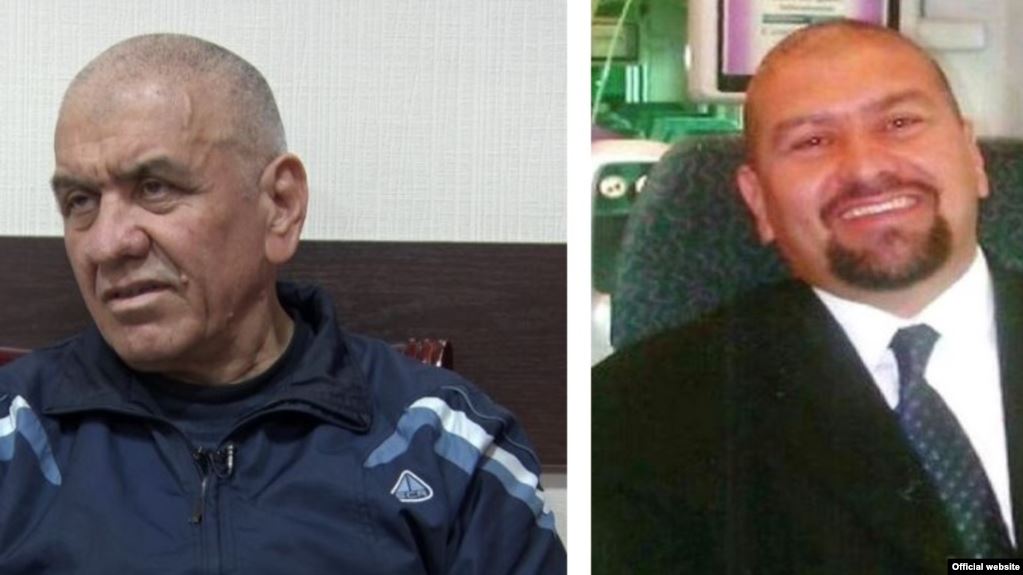
A new charge has been brought against a former field commander of the pro-government Popular Front, Khouja Karimov, known as Commander Khouja.
The investigation of the charges brought against Khouja Karimov in the mid-1990s has reportedly established that Khouja Karimov was involved in a murder attempt committed in the Khuroson district of the Khatlon province in 1992s.
A statement released by the Interior Ministry press center says that a 62-year-old local resident was shot in the building of School No 20, where the headquarters of the Popular Front for the Khuroson district was located.
“The wounded man received medical assistance on the spot and survived,” says the statement.
The Interior Ministry press center does not give the name of the suspect, but a source within the law enforcement authorities has confirmed that it is about Khouja Karimov.
Criminal proceedings have reportedly been instituted against the suspect under the provisions of Article 104 of Tajikistan’s Pena Code – murder.
Recall, the United Arab Emirates (U.A.E.) in February this year sent Commander Khouja back to Tajikistan where he faces charges of murder, robbery, kidnapping, and other crimes.
The Tajik Interior Ministry said on February 17 that Khouja Karimov — a commander of government troops during Tajikistan's five-year civil war — has been extradited to Dushanbe.
Karimov was arrested in the U.A.E. in July 2019 at the request of Tajikistan.
Tajikistan's civil war lasted from 1992 until 1997. The war ended after a peace accord was signed in Moscow by the rival sides.
Khouja Karimov, known as Commander Khouja, was one of influential field commanders of the pro-government Popular Front. He is notorious for reported cruelty during the conflict.
After the war, he was a deputy commander of a special brigade at the Defense Ministry. In the late 1990s, he was president of Tajikistan’s Football Federation and deputy of parliament.
In November 1998, he was arrested on charge of organizing killing of MPs S. Shoe and T, Shukurov and taken to police custody, but later, he was released.
Karimov fled Tajikistan for Malaysia after Tajik authorities launched criminal charges against him in September 2005.