AKDN’s response during the novel coronavirus

The Aga Khan Development Network (AKDN) remains committed to our countries and communities of operation during this crisis, says AKDN’s website. While tracking the pandemic locally and globally in February and March, several AKDN agencies such as the Aga Khan Health Services (AKHS), the Aga Khan University (AKU) and the Aga Khan Foundation (AKF) engaged […]

Asia-Plus

The Aga Khan Development Network (AKDN) remains committed to our countries and communities of operation during this crisis, says AKDN’s website.

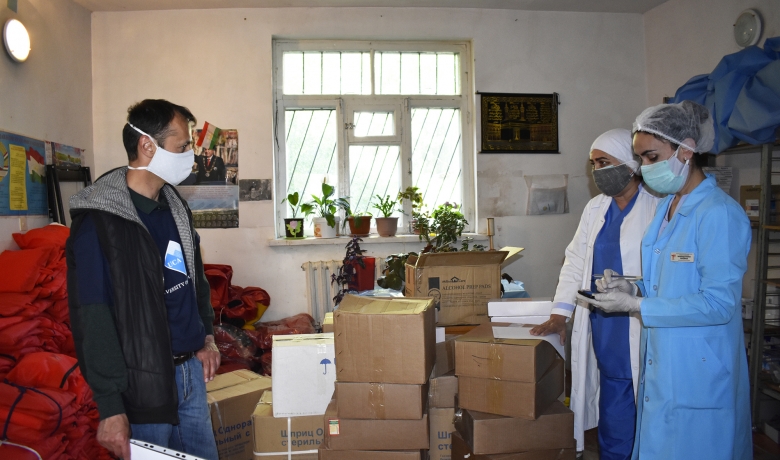
While tracking the pandemic locally and globally in February and March, several AKDN agencies such as the Aga Khan Health Services (AKHS), the Aga Khan University (AKU) and the Aga Khan Foundation (AKF) engaged with national Ministries of Health to help raise funds for country-specific COVID-19 preparedness plans.  The priority was to bolster government diagnostic and care capacities and secure much needed supplies and test kits.

By mid-March, an AKDN COVID-19 Taskforce was set up to mount a robust response to the pandemic across all agencies and the Imamat.  The AKDN response ranged from front-line health workers treating patients and testing suspected cases to construction of additional health facilities to advising national authorities on their country’s response and preparedness.

AKDN's operations and programs were also being adapted to complement those of governments. AKDN put in place contingency plans across all country offices to adapt operational procedures to quarantine measures and other restrictions where necessary; to maintain as much program implementation as possible; to adopt remote-working or remote-delivery models where necessary and feasible; and to prepare for further restrictions on movement, meetings, or activities.

AKDN reportedly also utilized existing country networks to help reduce the spread of COVID-19 by serving community needs, including support for public policies on self-isolation and quarantine; developing and introducing a spectrum of protocols for prevention, containment and care; and surveillance and case reporting.  Addressing issues of economic wellbeing and social cohesion was a particular focus.

The AKDN COVID-19 Taskforce adopted three pillars for its work: 1) slow and stop transmission, prevent outbreaks, delay and suppress the spread (or “flatten the curve”); 2) provide optimized care for all patients, especially for the severely and critically ill; and 3) minimize impact on communities, the vulnerable, social services and economic activity.


Join us on social media!

Article translations:

Related Article

Оби зулол
Оби зулол

Most Read

Recent Articles

The only GPW veteran in Dushanbe allocated more than 80,000 somoni

The mayor's office of Dushanbe allocated him 25,000 somoni.

GITEX AI Kazakhstan 2026: how Almaty became the main AI hub of Central Asia

More than 300 companies and startups, over 200 speakers and 100 investors from 50 countries — the region is entering the global stage.

A trade and economic park to be built at the border junction of Tajikistan, Kyrgyzstan, and Uzbekistan

President of the Kyrgyz Republic Sadyr Japarov familiarized himself with the project.

A project to protect soil from degradation to be developed in Central Asia

The initiative is of great significance for the mountainous countries of the region, including Tajikistan.

Mudslide, death, and destroyed homes: hundreds of families in Tajikistan left homeless

A correspondent from "Asia-Plus" visited Kulob and spoke with the families of those who died and were affected by the disaster.

Spring 2026 bright event: new issue of VIPzone now on sale

This issue is about people and ideas that change everything: from business and investments to fashion, food, and urban environment.

Godfrey Sullivan: “Tajikistan is a promising market for Visa to develop digital payments”

The Vice President of Visa explained why Tajikistan is becoming a promising market for digital payments and how artificial intelligence is influencing the future of finance.

Seven students in Dushanbe were threatened with expulsion for arriving at universities in personal cars

The materials for each case have been sent to the Ministry of Education and Science for appropriate actions.

India’s blockchain push and lessons for the global south

The Indian Government has started pushing aggressively its agenda...

India’s blockchain push and lessons for the global south

The Indian Government has started pushing aggressively its agenda...