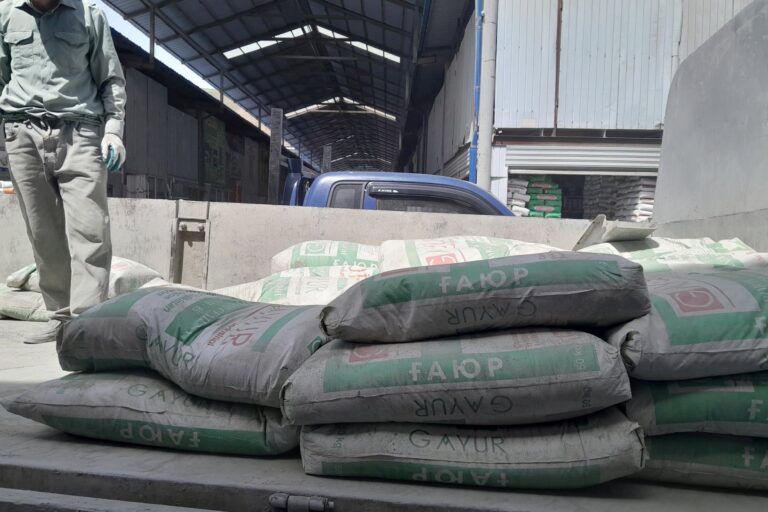
An article posted on Eurasianet’s website notes that Beijing has changed course in Central Asia and it now rarely funds major infrastructure projects in the region. Instead China has shifted to manufacturing: a bus factory here, a cement plant there.
China Diversifies in Central Asia says that when Beijing does lend, it is still from its policy banks (China Development Bank and China Eximbank), but preferably after securing joint funding from local partners or other countries.
This change, which has come into focus in the last two or three years, has reportedly had two drivers: recipient states are demanding projects that provide jobs, exports and industrial capacity; and Chinese policy banks that historically funded infrastructure now want to spread their risk. This is playing out differently in each Central Asian state.
As far as Tajikistan is concerned, the article notes that large-scale Chinese government lending to Tajikistan has reportedly dried up over the last five years.
While Beijing has hit the brakes, Chinese firms have steadily increased investments (sometimes in the form of joint ventures) in mining, cement, textiles and agriculture.
Unlike loans from Eximbank, the Tajik government does not have to pay these back. For joint ventures the Chinese partner will typically make the majority capital investment, with the Tajik side organizing land and regulatory approval. Often the Tajik government provides tax benefits or free land for Chinese investments.
In select sectors, these Chinese investors have reportedly created an export industry. Gold production rose from 2.4 tons in 2012 to 8.1 tons in 2019, when one Chinese-Tajik joint venture reportedly accounted for over 70 percent of production.
Similarly, in 2013 Tajikistan produced a mere 30,000 tons of cement and imported about 3 million tons. By 2018, the country produced 3.8 million tons and exported 1.4 million. Almost all of this was made by Chinese firms.
A Chinese-owned textile firm claims to be Tajikistan’s largest exporter in terms of foreign currency earnings. Silver production also increased by 17 percent in 2019.
But with Tajikistan’s small market and hostile business conditions, major projects are harder to get off the ground.
Several Chinese investors have announced plans in recent years to modernize the Talco aluminum smelter, the country’s largest industrial asset. The Soviet-era plant, which uses up to 40 percent of Tajikistan’s limited energy supply, badly needs an upgrade. The article notes that Dushanbe has changed legislation to allow foreigners an ownership stake, but TALCO remains controlled by President Emomali Rahmon’s family and his government has kept the terms of any agreements secret (if they exist at all).
The one exception that could put Dushanbe on the hook would be the $3.2 billion Tajik section of a mooted gas pipeline from Turkmenistan to China, Line D, which was agreed in 2013 and would see state-owned Tajiktransgaz operate as a joint-venture with China National Petroleum Corporation. If the project loses money, the Tajik side would possibly need to repay some of the debt. The economics of Line D seem less viable now than when first proposed, however, and little progress has been made.
If either of the TALCO refitting or Line D were to go ahead, a Chinese firm would hold a major stake in projects producing a significant share of Tajik budgetary revenues.