Russia has transferred 3 million U.S. dollars to the Eurasian Fund for Stabilization and Development (EFSD) to finance construction of five Russian-language schools in Tajikistan, according to the Eurasian Development Bank (EDB), which acts the Resources Manager of the EFSD.
A relevant agreement has reportedly been signed by Timur Maksimov, Deputy Minister of Finance of the Russian Federation and Andrei Shirokov, Acting Managing Director, EFSD Project Unit.
The Eurasian Fund for Stabilization and Development (EFSD; the Fund) is a regional financial arrangement to support the member economies. The fund was established with the aim to overcome negative crisis effects, ensure long-term sustainability, and promote integration of its member economies. The main borrower of the EFSD is Belarus, which has been extended two credits for fiscal support for a total of US $5 billion. Tajikistan, Kyrgyzstan, and Armenia also receive financial support in the form of investment loans and financial credits, as well as grants.
In a statement delivered at a press conference in Dushanbe, Igor Burulko, First Secretary, Russian Embassy in Dushanbe, noted on December 24 that construction of five Russian-language schools may start in Tajikistan in summer next year.
“Several days, go, the Russian Federation allocated funds for advance payment of the work of the general contractor, and sites for construction of schools have been determined,” Burulko said.
The results of a tender for selecting general contractor (it will be a Russian company) and subcontractors (Tajik companies) will become known in February.
Recall, a government-to-government agreement between Tajikistan and Russia on construction of five Russian-language schools in Tajikistan was signed in Moscow on April 17 last year.
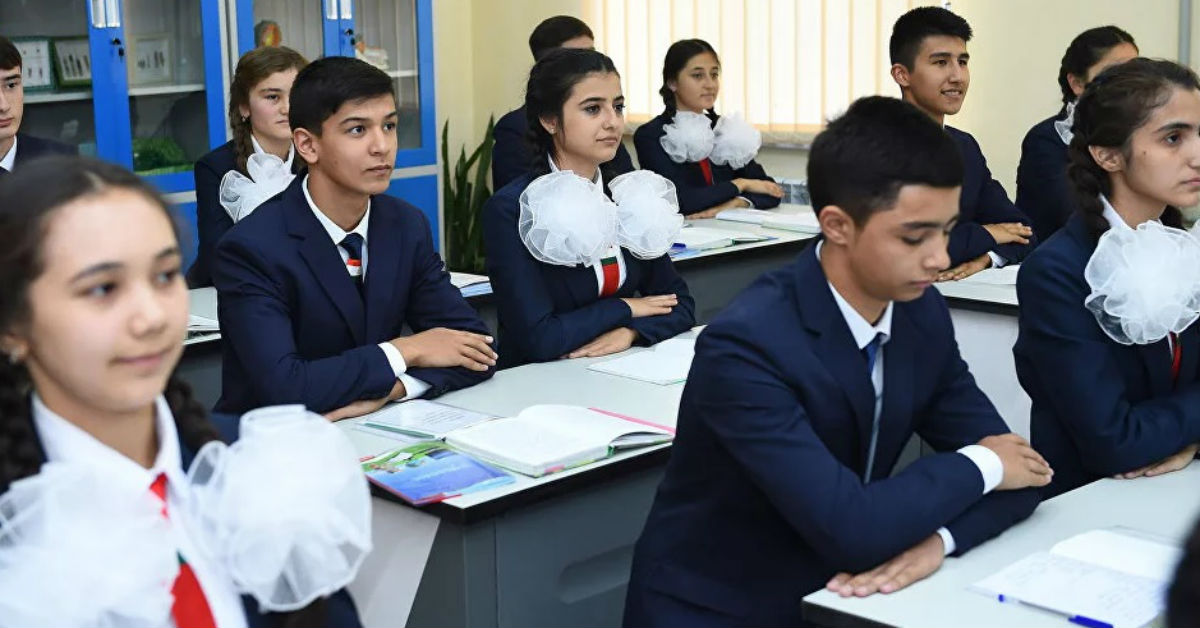
The agreement provides for phased construction of Russian-language schools in the cities of Bokhtar, Dushanbe, Khujand, Kulob and Tursunzoda and equipping of them. Each of these schools will accommodate up to 1,200 pupils.
The construction of the schools will be financed by the Russian government. Russia was supposed to provide six billion rubles for construction of these schools.
Tajikistan’s lower house (Majlisi Namoyandagon) of parliament on January 15 this year ratified an agreement with Russia on construction of five Russian-language schools in Tajikistan. Recall, Russia at the start of the academic year 2018-2019 sent 30 teachers to secondary schools in Tajikistan. Teachers from the Russian regions of Kostroma, Kemerovo, Bashkortostan, Dagestan, and Tatarstan arrived in Tajikistan to teach subjects such as mathematics, physics, biology, chemistry, computer science, Russian, and others at secondary schools where teaching is conducted in Russian.
Russian teachers left Tajikistan this year because of the coronavirus crisis.
The education sector in Tajikistan has been in decline after collapse of the Soviet Union in 1991 and many Tajik nationals described the effort to bring over Russian teachers as a much-needed remedy.