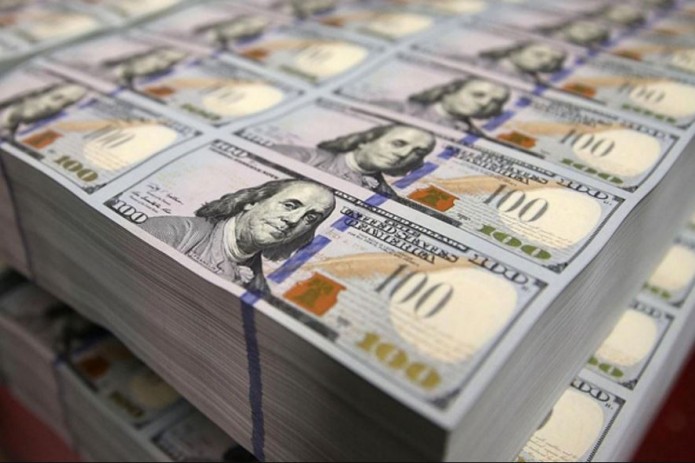
Tajikistan last year spent 190 million U.S. dollars servicing its external debt, according to the Ministry of Finance (MoF) Secretariat.
Of this amount, US$124 million were spent to service the principal and US$66.2 million were spent to service interest of the debt.
Tajikistan’s external debt reportedly rose 300 million U.S. dollars in a year to December 31, 2020, reaching 3.2 billion U.S. dollars (41 percent of the gross domestic product).
Based on current data, the gross domestic product for the last year was 82.5 billion somonis (equivalent to some 7.9 billion U.S. dollars at the average official exchange rate in 2020).
The size of the country’s external debt last year increased mainly due to the attraction of a preferential loan in the amount of US$189.5 million from the International Monetary Fund (IMF) and a US$50 million loan from the Eurasian Fund for Stabilization and Development in May this year.
The main creditor of Tajikistan is China. Beijing owns more than US$1.2 billion. Tajikistan’s large-scale borrowing from China started around 2006. The bulk of Eximbank’s lending to the country – again largely for infrastructure – occurred over the next four years. According to Eurasianet, Dushanbe and Beijing signed their last major loan deal in 2014, with the project – Stage 2 of the Dushanbe-2 combined heat and power (CHP) plant completed in 2016. Despite extensive Chinese FDI in mining and other ventures with commercial potential, there is reportedly no major project currently under construction in Tajikistan directly financed by Eximbank.
Tajikistan pleaded for relief from its international creditors and has already received positive feedback from China. China has suspended debt repayments from Tajikistan, and negotiations with other creditors are also ongoing.
Debts due to placement of government bonds (Eurobonds) in international financial markets amount to US$500 million.
There are also comparatively large debts to the World Bank, Asian Development Bank, Islamic Development Bank and IMF.
This year, Tajikistan earmarked about 1.5 billion somonis (equivalent to US$133 million at today’s exchange rate).
Despite a considerable amount of debts accumulated, the Tajik government is not going to discontinue the practice of foreign borrowing, and is planning to borrow 562 million U.S. dollars this year, 459.7 million U.S. dollars in 2022, and 246.8 million U.S. dollars in 2023.