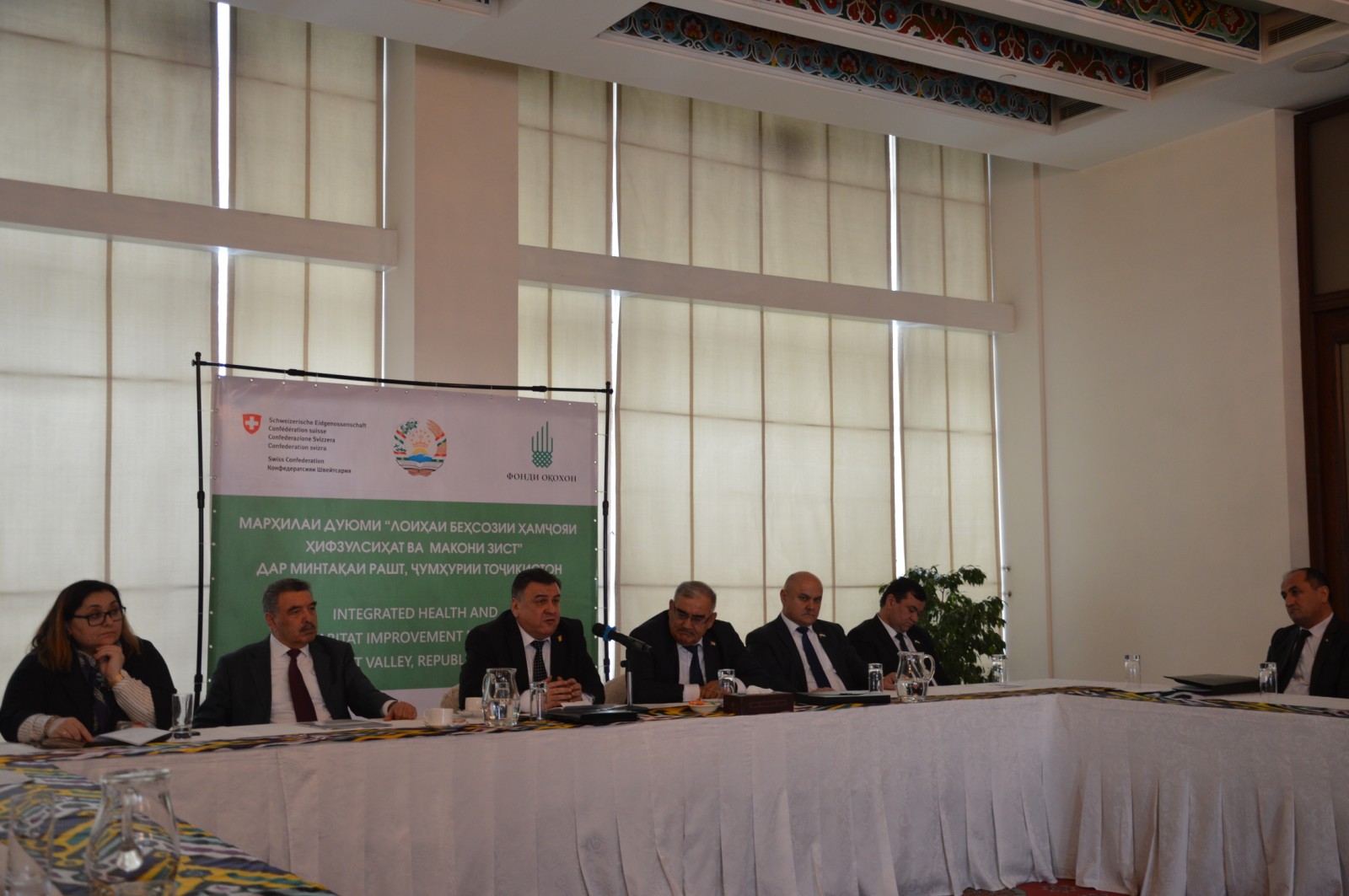
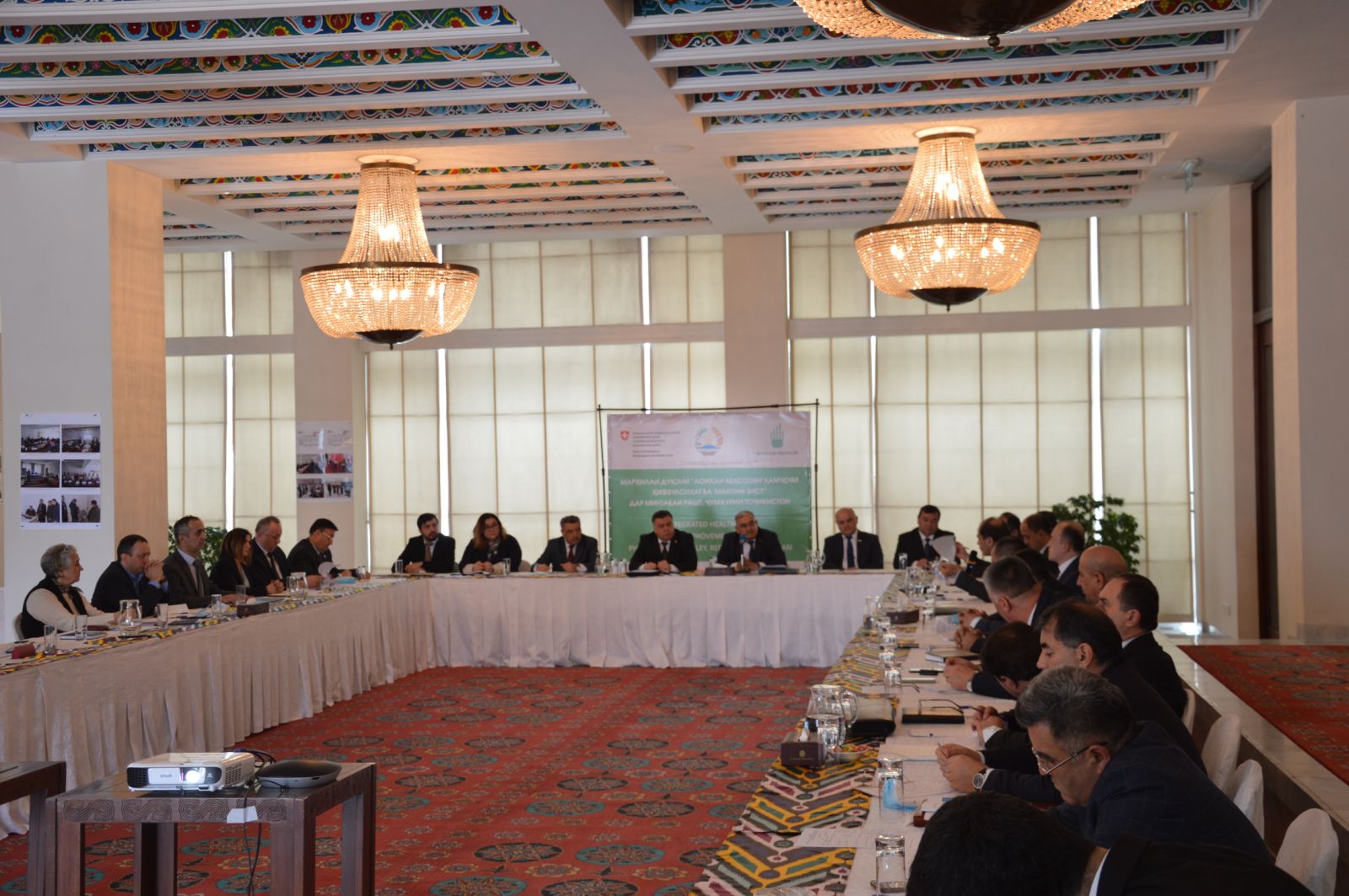
Second meeting of the Steering Committee for the Improving Health and Habitat Integration in the Rasht Region Project, supported by the Swiss Agency for Development and Cooperation (SDC) and implemented by the Aga Khan Development Network (AKDN) agencies, was held at Dushanbe Serena Hotel on February 25 with participation of Chairman of the Local Development Committee under the President of Tajikistan Mr. Qosim Rohbar, Resident Representative of AKDN Tajikistan Mr. Qozidavlat Qoimdodov, the CEO of the Aga Khan Foundation of Tajikistan (AKF), deputy heads of relevant ministries and agencies, representatives of Tajikistan’s lower chamber (Majlisi Namoyandagon) of parliament, heads of local government of Rasht Valley and heads of the other AKDN agencies active in Tajikistan.
According to the AKDN, Mr. Qosim Rohbar thanked the development partners – the Government of Switzerland (SDC) and the AKDN for their continued support and fruitful cooperation with the Government of Tajikistan. “The Integrated Protection and Habitat Improvement (IHHI) Project, supported by SDC and implemented by AKDN agencies, provides a solid foundation for improving people's quality of life, and creates a safe environment and job opportunities” – he noted.
AKDN RR called AKDN as a reliable and long-term partner of the government. He underlined that “to transparently implement the projects, we have decided to establish a Steering Group at the level of government representatives and development partners. The purpose of this group is to ensure that cooperation between the private sector, donors and the government continues at a constructive level, and as a outcome, the projects will serve a larger number of people and for longer years”.
Ms. Svetlana Jumaeva, on behalf of Representative of SDC in Tajikistan, expressed her satisfaction and effective work with Aga Khan Foundation (AKF), Aga Khan Agency for Habitat (AKAH), Mountain Societies Development Support Programme (MSDSP), the Aga Khan Agency for Health Service (AKHS) and other partners. She has added that AKF is implementing the IHHI Phase II project and SDC has provided 46% of contribution to this project, other 64% comes from the AKF, AKAH and other partners.
AKF CEO Kisvar Abdulalishoev and Project Coordinator for IHHI Saidali Kadyrov reportedly briefed the Steering Group on progress and activities under the program. In particular, it was noted that the total budget of the project is 10,518,912 CHF, the implementation period is from January 2018 to December 2021 and it covers Faizobod, Nurobod, Rasht, Tojikobod, Lakhsh, Sangvor districts and Roghun. It was highlighted that the aim of the project is to ensure that the population has access to the basic services in a peaceful society and improves their quality of life. The end result of the project is that women and young people would be actively involved in community development, have access to basic services, and improve their attitudes towards health, a sustainable environment, and disaster prevention. The project operates in all districts of the Rasht Valley and covers 147 villages, 20,816 households, 139,429 or 32% of the population.
Representatives of the AKF of Tajikistan added that in addition, the project provided several assistances to the population of Rasht in the fight against COVID-19. In particular, the provision of protective equipment (gloves, masks, chlorine, alcohol, thermometers, etc.) to 7 districts, the provision of 50 beds and supplies for the Rasht Infectious Diseases Hospital, access to 70 pulse oximeters for the diagnosis of infectious diseases. The total budget of COVID-19 was more than $ 76,000. Aware-raising work was carried out with 26,175 households and 174,188 people (85,694 women) to reduce the risk of its spread, and 43,794 information leaflets were distributed to them. The groups sewed 19,959 masks and provided 997 items to vulnerable families free of charge.
At the end of the meeting, the deputy heads of relevant ministries and state committees and heads of districts exchanged their thoughts and recommendations for further development of cooperation, and implementation of joint projects with development partners, and articulated hope for the improvement of mutually beneficial relations.