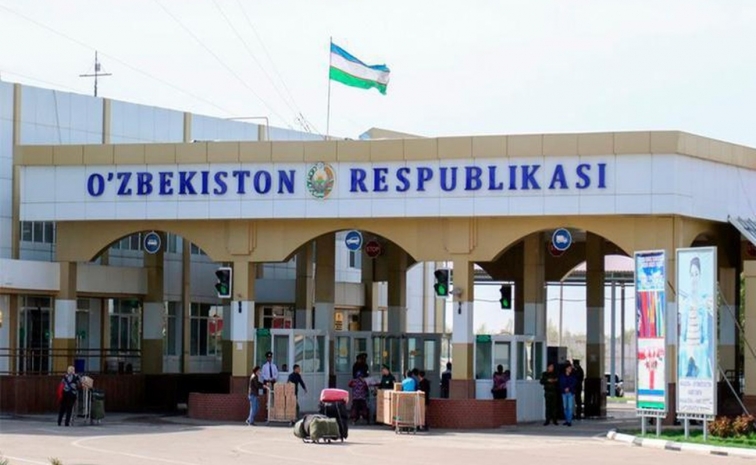
While proceeding via border crossing points (BCPs) along the Tajik-Uzbek border people must pass a paid express test for COVID-19, a source within the government of Tajikistan told Asia-Plus in an interview.
People must pay for the express test in the national currency in the amount equivalent to 14.00 U.S. dollars, he noted.
Tajik First Deputy Foreign Minister Khusrav Noziri on February 26 held a video-conferencing meeting with his Uzbek counterpart Farhod Arziyev to discuss issues rated to bilateral political, economic and humanitarian cooperation between Tajikistan and Uzbekistan, according to the Tajik MFA information department.
They reportedly also exchanged views on cooperation between the two countries within the framework of international and regional organizations.
On the same day, Dushanbe and Tashkent also discussed the opening of BCPs operating along the mutual border, which were closed in March last year due to the coronavirus pandemic.
All BPCs operating along Tajikistan’s common border with Uzbekistan are expected to reopen by Navrouz festival, which is celebrated on March 21.
Practically all BCPs along the Tajik-Uzbek border were sealed in March last year, and only three of them have operated since that time: Tusunzoda-Sariasiay; Mastchoh-Oibek; and Spitamen-Plotina. International goods have reportedly been transported through these BCPs.
Three other BCPs reopened along the Tajik-Uzbek border in December last year and one more reopened in early January this year. But not all categories of citizens were allowed to proceed via these BCPs. Only Tajik students studying in Uzbekistan and Uzbek students studying in Tajikistan as well as those nationals of Tajikistan and Uzbekistan who have a wife, a husband or children in the neighboring country were allowed to proceed via these BCPs.
Persons wanting to proceed via these BCPs were reportedly required to hold a certificate of a negative COVID-19 PCR-based test, made no earlier than 72 hours (3 days) prior to crossing the border.
Besides, nationals of both countries having written permission from the Standing Committees on COVID-19 Response of the two countries are allowed proceeding via these BCPs.
Currently, there are eighteen BCPs along the Tajik-Uzbek border; nine of them have an international status. Fourteen BCPs are located in the northern Sughd province and the remaining four BCPs are located in the southern Khatlon province and in the Tursunzoda district (central Tajikistan).